Special Note: Originally all Pinball FX tables were going to be posted to a single review guide, but there would have been loading issues. I’m splitting the guide into individual table posts.
Ahch-To Island
First Released April 17, 2018 Main Platform: Pinball FX Switch Platform: Star Wars Pinball Designed by Szucs “ndever” David Set: Star Wars Pinball Collection 2 ($23.99)
Links: Strategy Guide – Pinball FX Wiki
Kickback – Angela: I won’t argue if you think Ahch-To Island lacks excitement. That’s fair, and if you value edge-of-your-seat action, this might not be the table for you. What draws me to Ahch-To Island is how accessible it is. It’s the only original creation from Zen Studios where modes start automatically in a random order. Instead of girding just to get the game started, you immediately begin light chasing, or collecting lightsaber pieces. That sets it apart from every other pin in the entire Zen Studios library. Not only that, but it feels perfect as a table themed around Luke Skywalker training Rey in the ways of the Force. It might not be “exciting” in the traditional pinball sense, but it’s still exhilarating to shoot combos and hit your targets. The theme and flow give Ahch-To a serene quality that you seldom see in pinball. That’s why Ahch-To Island is my favorite non-Mimban Star Wars pin. In every way that matters, it’s one of a kind, but in a way that succeeds.
Fun fact: we scored over two-hundred pins as a team and this became the first table that was awarded a MASTERPIECEby one of our judges, yet failed to be issued a Certificate of Excellent. That’s on account of Angela losing her freakin’ mind and calling Ahch-To Island a MASTERPIECE while the rest of us have it down as only a standard GOOD table. Ahch-To Island is a genuine throwback to the early DMD-scoring era that lets the tables flow speak for itself. As a tribute to that era, back when you didn’t have to grind to start a mode, it works mostly well. There’s no timer on the main modes, and if you drain, the mode stays active when you start the next ball. No progress lost at all. So, that’s different from what you expect from Zen Studios, and a nice change. But, the rest of us are kind of ho-hum about the table. It’s not bad. It’s just kind of plodding, you know?
Signature Mode – Rey: In the second and third part of Rey’s mode, you have to hit the lane that’s lit. I like that the entire lane is lit-up with magic. That’s quite neat. Iron Man does something like this too. The problem is that it changes too quickly. Two seconds, if that. There’s a LOT of lanes on this table, and while there appears to be some grace period, it’s not enough time. It doesn’t make the table more exciting. It makes the modes a total slog.
It’s bonkers how much the rest of us fundamentally disagree with Angela about the value of the table. Oscar and I disagree about how smoothly it flows. A weirdly placed vari-target along one of the orbits causes the ball to get hung up constantly, as it’s too tight a shot and gives the ball a distinct wobble that kills the flow. Also, we disagree about how tough the outlanes are. The left one especially chews up more balls than a malfunctioning pitching machine, and by the way, a red-faced Angela feels the previous paragraph is not true and she’s threatening to stab me. Meanwhile, Jordi thinks the placement of the spin disk is a waste of space. I’m indifferent to the disk, which closes off during Luke’s mode anyway. The cause of the lower rating I think is all the secondary flippers. They just don’t work for me. They feel inelegant. Mind you, even though we all strongly disagree with Angela’s assessment, we all agree that Ahch-To Island is fine. Angela is right about one thing: it’s a one-off. There’s nothing quite like it, and I think I’m okay with that. Cathy: GOOD (3 out of 5) Angela: MASTERPIECE (5 out of 5) Oscar: GOOD Jordi: GOOD
Elias: GOOD (Star Wars Pinball on Nintendo Switch)
Sasha: GOOD
Overall Scoring Average: 3.33 * 🧹CLEAN SCORECARD🧹
Primary Scoring Average: 3.4 🧹CLEAN SCORECARD🧹
*Nintendo Switch version is, more or less, identical to all other versions.
Some review copies were provided in this review, others were paid for.
Special Note: Originally all Pinball FX tables were going to be posted to a single review guide, but there would have been loading issues. I’m splitting the guide into individual table posts.
Adventure Land
First Released December 12, 2017 Main Platform: Pinball FX Switch Platform: Pinball FX 3 Designed by Tamas “Ypok” Pokrocz Set: Zen Original Collection 1 ($15.99)
Links: Strategy Guide – Pinball FX Wiki
It’s a beautiful, zany-looking table, but the grinding combined with the hungry outlanes makes this significantly less fun than I think the average player would be primed for on looks alone.
Angela is beside herself that my father and I ranked Adventure Land GOODand claims our love of theme parks and their artificial reality is what distracts us from a table that flows badly. When she found out Jordi was giving it a GREAT, we had to fetch her fainting couch. Maybe she has a point, and in fairness to her outrage, this is as generic as an amusement park gets in media. I get why people would dislike Adventure Land. It features some stunning scoring imbalance issues and absolutely maddening slingshots and outlanes. Fine. She’s right in that regard, and I’ll throw in that Adventure Land has the absolute worst skillshot in all of Pinball FX. It’s above the right slingshot at a horrendous, high-risk angle that doesn’t seem compatible with the physics. The only time we’ve made it on Pinball FX 4 is via a lucky bounce. Making it opens the super skillshot, where you can light an extra ball, and it’s actually not even worth trying for that. The rest of the table is a massive grind, because that’s Zen’s thing. Adventure Land is the definitive burst-scoring table thanks to some of the most slow-to-active modes in Pinball FX.
Persistent Problem – Mini-Game Rules: Mini-Games in pinball should be simple enough to be self-explanatory, but when that’s not the case, it drags the whole table down. Take the Icarus V here. It’s a minigame where you have to make a Ring of Fire-like ride do loops. And these are the instructions for the mini-game in their entirety: “Once the ball is inside the toy, press the flippers at the right time to make a loop.” That’s about as useless as giving a dog a tuba. What flippers? Both? Alternating? When’s the right time? There’s a bunch of lights. Which light is the one that signals “the right time?” Say what you will about Pinball Arcade and its hundreds of pages of painfully detailed instructions, but at least every question was answered. For Pinball FX, you have to track down what the actual object is on websites or the strategy guide. They need to hire someone to do better instructions. It’s arguable the worst overall aspect of Pinball FX and Pinball M are the instructions themselves. This is why we tend to prize intuitive tables and mini-games above all else. If they insist on complicating these things, practice mode isn’t enough because you still have to grind to get the shot, and then if you fail it in five seconds (like we used to do with Icarus V), you have to start the grind all over. They could fix this by allowing players to practice the more abstract mini-games separately.
Here’s the thing: Adventure Land’s layout is really good. Most of the shots are fun in a vacuum. The reason why I’m settling on GOODinstead of a higher score is Adventure Land’s good shots are rendered meandering thanks to the grind. The table is too big, the shots too spread out, and the time limits are too strict (even with shots that extend the timer) for Adventure Land’s own good. This is one of those pins that’s BEGGING to be saved with a ROM update that cuts the grind and shot requirements. Maybe all of that wouldn’t be a problem, but Adventure Land wants to be both a grind-a-thon AND a brutally punishing table with serial killer outlanes and slingshots. It takes too long for this table to feel rewarding. Too repetitive. Too back-loaded. I like shooting on Adventure Land, but when it takes forever for those shots to pay off, it’s a downer. It’s a slog. And, for a lot of players, it’s a big turn-off. I’m also not a huge fan of the mini-games that act as a buffer because, on a table that shoots this tough, they make it harder to get into a rhythm. Adventure Land is one of those pins that’s showing its age a lot sooner than a lot of much older Zen originals. There’s a chance in another two to three years, I’ll be dropping my rating to BADas well. Cathy: GOOD (3 out of 5) Angela: BAD (2 out of 5) Oscar: GOOD Jordi: GREAT (4 out of 5) Dash: GOOD Sasha: BAD Elias: BAD (Pinball FX3 on Nintendo Switch) Overall Scoring Average: 2.71* –GOOD
Primary Scoring Average: 2.83 – GOOD
*Nintendo Switch version is, more or less, identical to all other versions.
Some review copies were provided in this review, others were paid for.
Special Note: Originally all Pinball FX tables were going to be posted to a single review guide, but there would have been loading issues. I’m splitting the guide into individual table posts.
A-Force aka Marvel’s Women of Power: A-Force
First Released September 27, 2016 Main Platform: Pinball FX Switch Platform: Not Yet Released Designed by Thomas Crofts Set: Marvel Pinball Collection 2 ($29.99)
Links: Strategy Guide – Pinball FX Wiki
Kickback – Angela: I’m in disagreement over how well four out of five modes in A-Force are. They’re modes! You aim at the targets it tells you to shoot and you shoot, no different from any other table. Yes, the lights are badly done and too many that aren’t tied to modes blink at once, but that just slows down how fast you learn a table. It doesn’t affect the quality of those shots. Plus, you don’t even have to win the modes to make progress, which is something my family claims they want from Zen. Frankly, I don’t know what more they could have done that would win everyone over short of removing the timer for them. They even stack with mini-modes to add additional excitement. Maybe they’re a little repetitive, but the shot selection is different for each and they don’t feel much alike. I think A-Force is one of Zen’s best pins, Marvel or otherwise.
The smooth-shooting A-Force is one of the most underrated Zen original creations, and in Pinball FX, it seems the difficulty has even been slightly scaled back. Maybe it’s the placebo effect since it’s subtle, but the rails no longer feel like they spoon-feed the outlanes. The result is a table up for players of all skill levels. What I really love about A-Force is that the act of learning the table’s flow and which shots work in combination with each-other is as exciting as making the shots too. It’s a complicated layout, but not in an overwhelming way, and that “ta-da” moment when you put it together is so satisfying. Awesome shot selection too, and oddly enough, the gigantic Titanium Man head that sticks out in the most smackable way isn’t the key to it all, but let’s talk about him. He’s tied to a multiball mode, his own mode (the 5th mode, specifically) which is also a multiball mode, and to a hurry-up that yields a lot of points. Clearly Thomas Crofts understood how fun this target was.
Signature Mode – Restore the Reality: A-Force’s wizard mode is a timed multiball rush with a twist: instead of flipping flippers, you create a series of explosions at the flippers that launch the pulsating red balls at the orbits. It’s silly but a lot of fun.
What ultimately keeps A-Force out of the Pantheon are the modes. Only the two-ball battle against Titanium Man stands out, and maybe a mode where a helicopter drops bombs on the city that you have to shoot to collect. The remaining three are somewhat bland and uninspired, but at least you don’t need to shoot perfectly or even win in order to get the checkmark for them. This is the way Zen should do every table: if you fail, the mode is still checked-off, and then after you’ve played the wizard mode, the second cycle changes the rules and you must win a mode in order to check it off. I love that. Zen could probably bump the ratings of 20% of their pins by updating their rules for that. With that said, although the final Wizard Mode succeeds in being a visually-striking tribute to late Williams arcade-era final multiball showdowns, getting there is a bit underwhelming. I don’t agree with Angela’s “modes are modes” belief, because I think it matters that it’s often not clear what shots are for what mode. It doesn’t do a good enough job of directing you towards the prudent shots. And while I’m on the subject, I can’t imagine playing this without the vertical table-view, since the playfield is massive but obstructive. I really wanted to make the leap and declare A-Force a masterpiece, because I think it has to be in the discussion for best layout in the entire Marvel brand, but I couldn’t quite work myself up enough to do it. The layout was worthy, but I don’t feel they used it to its fullest potential. Cathy: GREAT (4 out of 5) Angela: MASTERPIECE (5 out of 5) Oscar: GREAT Jordi: GREAT
Sasha: GREAT
Overall Scoring Average: 4.2📜CERTIFIED EXCELLENT📜
Some review copies were provided in this review, others were paid for.
A Charlie Brown Christmas
aka Charlie Brown
Pinball FX Debuting Pin
First Released December 7, 2023 Main Platform: Pinball FX Switch Platform: Pinball FX Designed by Zoltan “Pazo” Pataki Stand Alone Release ($5.49)
The second floor you get to via a jump ramp that you activate by smacking Lucy’s booth. Making the ramp shot is SO satisfying. It also activates during the “collect snowflakes” mode.
I nearly had a cow when I found out Charlie Brown’s pitiful Christmas tree wasn’t a target you shoot. My father gave me one of those “I’m not mad, just disappointed” glares as he asked if I really wanted to shoot a sickly tree that nearly died from having a single bulb hung on it. Well, yea, Pops. It’s pinball! Hell, the ball itself should have been the bulb that killed the tree (maybe a magnetic target?), and then after you do that, have the table light various other targets representing the rest of the Peanuts Gang to perform their magic hand wave that heals the tree and turns it into a beautiful, fully-decorated Christmas tree. It’s so obvious and such a missed opportunity. You do decorate the tree in the wizard mode but, frankly, we couldn’t reach it even after twenty-five combined hours of playtime. It’s too much work for what is a fairly tough-shooting table. Charlie Brown is a very good table that comes just short of legendary, with fun angles and excellent scoring that make-up for relatively basic targets, some ho-hum modes, and some eye-popping shot requirements. The lack of pizazz I suppose is befitting of the Peanuts franchise, as is the hidden skillshot: the ball going straight from the plunger to the left outlane. That’s genuinely funny.
Signature Element – False Outlane: It seems like such a small thing, but the way Pazo implemented the right side of Charlie Brown’s rails is probably the most exciting aspect of the table. The O is the inlane that feeds the flippers. No explanation needed. The P is the outlane. You lose the ball, and there’s no kickbacks to be had for it. The twist is in the Y lane: a no-work-needed return to the plunger lane, at which point the ball is auto-plunged back onto the table. That’s right: you don’t even even have to light it. It’s always active, and it’s awesome. It makes the table’s defensive game every bit as thrilling as the offensive side. The only downer is that it’s an auto-plunge instead of a Bride of Pin⋅Bot-like multiple-skillshot generator. I think they probably intended that and cut it, possibly because it was too easy and threw the balance and pace off. I love the element in general so I can’t really complain that there isn’t more to it. I’d love to see Zen do more of this.
Be warned: this is actually one of the hardest shooters among new tables. The director saucer is one of Zen’s most deceptively difficult shots. Lucy’s booth is situated in a way that the ball will just barely clip the corner of it. Thus, what should be the simplest angle in the game is rendered the most challenging. Even more frustrating is that the ball must pass through a gate before reaching the saucer, and if it loses too much momentum it’ll roll-out to the mailbox orbit. This caused some major problems on Nintendo Switch (see below). It’s worth the challenge because the table has such a unique flow, but it’s also a shockingly hard table to clock. The bat flipper is especially difficult, as there’s two possible lanes to hit with it, but aiming at them is quite hard since you can’t really see what you’re shooting. None of us got a feel for it. It’s pretty clunky and likely the main reason why this is the rare table that mostly scored GREATratings without anyone even thinking about going MASTERPIECEon it. With that said, we all had a good time and, yea, I could see where people might consider pulling this pin out during the holiday season.
Persistent Problem – Shot Requirements: When you read our Pinball FX reviews, you’re going to hear us complain a lot about grinding and ridiculous shot requirements. I imagine Zen’s designers will tune out really quick, so I wanted to put this in the first review alphabetically. To reach the wizard mode in A Charlie Brown Christmas, you have to play every mode once (win or lose), activate Lucy’s multiball, start all three “design and play” modes, and start the two ball “decorate Snoopy’s house” multiball, which specifically requires you to score five different jackpots to earn its check mark. Activating that mode by itself requires you to repeatedly shoot the target pictured here, which is far and away the most high-risk target on the table. One of the main modes is also shooting the dog dish about four or five shots too many than reasonable. The amount of work your tables expect, WITHOUT failing is so beyond reasonable that I wouldn’t be shocked if only a couple dozen people ever reach the wizard outside of the practice. The problem is, seemingly no consideration is made for how high risk the targets are. Designers just place a target wherever there’s room, bump up the requirement on it until it becomes boring, and then move on to the next table. Another example of bonkers requirement: a twenty-five hit combo is what earns you an extra ball. Twenty-five. WHAT THE ACTUAL F*CK IS WRONG WITH YOU DESIGNERS? It’s Charlie Brown, for Christ’s sake! You can’t even drop this batsh*t mind-numbing grind for a Charlie Brown Christmas-themed table? You have all the talent in the world, and you squander it by turning your fun designs into mind-numbing slogs. There are multiple Pinball FX and Pinball M tables we should be holding up as triumphs of modern pinball, and instead we hold up only a fraction of that because of the rules, not the tables themselves. You are the one who is both building the Porsche and puncturing the tires. I don’t think any of you suck at designing pinball. That’s why it hurts that the tables aren’t as good as they can be. Because you’re so much better at this than the actual final product suggests.
Special Consideration – Nintendo Switch: On the Switch build of Charlie Brown, the Grinch is the director’s chair shot, and it steals Christmas. Even high-speed direct shots right down the middle of the director’s chair target stop and miss after passing under the metal gate. There’s just too much resistance on that gate, as if it’s grabbing the ball by a tail and yoinking it away from the target. It’s weird. Since that shot is the mode start, it’s pretty ruinous. This culminated in a game where Oscar hit the director’s chair shot over a dozen times before it finally registered and started a mode. For this reason, and this reason only, we have to consider A Charlie Brown Christmas on Switch to be ⚠OUT OF ORDER⚠ for the time being, but if they fix this one thing, it should easily cruise to a Certificate of Excellence. Cathy: GREAT (4 out of 5) Angela: GREAT Oscar: GREAT
Jordi: GREAT
Dash: GREAT
Sasha: GREAT
Dave: Projected to be GREAT on Switch after fix.
Elias: Projected to be GOOD (3 out of 5) on Switch after fix.
Primary Pinball FX Scoring Average: 4.0📜CERTIFIED EXCELLENT📜 Switch Scoring Average: ⚠OUT OF ORDER⚠
Some review copies were provided in this review, others were paid for.
World Cup Soccer First Released February, 1994 Zen Build Released October 20, 2022 Main Platform: Pinball FX Switch Platform: Pinball FX Designed by John Popadiuk Conversion by Zoltan ’Pazo’ Pataki Stand Alone Release ($9.99) Link to Strategy Guide
A lot of tables use sports themes, but few are as good at creating a real tie to athletic competition quite like World Cup.
UPDATE: The Nintendo Switch has been patched and tables are working the way they’re supposed to. Well, except this one. Read below.
World Cup’s inclusion in Pinball FX was a revelation for me. No filing the serial numbers off and calling it “World Champion Soccer” for Zen Studios. They went out and got the World Cup deal signed. It’s a sign that no license is out of bounds. At this point, there’s only one Williams/Bally pin I’d be stunned for Zen to actually get a deal made for, and that’s for 1997’s NBA Fastbreak. I don’t even necessarily think you NEED the license for a table like World Cup. Farsight turned it into a generic soccer theme and it was fine, and Zen already outdid them in the way that matters a lot more: their conversion is just plain better. Pinball Arcade’s take on this classic had an especially brutal left ramp. As a late-stage release, they never got around to fixing it. Zen got it right from the start. A slapshot that enters the ramp cleanly will not result in a rejection, which could happen in Pinball Arcade. When a rejection does happen, it feels intuitive. Like “yep, that one wasn’t good.” That by itself makes a BIG difference and turns a middling digital pin into a very fun one.
“What are we going to do for the ‘enhanced graphics’ on World Cup? What do you mean you don’t have any ideas? Okay, screw it. Do we have any unused graphics from other tables? Whirlwind does? Use it!”
The big news is my father, who is NOT a fan of John Popadiuk, has awarded World Cup Soccer MASTERPIECEstatus. Most of us don’t agree. Dad’s argument is the following four points. (1) World Cup is focused on ball control that rewards carefully setting up your shots and (2) instead of the entire scoresheet offering strategic flexibility, World Cup offers shot selection flexibility. In other words, modes and goals come out in a specific order, but most of the modes can be done via different shots. Take multiball for example. While making a goal is the jackpot, you can shoot either ramp or the saucer in front of the goal to re-light the jackpot. (3) This is the most balanced-scoring Popadiuk table. (4) Every shot is fun.
The goal is one of the all-time great pinball shots. Adding shots that target the goalie was a stroke of genius.
On point #1, while I agree that “ball control” is the primary gameplay theme of World Cup, I don’t think you necessarily need to slow down the pace to play World Cup well. I think that this is a table where converting rebounds to quick shots matters a great deal. There’s plenty of time-sensitive scoring opportunities where you can’t always just grab a trap and wait for the perfect shot. Oscar had a chance to prove his way was right and he only won 2 out of 14 match-ups against us. The shooting area between the flippers and the goal is tight, which makes it hard to juggle a multiball. I think quick, efficient shots matter, or in my case, just shooting for volume and hoping for the best. He’s probably right on his other three points, depending on how you feel about Cirqus Voltaire’s scoring. While World Cup heavily back-ends points via end of ball bonuses, you do actually have to work for those bonuses. Hell, you have to activate them by scoring goals, which is AWESOME. This might be my favorite way of doing end-of-ball scoring. More importantly, the four bonuses require you to tour the table since one is tied to the ramps, one to the spinner, one to the bumpers, and one to the goalie.
The magna-save is particularly worthless. It doesn’t catch anything, at least in Pinball FX.
World Cup Soccer IS a ton of fun, but it’s not perfect. This is where my lack of familiarity with real life World Cup Soccer pins comes into play, because I’m not entirely sure how powerful the magna-save is in real life. On Pinball FX, it isn’t strong enough to stop any ball you know is going to go straight down the drain. In fact, I don’t think I ever once used it to affect. On the other hand, the outlanes were well handled. I don’t think the right one was particularly lethal, as I was able to use a slight nudge to defend it. My biggest problem is so nit-picky I feel guilty for saying it: it takes too long for World Cup to spit out the third ball during multiball. I’ve had instances where I made a jackpot, relit the jackpot, and was shooting the second jackpot before the third ball came out. Usually, it released at the least opportune time. For a table that leans so heavily into multiball, this sure ain’t a very good multiball table. I didn’t REALLY start to do well until I stole my father’s “use only two balls during the wizard” tactic. Which eventually led to me hitting the buzzer beater to end all buzzer beaters and claiming the distance challenge record on Xbox (and #3 overall). Otherwise, this is a table where the #1 challenge is trying to prevent the frequent multiballs from clearing each-other out.
I just found out the dog’s name is “Striker.”
For me, I think World Cup is the definitive “amazing, but something just doesn’t work for me” pin. I might not be super familiar with real life World Cup pins, but I do remember the ball reacting more violently to the giant spinning ball. In this adaptation, it rarely factors into the gameplay in a meaningful way, except maybe preventing the occasional straight-down-the-middle plunge. Maybe. Angela doesn’t think it spins fast enough. Either way, I think it’s just a big waste of real estate that shrinks the playfield in a way that doesn’t feel true to the sport. Soccer fields are big and wide. This sucker is downright cramped. Because it’s a defensive-oriented pin that puts a high premium on rebounding, World Cup feels more sporty than most pins. It just doesn’t necessarily feel like the right sport. (Sasha made a good point: while a soccer field is wide and vast, the ACTION itself is usually packed into a tiny space and the main defensive strategy of soccer is to give your opponent as little room to maneuver as possible, thus making World Cup Soccer true to the sport. I admit, she has a point!) Oh, I still enjoy it. The goal is an all-timer in the annals of pinball. It’s NEVER not a joy to hit that shot, but World Cup has a few other great shots. Both ramps are satisfying to shoot, and it has one of the better uses of a spinner out there. This is a GREATtable. I just wish it didn’t feel so suffocating with its narrowness.
This slideshow requires JavaScript.
UPDATE – Nintendo Switch: Following the big update, we’re now ready to say that World Cup on Nintendo Switch is probably Zen’s worst translation of a real life pin, well, ever. The angles are all wrong. Compare shooting the goal on any of Zen’s other versions of World Cup Soccer to their Nintendo Switch version and you can immediately feel the difference. It’s just all wrong. You actually can’t really aim at the goal. Popping a straight-up shot is not THAT difficult of a shot, but it’s nearly impossible to make it on Switch, and that’s just the start of the problems. The saucer above the left flipper constantly throws the ball straight down the drain. We really hoped these things would be fixed following the update. Honestly, I think the saucer is more lethal now than ever. It shouldn’t be lethal at all. Meanwhile, the flippers feel like they don’t have enough strength. There’s no punch off of them. This is a really horrible effort. Honestly, a rating of BAD is being VERY generous.
Cathy: GREAT (4/5) – BAD on SWITCH (2/5) Angela: GREAT – BAD on SWITCH Oscar: MASTERPIECE – BAD on SWITCH Jordi: GREAT (4/5) Dash: GREAT (4/5) Sasha: MASTERPIECE (5/5) – GOOD on SWITCH (3/5) Dave: GOOD on SWITCH Scoring Average: 4.14 – GREAT Nintendo Switch Scoring Average: 2.4 – BAD 📜Awarded a Certificate of Excellence📜 N00b Factor: Even though it has fewer shots than some pins, what shots are here use simple, easy to learn angles. World Cup can be a pretty difficult pin to get used to, but it’s excellent for training rebounding and ball control skills. When you miss the goalie, the ball is going to come back down at an unpredictable angle, and learning to catch a ball and bring it under your control is just about the most valuable skill you can have in pinball. This is also a game that’s VERY generous with extra ball opportunities. Verdict: An excellent “difficult shooter” starter pin.
VICE VERSUS
You know, for a table themed around sports, World Cup Soccer sure isn’t very good as a versus table. The #1 requirement of such a table is that it’s fun to watch someone else play, and World Cup really isn’t outside of multiball or the wizard. The way the wizard is handled is pretty much tailor-made for excitement and cheers. Only one time did any of us “blowout” Germany during the wizard, and that was when Oscar won 7 to 4. Otherwise, it’s always fun to see someone get hot during a multiball, so having a particularly exciting-to-play multiball doesn’t help World Cup much. You’ll note that, for most games, three of us had similar scores and one player broke out for the win. That’s just not fun to watch. World Cup is a strong table, but it doesn’t make for a good competitive table. My family has been really sick for the last couple weeks, so our World Cup gameplay was spread over multiple days. It didn’t matter. It was me versus Angela, with Dad taking two games (and one world record). Sasha’s lone victory gave her the arcade world record on Switch, her first main-mode world record for a Williams pin.
GAME NINE: SWITCH PRO MODE Sasha: 713,466,110 Cathy: 606,795,950 Angela: 1,019,079,600 Oscar: 3,007,901,030 (World Record) WINNER – NEW SWITCH WORLD CHAMPION: Oscar (1)
GAME TEN: PRO MODE Cathy: 1,364,682,400 Angela: 1,790,686,930 Oscar: 1,230,330,210 Sasha: 782,564,250 WINNER: Angela (4)
GAME TWELVE: ONE BALL CHALLENGE – BEST BALL OF THREE Oscar: 623,092,420, 407,435,420, 3,508,341,570 (#7 All-Time) Sasha: 48,519,030, 237,049,790, 609,014,890 Cathy: 377,549,280, 293,339,700, 38,386,550 Angela: 303,125,040, 359,189,210, 950,877,070 WINNER: Oscar (2)
GAME THIRTEEN: FIVE MINUTE CHALLENGE Sasha: 727,707,100 Cathy: 527,355,070 Angela: 764,002,200 Oscar: 522,742,150 WINNER: Angela (5)
GAME FOURTEEN DISTANCE CHALLENGE Cathy: 2,045,656,630 (#3 All-Time, Xbox Record) Angela: 753,172,320 Oscar: 792,318,610 Sasha: 1,048,502,620 WINNER – NEW XBOX WORLD CHAMPION: Cathy (6)
Tales of the Arabian Nights First Released May, 1996 Zen Build Released December 10, 2019 Main Platform: Pinball FX Switch Platform: Pinball FX 3 Designed by John Popadiuk Conversion by Zoltan Vari Set: Williams Pinball Collection 2 ($23.99) Link to Strategy Guide
Tales of the Arabian Nights might be the most beautiful 90s pin. Maybe it’s the Golden State Warriors fan in me, but I love the gold and blue, along with the clashing red. The genie design is great too. It could have looked dangerously close to the Genie design from Aladdin, but it looks nothing like it despite being blue and having similar facial hair. I hope fans of TOTAN (one of the great pinball acronyms) remember that I love the look of this and I’m giving it a GOODscore after I say lots of mean things about it.
We came pretty close to saddling Zen’s version of the unfathomably popular Tales of the Arabian Nights with a rating of BROKEN. Angela, our undisputed best pinball player, was the main advocate for the rating. Among other hiccups that haven’t been addressed in all the revisions and patches Pinball FX has had so far:
The most common glitches are tied to the skill shot. While we’ve never had any instance of a made skill shot being called a miss, we’ve had PLENTY of instances where it simply didn’t register anything at all. Even if the ball cleanly falls through the correct hole, it’s not uncommon for nothing to happen except the ball entering the playfield while the scoreboard is still anticipating your plunge. The Vice Family couldn’t agree if it was more common for the failure to happen when the skill shot was the middle or bottom hole, which probably says a lot about how bad the entire mechanism is. Meanwhile, if the top hole is lit as the skill shot, the game almost always awards you for a made shot from any full-force plunge, regardless of what hole the ball ultimately falls through. This whole mechanism DOES NOT WORK and needs a full rebuild from Zen’s side.
The magnet can cause unpredictable behavior well away from the magnet section of the table. We’ve had instances where it causes strange ball behavior as far down as around the left flipper and slingshot, which should be impossible unless it’s one of those Wile E. Coyote magnets (and those NEVER work). We’ve even had it happen when there’s no logical reason for the magnet to activate, meaning the ball isn’t close to where it should be affected by the genie, but also the genie hasn’t been hit for a while anyway. This is a lot rarer than the skill shot issues, but it happens enough that I had to mention it. It’s quite peculiar.
Like with so many other Williams pins in Pinball FX, we’re comfortable rating TOTAN’s PRO mode as BROKENin multiple ways. We’ve had instances where multiball should have started but didn’t and instead keeps cycling between Ball Lock #1 and #2. In PRO mode, starting multiball requires you to lock all three balls in a single ball. If you lock one or two and then die, it seems to have trouble counting to “three” in each subsequent ball. When this happens, we’ve also had instances where all three balls are launched but multiball mode doesn’t start. Also, the ball frequently valleys on the right ramp in PRO mode, something that rarely occurs in any other mode. When it happens, instead of the game performing a soft reset to the plunger, the ball is magically pushed upward and drops down into the bumpers. We’ve never lost a ball by this means, but it’s immersion-breaking. Finally, the skill shot glitches mentioned above are most likely to happen on PRO.
Sasha on Genie Shot: I wish Popadiuk had instead used a traditional cellar instead of a magnetic element for the genie. I get that it’s supposed to be the antagonist of the table, but the magnet and its house balls (and glitches in Pinball FX) is why I’m giving a rating of GOODfor TOTAN instead of GREAT. It looks cool when it works, but it just as often wrecks a game.
Tales of the Arabian Nights is one of the most popular pins of the 90s. A mainstay in the Internet Pinball Database top 10 until Godzilla came along and finally bumped it down to #11, where it remains. Of the tables that I disagree with the high IPDB standing, which also includes White Water and Scared Stiff, I probably like TOTAN the most. So, it kind of feels like a table that Zen Studios needs to do a better job with, because it’s one of their most unstable Williams/Bally pins, if not THE most unstable. And yet, it ran away with ratings of GOODfrom all eight members of The Pinball Chick team. Tales of the Arabian Nights is one of those pins nearly everyone wants to like, even in the face of multiple problems. There’s no denying the lamp is one of the best shots of the 90s. The genius use of two targets on it that change position depending on where the spin stops makes for some exciting wood chopping. That’s before you even consider the fact that every single spin matters to your overall score, with various associated bonuses and perks tied to the spins. It really is special.
I easily prefer Zen’s version of the lamp to Farsight’s, as it doesn’t feel as weightless.
Very few pins offer the levels of flexibility and sheer volume of risk/reward choices as it does. Put all your muscle into spinning the lamp and increasing the value of the lightning lamp. That’s Angela and Sasha’s strategy, with Angela throwing in “build-up extra balls ASAP” on top of that. Totally doable. Totally viable. Both have set Xbox records using that specific strategy. Dad prefers to go for the wizard as fast as possible by shoring up the jewels. Totally doable. Totally viable. I prefer to dance between those two strategies but with a focus on building-up the multiplier for the massive end-ball bonuses (I smile EVERY TIME I get a “hold bonus” random award). Totally doable. Totally viable.
Sometimes the “enhanced graphics” aren’t bad. In TOTAN’s case, this is Star Wars Special Editions of needlessly gaudy to the point of distraction.
And that’s not even factoring in MAKE A WISH (lit every seven-and-a-half lamp spins) and the choices it puts to players. You have two jewels left to complete the modes and have a hot ball with a high multiplier and lots of lamp spins. You light and convert MAKE A WISH and it gives you the option of COLLECT TWO JEWELS or COLLECT BONUS, and then you stare at the screen like “jeez.” It happens all the time in TOTAN, and since games can turn on a dime thanks to brutal outlanes and the possibility of the genie’s magnet having about a 1 in 10 chance of dunking the ball straight down the middle, the MAKE A WISH choices aren’t really easy to make. I’m someone who puts the highest premium in tables that give you the ability to create your own strategy, and in the case of TOTAN, that alone carries it over the finish line. If not for that, I’d probably be inclined to give this a BADrating. Those outlanes ARE brutal, and the shallow angles assure that every ball has a chance of dancing right over the slings and rails and down the poop chutes. And while I’m whining, good lord, does this have the worst type of “kickback” ever. They’re more like the world’s most paranoid magna-saves. The “shooting stars” only last ten seconds, and the f*cking things goes off even when the ball doesn’t need saving. Thankfully, if the ball dies anyway, you get it back.
Even with easy-to-light pseudo-magna-saves, this is one of the most intense 90s in. You can’t relax, for any shot or mode.
The rest of the table is surprisingly kind hearted. Every mode can be skipped by lighting MAKE A WISH and choosing the jewel. But, I’m not a fan of the Wizard mode thanks to the need to manually launch the balls, and this is frankly a terrible multiball table. But, I loved the seemingly limitless strategy variations, even if the outlanes can kiss my butt. So, what gives? My dad pointed out to me the risk/reward wouldn’t be as good without the brutal outlanes, since the scoring isn’t really that balanced. And he’s right. Tales of the Arabian Nights’ brutality enhances the very thing I value most about a 90s-era pinball table. Yes, every shot is risky because of the outlanes and a weirdly hard-to-defend drain, making this a table that always feels like a series of bad breaks. It’s a MADDENING pin. But without that, the temptations of the random awards, multipliers, and MAKE A WISH choices would vanish and a lone self-evident strategy would emerge: grind high-yielding lighting lamps. At their max, they yield 600K per spin, and it’s only because of its unpredictable angles that it doesn’t break the entire table. Whoa. That means the flexibility I cherish so much would be non-existent. I’m calling it the TOTAN Paradox, and the TOTAN Paradox states “the more strategic options you give players, the harder the table MUST BE in order to precisely balance all of them, which in turn limits how enjoyable the table will ultimately be.” Tales of the Arabian Nights offers so much more flexibility than my favorite pins often do, but it’s not even close to being one of my favorite pins. Apparently I want flexibility, but not too much flexibility. Cathy: GOOD (3/5) Angela: GOOD Oscar: GOOD Jordi: GOOD Dash: GOOD Dave: GOOD Elias: GOOD Sasha: GOOD Scoring Average: 3.0 – OKAY
🧹Awarded a Clean Scorecard🧹 N00b Factor: Because of the house balls and hungry outlanes, Tales of the Arabian Nights might not be the best pin for brand new pinballers or casual fans who aren’t looking for a challenge. But, it’s not a total wash, either. The lamp is one of the all-time great toy elements in pinball history. Truly the fidget spinner of the sport, and it’s SO rewarding to get good at shooting it. TOTAN is also an excellent table for learning to anticipate rebounds, especially when aiming at the lamp. The genie makes for a less impressive target. It’s just not as satisfying to hit as it should be given the amount of real estate it takes up, which is to say nothing of the insanity that the magnet leads to. Oddly enough, if you ignore the outlane factors, this is one of the easiest wizards to get in Pinball FX. You literally can finish zero modes and get it. Verdict: Newcomers should approach with caution, but if you’re struggling to learn how to grab rebounds, this might be a good choice to hone your skills in that field. But overall, we don’t think this is a good choice for newbies.
VICE VERSUS
TOTAN is one of the better tables to challenge your friends at. The spectator factor is high, and in fact, this was what convinced Angela to rate it GOODand not bust the table’s Clean Scorecard award. For all its many problems, it’s genuinely entertaining to watch a match-up against your friends or family in a game of Tales of the Arabian Nights. Part of that is the nature of the table means there’s tons of near-deaths and close calls with the outlanes offer plenty of cheer out-loud moments. Of course, that also means there’s plenty of groans when those close calls go the other way. At one point, I scored only 30,230 in a game of one-ball. You read that right: 30,230, which led to my father saying “that’s not a score. That’s a zip code!” Not my proudest moment, though a victory for the good people of Hogansville, Georgia, since my father was right about it being a zip code. On the bright side, my family set four Xbox world records between us, and hey, I did win the duel! Tales of the Arabian Nights is far from perfect, but it’s one of the top versus pins in Pinball FX.
GAME TWO: PRO MODE
Cathy: 18,910,090
Angela: 16,354,010
Oscar: 19,241,060 (#20 All-Time, #2 Xbox)
Sasha: 13,571,990 WINNER: Oscar (1)
GAME THREE: PRO MODE
Angela: 9,703,570
Oscar: 19,657,040
Sasha: 12,670,130
Cathy: 26,673,100 (#14 All-Time) WINNER: Cathy (2)
GAME FOUR: PRO MODE
Oscar: 14,293,800
Sasha: 15,080,350
Cathy: 21,527,240
Angela: 34,930,820 (#10 All-Time, Xbox Record) WINNER – NEW XBOX WORLD CHAMPION: Angela (1)
GAME FIVE: ARCADE MODE
Sasha: 77,624,990
Cathy: 151,129,850 (#3 All-Time, Xbox Record)
Angela: 103,394,650
Oscar: 88,635,220 WINNER – NEW XBOX WORLD CHAMPION: Cathy (3)
GAME SEVEN ONE BALL CHALLENGE – BEST OF TWO
Angela: 3,321,880, 2,176,550
Oscar: 8,824,390, 7,358,970
Sasha: 3,087,610, 16,054,010 (#13 All-Time)
Cathy: 5,182,020, 30,230 WINNER: Sasha (1)
GAME EIGHT: FIVE MINUTE CHALLENGE
Oscar: 8,993,310
Sasha: 24,932,040
Cathy: 33,809,490
Angela: 37,838,590 (#8 All-Time, #2 on Xbox) Winner: Angela (2)
GAME NINE: FIVE MINUTE CHALLENGE
Sasha: 39,414,430
Cathy: 30,397,880
Angela: 47,268,830 (#6 All-Time, Xbox Record)
Oscar: 30,370,620 WINNER – NEW XBOX WORLD CHAMPION: Sasha (2)
GAME TEN: DISTANCE CHALLENGE
Cathy: 108,170,620
Angela: 75,770,880
Oscar: 101,935,010
Sasha: 142,576,870 (#2 All-Time, Xbox Record) WINNER – NEW XBOX WORLD CHAMPION: Sasha (3)
Monster Bash First Released July, 1998 Zen Build Released October 29, 2019 Main Platform: Pinball FX Switch Platform: Pinball FX 3 Designed by George Gomez Conversion by Peter “Deep” Grafl Set: Universal Monsters Pack ($6.99)
Like so many Pinball FX builds, what’s here is fine, but there’s always room for improvement.
Monster Bash was created to be a table simple enough anyone could get into it but deep enough that anyone could get REALLY into it. So, it’s arguable that this table’s journey from conception to reality is one of the most successful the medium has ever seen, because it accomplished every goal George Gomez set out to complete. If you want to learn more, I interviewed George here. Monster Bash is so instantly charming that you forget that it’s actually one of the tougher shooters Williams had in the DMD era. I imagine this must have been popular with what few operators were still installing pins in their arcades in 1998. We’ve had games that ended shockingly quickly, given our skill levels.
Normally we dislike the “enhanced graphics” of Pinball FX’s Williams/Bally pins. In the case of Monster Bash, whoever came up with the concept nailed it. They kept the plastic toy look of the elements and just, you know, animated them. I like that.
Most problematic is right orbit, where a rolling ball sometimes lightly grazes the inactive Dracula toy, giving it enough bounce to give you a house ball right down the middle of the drain. This happened so much that a house ball is all but guaranteed over the course of a normal three ball game, which is why Dad and Angela dropped their scores to GREATand refused to budge until Zen fixes this. It became quite the argument, especially since this can happen in real Monster Bash tables. In fact, people have been known to cut the toes off the Dracula toy to prevent it. Angela took the “Spirit of the Table” argument: this should not happen in any video version, because this phenomena was never George Gomez’s intention, and that the infamous “toe clip” is a byproduct of the mechanism not working as intended, so Zen’s conversion should have no collision with the toes. My argument is the “reality of a real table” argument: whether intended or not, it happens in real life and game designers don’t intend all kinds of things that ultimately factor into gameplay. While I’m all for fixing old games, in the case of Monster Bash, Dracula’s toes are one of those bugs that have risen to the level of becoming legitimately part of the table’s lore.
We did our best to try to find a correlation with how much bumper activity there was versus house balls off the Drac toes. The result was the opposite of what we expected. In fact, the more lively the bumpers were on the ball, the less likely it was that a house ball would result. Instead, the more slowly and smoothly a ball rolled in the orbit, regardless of what the ball had been doing before that (IE bumpers or a rejection), the more likely it is to clip the Drac toy and dive down the center of the table. For example, a full Wolfman orbit, left to right “around the world” circuit NEVER ONCE was aimed at the drain, but a slow moving drop off the lanes above the bumpers became very high risk.
Since I guess I’m starting with the negatives, what is up with those ramps? My father compared that left ramp to Wile E. Coyote’s giant slingshot contraption, where the coyote catches himself in the sling and he always has enough time to look into the camera with that wide-eyed “uh-oh” look before being launched backwards to his doom. Again, it’s hard to complain because this happens on real Monster Bash tables, but in the wacky world of video game adaptations of real tables, sometimes those rejections sure feel like they were hit cleanly enough and with enough force to clear the ramp and it still rejects. Since Zen’s physics have so much side-spin (I lost count of how many times we’ve said “didn’t you think video pinball physics would be better by 2024?” playing this table), sometimes it feels like a made-shot gets cancelled by physics engine quirks. The right ramp, on the other hand, is much easier to clear even when you shank a shot and it seems like it should be a rejection. You’d swear the two ramps each had their own unique physics engine.
Dracula shoots great. One thing about Pinball FX over Pinball FX 3 is we all think toy targets shoot better.
And, that’s pretty much everything we can complain about, except we all note that this table is bad for blood pressure because there’s just so many house balls, rejections, or bad breaks that scores feel capped by the ball doing something weird. Oh, and timing never feels consistent. When we were dueling for high scores, sometimes it feels like the “overtime” for a mode ends instantly, and other times we’d scream bloody murder when someone scored a final hit well after time felt like time should have expired. So, why the hell do the rest of us have this as a MASTERPIECE? It sure seems like we have a lot to complain about, right? Well, I think Monster Bash is a MASTERPIECE because how many tables can say that nearly every single shot, and every single angle, is a joy to shoot?
Do you know what’s weird about the giant CD called “Monsters of Rock” in the center of the playfield? There really was a famous CD called Monsters of Rock, that was released in June of 1998. Anyone who watched TV in the United States around this time, no matter WHAT you watched, surely remembers the onslaught of ads for it. They were EVERYWHERE, but I mostly remember the CD because my mother listened to it while dancing and singing around the house all day long with the biggest, most joyous smile on her face while holding the TV remote like it was a microphone. Over twenty-five years later and she can still recite the tracks in order. The pinball machine called Monster Bash came out in July of 1998, one month AFTER the CD. This seems to be a monster-sized coincidence, and it took my mother a single glance at the CD on the playfield to confirm that wasn’t the font on her CD. This is a cosmic fluke right up there with Dennis Menace being created by two people at roughly the same time on separate continents. The famous barrage of TV ads for the CD wouldn’t have been airing by time the “Monsters of Rock” CD design on the pinball table was finalized and being manufactured. Did this cause any problems? I dunno, but I wish I had thought to ask George Gomez about it. And yes, Mom had ALL the CDs, including Monster Ballads and Monster Mayhem.
Since the modes stack and any active mode stays active during multiball, Monster Bash is relatively grind-free. Best of all is the scoring is so finely-tuned that it feels scientific, at least before you factor in how overvalued just activating Monsters of Rock is. The truly great and deeply missed Lyman Sheats Jr. did the scoresheet, and along with the rules for Attack From Mars and Medieval Madness, Monster Bash’s scoresheet is Sheats’ masterwork. The two tiers of Wizard Modes and how those modes work is particularly genius. Fully completing any one mode lights that monster’s instrument. Light EVERY instrument and you get “Monsters of Rock” with massive payouts. So massive that I question the wisdom of having such a large point bonus just for starting the mode. On the plus side, the journey to getting to Monsters of Rock is so open to variation that it lends itself PERFECTLY towards creating your own strategy. I’m a fan of just trying to get as many normal Monster Bash wizards and extra balls as possible. Angela preferred to get as many monsters as possible to the VERGE of their mode starting, then lightning either Frankenstein OR Monster Bash itself and using the multiball to light instruments. She was the only one of us who could consistently get Monsters of Rock, so hey, maybe she’s onto something.
The only shot in Monster Bash that we didn’t universally agree was “satisfying” was the Creech locker. Angela and Elias are not fans of it. And since I couldn’t find another space for it, I’d like to say that the Monster Bombs are a clever idea. Each creature has its own unique “bomb” that can be activated to score a jackpot during its mode and tick off one of the required hits. Again, it lends itself to risk/reward gameplay and multiple possible strategies.
The other big reason to put Monster Bash in the elite category is because it’s a table that builds your confidence like no other pinball machine does. It mostly does this via being surprisingly generous with its extra balls. One is gotten just by lightning half the modes, which takes maybe a minute. This even works on your second cycle of modes, after you’ve already done a Monster Bash. Wha? Really? That’s awesome! Also, the replay extra ball is set to a fairly low 60,000,000 points, cherry bombing twelve shots up the middle channel lights an extra ball (thirty will too, but I’ve never done THAT good) and lighting four out of six instruments lights the special. Hell, if your first ball dies quickly, or especially your first two, it’s likely the mystery hole will award an extra ball. Sometimes the mystery hole just gives you an extra ball even if you’re putting up a massive score. Angela was given so many bullsh*t extra balls that there was nearly a riot in my home. There’s no point in doing a Vice Versus section for Monster Bash. We dueled 31 games. She won 29 of them. The best thing I can say about Monster Bash is, even getting dominated during the dueling, I don’t remember my family having as much fun as we’ve had playing Monster Bash the last couple weeks. If the ramps were just a teeny tiny bit less rejection heavy, or if the right orbit didn’t just randomly feed the drain, or especially if Monsters of Rock didn’t have such an absurdly high auto-payout before you even start shooting for scores, I’d call Monster Bash the best pin ever. Few tables personify “fun for all ages” quite like it. Cathy: MASTERPIECE (5/5) Angela: GREAT (4/5) Oscar: GREAT Jordi: MASTERPIECE Dash: MASTERPIECE Dave: MASTERPIECE (Pinball FX 3)
Elias: MASTERPIECE (Pinball FX3) Sasha: MASTERPIECE Scoring Average: 4.75 – MASTERPIECE
🏛️THE PINBALL CHICK PANTHEON OF DIGITAL PINBALL INDUCTEE🏛️ N00b Factor: The frequent houseballs might frustrate newcomers, but Monster Bash was also created specifically to appeal to players of all skill sets with simple angles and rules. It largely succeeds in this and is one of THE great casual tables that can also remain fun as players gain skill. Verdict: At only $6.99, the Universal Monster Pack is a must-buy Pinball FX pack for newcomers interested in learning pinball. Creature of the Black Lagoon makes for a decent if unspectacular throw-in bonus with it.
Creature From the Black Lagoon aka Creech First Released December, 1992 Zen Build Released October 29, 2019 Main Platform: Pinball FX Switch Platform: Pinball FX 3 Designed by a different sort of creature. Conversion by Zoltan Vari Set: Universal Monster Pack ($6.99) Link to Strategy Guide
Angela on Color: While I don’t like Creech’s layout or scoring, I think it’s one of the prettiest tables out there. Lagoon stands out among its 80s and 90s brethren thanks to its use of pastels. You might see the odd teal or light pink here and there, but Creech is fully committed to the faded look. There’s a thematic reason for it: I’m guessing it’s trying to replicate the look of Technicolor film posters that one would expect to see if going to the movies in 1959. Ironically, Creature from the Black Lagoon is a black-and-white film, albeit one shot in 3D. The hologram is a tribute to that aspect of the film.
When I think of Creature From the Black Lagoon, I think of two things. I think of the 50s drive-in theme, one of THE great themes of the DMD era. I also think “the table where the ball flies around like a hockey puck.” It’s one of the era’s most popular tables, though our ratings don’t reflect that at all. With the exception of my father, who really likes Creech, we all agree that it’s a middle-of-the-pack table. So why is this such a famous pin? It can’t just be a cheap hologram sticker, can it? Nah. I think the theme plays the largest role in the table’s legacy. It’s so unexpected, too. You hear the name “Creature from The Black Lagoon” and you perhaps imagine a macabre Addams-like “chaotic wickedness” affair. Instead, the theme is date night in 1959, watching the Universal classic Creature from the Black Lagoon at a drive-in. Presumably this table would have happened even if they hadn’t gotten the license from Universal under a generic name like “Drive-In” or “Silver Screen” or something along those lines. The movie is completely arbitrary. It could have been any film, because the film isn’t the point. It’s everything around the viewing of that film, and it’s a wonderful premise. I just wish the gameplay was better.
Creech’s bumpers are the stuff of nightmares. Some of the most violent and time-consuming bumpers in all of Pinball FX. When we competed in the distance challenge, Sasha got what would, in normal circumstances, be a lucky break: the ball got stuck in the bumpers for nearly a full minute. The problem is this ate-up a whopping 60 of her 200 distance points. It was surreal to watch, and the look on her face was pure agony, because she had just relit the multiball, but the bumpers ate up the distance points she would have needed to score one final, game-winning jackpot. Not even a super jackpot. A normal jackpot would have been enough. Alas.
Creature’s shot selection, at least individually, is well done. There’s really only five main shots, but each is satisfying enough. The most notable, and perhaps the most famous cherry bomb shot of the era, is the straight-up-the-middle lane known as the MOVE YOUR CAR shot. Cleanly accessible with either flipper and essential to both the 80M-max MOVE YOUR CAR hurry-up and for charging-up the high-paying super jackpot, it’s one of the better switch-hitters in pinball. It even has the table’s extra ball light mapped to it. Both ramps are well-placed, but it’s the left ramp especially that’s deceptively challenging. It was the perfect shot to attach the oh so tempting multiball scoring multiplier to. Trust me, it needed it, because the good stuff is already over.
The most difficult and highest-risk shot in the game is one you don’t have to worry about until after your first jackpot. The snackbar lights are off-angle and hard to access directly via the flippers. All four also hang precariously over the drain. BUT, these must be lit in order to gain the “I” light in F-I-L-M in order to start multiball. Before your first multiball jackpot, shooting the unlit Snack Bar cellar will give you a light every time. Unlike the targets that light the shot, the Snack Bar is low-risk and hangs over the left flipper. It’s also a shot that lights AND collects the jackpot, and later collects the lit super jackpot. We all have a shooting average of around 90% to 95% for the snack bar, so it’s a cinchy shot. After the jackpot? None of us have found a comfortable angle for the upper Snack Bar lights. Oh, and in Pro-mode, the Snack Bar trick doesn’t work. Have fun!
Creech’s most important shot, the aforementioned MOVE YOUR CAR shot, will reliably feed the right flipper every single time. When the ball finally clears the bumpers, it has plenty of run-off to lose whatever momentum it has before falling gently to the right flipper. That flipper just so happens to have clean access to both the Snack Bar and to MOVE YOUR CAR. The second is the most important, because it creates the safest, lowest-risk complete circuit in DMD pinball. If one were to play at VERY conservative pace and had the luck of the Creature hiding in the Snack Bar shot during the two-ball multiball, you can grind-out a respectable score without ever slapping a single high risk shot. I put a 5.7 billion point game in the One Ball challenge. 5.6 billion of that was shooting just those two shots, all while trapping the second ball with the left flipper.
The hologram uses up real estate that could have been used for lights for additional modes. It’s a neat gimmick in real life and I’m sure it was an attraction in 1993 (even though it’s essentially just one of those hologram stickers grocery store vending machines sell for $0.50 – $1.00 in quarters), but the charm is lost in translation. So, we weren’t sure if this is supposed to represent the drive-in screen or not. If that’s not the case, how the hell did they do a drive-in theater theme without a screen as a target? It’s not shaped like a movie screen! No projector either except as the REPLAY animation in the DMD. They didn’t take the concept as far as they could have.
That two-shot circuit is sort of indicative of a much broader problem: all the shots are good by themselves, but they just never flow harmoniously together. There’s absolutely no rhythm to Creech, and if you feel that’s important to pinball, chances are you’ll quickly lose interest in it. That happened with Sasha. My niece thought the table was okay at first, but the more she played it, the more she grew bored with its repetitive modes and a pace that can be described as leisurely. Our resident expert, professional designer Dave Sanders, calls Creature from the Black Lagoon “boring.” Even though I’m voting GOOD, I can also see how someone might not like it. Creech is a table that’s less than the sum of its parts, even if a couple of those shots are very well done. I normally don’t like toe shots, and Creech has two of them. I should hate that, but the attached stakes and relatively sparse required usage make them worth shooting. And yet, all shots exist as an island unto themselves, with little to no flow to any other shot. That’s probably why the ramp modes are based on repeating one shot, not consecutive shots. The table was built to accommodate a set-shot style, and not quick combo shooting.
Sasha on the Creech Cup: My least favorite element of Creature from the Black Lagoon, besides the bumpers, is the cup that hangs over the right flipper lanes. I don’t understand why this is even here. Why would a designer trade so much visibility for such a little-used element that isn’t all that satisfying to begin with? I could understand if the Cup tied to other modes and got more usage. But that’s not the case. The Creech Cup is a fully optional shot tied to a high-risk ramp. Shooting the ramp adds too much chaos to the area over the drain during multiball. I’d rather have had a standard spinner charge the multiplier. Actually, I’d rather had no scoring multiplier at all, as it wrecks the already messy scoring balance.
And yet, it’s popular. Really popular. I think it’s the simplicity of the game design combined with an all-time great theme. People LIKE Creech. People you wouldn’t expect. It’s especially weird that Oscar gave Black Lagoon the highest score of all of us. He claims to cherish scoring balance and famously hates Theatre of Magic on the grounds of its scoresheet. Oh, delicious irony, because Theatre’s scoresheet was drafted by none other than Jeff Johnson, whose first table was.. Creature from the Black Lagoon. ♫ IT’S THE CIRCLE OF LIFE!! ♫ Dad justifies his rating of GREATfor Creech because of the shot selection. “How are we rating a table we all agree is made mostly of enjoyable shots so low?” Well, because we actually don’t agree on it. Jordi and I are sort of on the same page as Dad in terms of enjoying the shots themselves, and I personally like the strange glide the ball has.
This slideshow requires JavaScript.
Meanwhile, Angela is in total disagreement on the shots being good at all, even on their own. Dave agrees with her, and neither are entirely sure what we, or anyone, sees in Black Lagoon. Both think it’s a fundamentally unexciting pin. And you know what? They’re not wrong even if I still find it to be okay. What EVERYONE agreed on is that the wide flipper gap is cruelty for cruelty’s sake and that the scoring balance is just awful. The jackpots and super jackpots are so overvalued that they almost negate everything else, including a fully-charged MOVE YOUR CAR. Since the sequence that gets you the jackpots has a random one in three chance of being made entirely out of low-risk shots, that’s not cool. And, we all agree that Creech has no cadence to it. We’ve forgotten who coined the phrase “Anti-Flow” to describe Creature, but it still fits. The highlight of this review was the debate we had amongst ourselves over its value and quality. Say what you will about Creature from the Black Lagoon, but few tables invoke a more lively discussion among pinball fans quite like it does. Perhaps that’s why it’s become the legend that it is! Cathy: GOOD (3 out of 5) Angela: BAD (2 out of 5) Oscar: GREAT (4 out of 5) Jordi: GOOD (3 out of 5)
Dash: BAD (2 out of 5)
Elias: GOOD (3 out of 5) Dave: BAD (2 out of 5)
SASHA: BAD (2 out of 5)
Scoring Average: 2.65 – OKAY AT BEST ❄️POLARIZING TABLE❄️ N00b Factor: Creech has easy to learn shots with modes that typically require only one shot be repeated until time runs out. The most difficult aspect comes from its wide flipper gap, but because the shots are simple and easy to master, this might be more ideal for learning how to work with a bigger flipper gap than, say, Fish Tales. Creech’s multiball requires a relatively complex sequence of shots to build towards the super jackpot. Verdict: A solid next-step-up for n00bs ready to learn set-shooting and working with a larger drain.
VICE VERSUS
The added VFX to this build are some of Zen’s best. Subtle. Non-evasive.
Like our main review, Creech’s dueling status is polarizing. One aspect we disagreed on was how fun it is to watch others when it’s not your turn, which might be the most important element of a good competitive table. Angela and Sasha both agreed the low-risk shots make this a snooze to watch. Well, unless their sister/aunt can’t hit a single shot to save her life, since they were cackling their malicious little heads off while I missed every toe shot for an extended run of three long balls. On the other hand, I enjoy watching Creech because this is a table that really puts modern pinball fundamentals to the test, and the rejection-heavy left ramp generates plenty of OOOHs and AHHHs from on-lookers. It’s certainly not the best game for exciting close matches. Creech is a streaky table where you tend to be either on or off, and so most games end in blowouts. We had plenty of those during this duel, including two world records that my father wasn’t here to see.
GAME ONE – CLASSIC
Cathy: 547,147,700
Angela: 1,681,814,880
Sasha: 395,425,380 WINNER: Angela (1)
GAME TWO – PRO
Angela: 134,290,960
Sasha: 87,350,780
Cathy: 78,466,790 WINNER: Angela (2)
GAME THREE – ARCADE
Sasha: 442,814,210
Cathy: 3,926,036,350 (#7 All-Time)
Angela: 702,142,860 WINNER: Cathy (1)
GAME FOUR – 200 FLIPS CHALLENGE
Cathy: 328,707,690
Angela: 455,397,650
Sasha: 1,882,396,590 (New Xbox World Record) WINNER – NEW XBOX WORLD CHAMPION: Sasha (1)
GAME FIVE – ONE BALL – BEST OF THREE BALLS
Angela: 137,592,770, 108,977,340, 173,283,090
Sasha: 276,353,560, 27,465,320, 150,357,610
Cathy: 166,985,020, 150,850,460, 5,758,931,220 (New Xbox World Record) WINNER – NEW XBOX WORLD CHAMPION: Cathy (2)
GAME SIX – FIVE MINUTE CHALLENGE
Sasha: 183,527,470
Cathy: 261,724,380
Angela: 351,738,530 (#25 All-Time) WINNER: Angela (3)
The Addams Family
First Released March, 1992
Zen Build Released February 16, 2023 Main Platform: Pinball FX Switch Platform: Pinball FX Coin-Op Designed by Pat Lawlor Conversion by Zoltan ’Pazo’ Pataki Stand Alone Release ($9.99)
Make sure to read the entire review for a special note on the Nintendo Switch port.
I’ve almost run out of things to say about Addams Family. It’s the biggest seller of all-time and the dream table of most novice pinball collectors. What I find fascinating is all of these accolades and achievements are earned despite Addams Family being, frankly, one of the most unfair pinball machines of the 1990s. There are so many ways where the table’s mechanics can override perfect play and still kill you, and this on a table already crowded in a way that’s tailor-made to punish you for bricks. Specifically, it’s those damn magnets that push the ball down the drain or an outlane. We’ve all experienced the pleasure of starting the Seance and having the magnet immediately guide the ball straight down the drain a half-second into the mode. Seriously, Seance is the most maddening mode in the history of pinball. Pat Lawlor could have built a compressed airbag that blows up in the player’s face, and that act wouldn’t make him as big a jerk as Seance does.
Addams has two historically amazing ramps. So satisfying to hit, especially the side one. The little twist it does at the end is so delightful.
And of course, when the Thing Flip bricks so badly you die from it? That’s one of those moments where taking a sledgehammer to a $10,000 pinball machine becomes oddly tempting. So, why is this table beloved? Perhaps it’s because Addams Family integrates its theme better than any pinball table of the arcade era, producing exactly the type of pinball-based gameplay that celebrates a macabre family who doesn’t follow society’s rules. It’s not fair, but it doesn’t pretend to be, either. It revels its unfairness with a wink and a hug that’s endearing, even if the table is plunging a knife in your back as you embrace it. I can’t say enough about Raul Julia’s historically amazing call-outs. Sometimes real life movie stars phone-in their pinball voice work. Not Julia. He belts his call-outs with gusto. Cheers to the great Raul Julia, performer of the greatest pinball voice over in history! 🍻
How fun it must be to get the “remove Christopher Lloyd from the art” assignment.
Zen’s take on Addams is an imperfect port. Yes, Thing Flips misses on a real table, but, it’s a woefully bad shot in Pinball FX. Oddly, the first few builds of Addams on PRO difficulty had the ball moving so fast that Thing Flips didn’t even work in that setting. Now, it not only works, but the PRO difficulty is the best-shooting Thing Flips in all of Zen’s builds. All other variations? If this were the NBA, Zen’s Addams is the table you want to foul in a close game with only seconds on the clock, because that auto-shot is a bricklayer. The magnets for the start of the Seance or when you’ve lit multiball are also much more lethal on Pinball FX than they are in real life, with about a quarter of our games being an instant kill when the magnets carry the ball from the VUK to the drain in literally less than a second. Many purists would have it no other way, but part of me wishes Zen would create a second, idealized version of Addams that isn’t engineered like a cabinet that has to earn a living two quarters at a time.
No judgment if you want to play with the enhanced graphics on. But, you should know that you have to wait for the graphics to tee-up the pinball, which actually makes a difference in the five minute mode.
One last note on the Thing Flips shot: in a real life table, when you or the auto-shot misses the cross-table Swamp shot, it’s fairly common for the ball to ricochet in a way where you get a second chance to convert the shot. That almost never happens in the Zen Studios build. In my opinion, Pinball FX in general doesn’t have enough PING off solid surfaces. You can tell that their engine is built for their original works more than for the Williams/Bally pins because ricochets and rebounding matter a lot less in their newly-created tables, most of which aren’t defensive-minded. Coin-op pinball during the 80s and 90s, by its very “earning quarters, one player at a time” nature, requires pinball to be played defensively, with a heavy emphasis on rebounding and conversion shots. It speaks volumes to how strong Addams Family is as a table that I’m still going MASTERPIECE, even though I prefer the Arcooda build.
This slideshow requires JavaScript.
The gap is closer than ever before, and if Zen Studios can improve their physics, especially their problems with balls going limp when they should be ricocheting, they move head-and-shoulders above Arcooda. For now, Arcooda’s Addams is #1, by a slim margin. Of course, that’s a minimum $150 buy AND you must already own the tables on Pinball Arcade. Otherwise, it’s a $500 buy-in (and it requires two monitors) for a marginal upgrade. Or, maybe it’s not so small of a margin. One thing that bugs the hell out of me about Zen Studios is their refusal to include the options real tables have. I’ll get into that more in Vice Versus underneath the body of this review, but I’ll take this moment to note that Williams/Bally tables were loaded with fun options, and Pinball FX offers exactly none of it outside the “pro” difficulty, where the slope of the table is increased, the outlanes are widened, and the table’s internal toggles are set to “extra hard.” That isn’t very fun because of the steeper slope. I wouldn’t even mention this stuff except I know these guys making these tables and I know they’re better than no options at all.
This slideshow requires JavaScript.
On Nintendo Switch Addams has a fairly significant problem, albeit one that I am HOPING to delete (along with this entire section) later this Summer. If you take a dead flip from the Electric Chair, the ball will bounce across from the left flipper to the right flipper, then roll-up the right inlane’s switch, activating the temporary light of the electric chair, which you can then reshoot. This almost never happens on the coin-op. If your aim is true, you can use this to quickly run through the different modes and reach TOUR THE MANSION in record time. Now granted, you won’t be scoring as many points as you’d think if you begin this cycle right off the bat, since if you cheese the game, you’re not scoring points on Cousin It, Raise the Dead, Thing Multiball, and the Mamushka. But you can start cheesing the table at any time, making the final push towards TOUR THE MANSION trivial. For this reason, everyone but Elias discussed this and we decided to drop our ratings by one rank on Switch until this is fixed.
This slideshow requires JavaScript.
NINTENDO SWITCH UPDATE: The Big Update everyone’s been waiting for has dropped on Nintendo Switch, and with that, an improved Addams experience. Thing Flips are much more accurate, and manually shooting is much easier. Since Angela’s strategy is to charge-up the value of the Swamp Shot and tee it up till her heart’s content, she appreciates the much more true-to-life angles. The magnets are also much more accurate than they were before. Unfortunately, it’s still too easy to use the electric chair exploit mentioned above. For that reason, Angela, Oscar, and Dave have decided to keep their Switch scores in place. I’m not. I think that if a person wants to burn through the doors without utilizing their value, that’s on them. It’s a risk/reward calculation that makes sense. True to life? Not in the case of the electric chair’s drop. Everything else? This is a much improved experience. Make sure to read our Addams Family on Switch feature, which also includes a look at the ultra-rare (delisted in under two hours) Pinball Arcade version of Addams on Switch! Cathy: MASTERPIECE Angela: MASTERPIECE – GREAT on Nintendo Switch Oscar: GREAT – GOOD on Nintendo Switch Jordi: MASTERPIECE Dash: GOOD
Dave: MASTERPIECE – GREAT on Nintendo Switch
Elias: GREAT – Played on Nintendo Switch
Sasha: MASTERPIECE – GREAT on Nintendo Switch
Standard Pinball FX Scoring Average: 4.5 – GREAT
Nintendo Switch Scoring Average: 4.0 – GREAT 📜Awarded a Certificate of Excellence📜
VICE VERSUS
The electric chair is one of pinball’s all-time great drivers.
Addams Family makes for a great competitive table, which is why we’re so disheartened that hot seat’s modes don’t allow for scores to the online leaderboard, when there’s no real competitive advantage for using hot seat mode. It’s also frustrating that there’s no options beyond the seven main gameplay modes. We like to play “Galactic Rules” which is 10 Balls + 10 Potential Extra Balls, or “Iron Ball” which is 10 Balls, no Extra Balls, and we’ll tinker with the rules like extending the hurry-up time, or the ball save time, etc. We’re certainly not arguing those should count towards online leaderboards, but we’d have a LOT more fun with Pinball FX if not for the lack of options. This ability was up-sold on Pinball Arcade as the “Pro Mode” which, if Zen were to do that, yea, we’d pay for the upgrade. Zen wastes too much time on fancy “enhanced” graphics when the best upgrades are right there, built into the pinball’s software itself. Still, Addams is one table we never get sick of competing against each-other in my house.
GAME ONE – CLASSIC
Sasha: 157,922,100
Cathy: 217,160,880 – Toured
Angela: 169,511,430
Oscar: 208,727,270 WINNER: Cathy (1)
GAME TWO – PRO
Cathy: 60,519,390
Angela: 114,712,130 (24th All-Time)
Oscar: 50,239,100
Sasha: 56,579,540 WINNER: Angela (1)
GAME THREE – ARCADE
Angela: 236,139,300 – Toured
Oscar: 242,113,290 – Toured
Sasha: 190,444,270
Cathy: 162,871,540 WINNER: Oscar (1)
GAME FIVE – ONE BALL CHALLENGE
Sasha: 50,543,940
Cathy: 87,197,950 (#22 All-Time)
Angela: 87,779,430 (#21 All-Time)
Oscar: 41,610,620 WINNER: Angela (2)
GAME SIX – FIVE MINUTE TIME CHALLENGE
Cathy: 115,861,870
Angela: 102,849,350
Oscar: 146,568,420 – Toured (#15 All-Time)
Sasha: 112,528,890 WINNER: Oscar (2)
South Park: Butters Very Own Pinball Game
Platform: Pinball FX
Set: South Park Pinball ($9.99)
Included in Pinball Pass
Designed by Szucs “ndever” David
Originally Released October 14, 2014
This is a reminder that Butters made multiple earnest attempts at destroying the world, by drowning everyone and by destroying the o-zone layer. Oh sure, it was adorable how ill-conceived and childlike his attempts were, but they were good faith efforts at human extermination. He’s not THAT wholesome.
It’s probably best that pinball fans look at the Butters table as a throw-in bonus for South Park: Super-Sweet Pinball, where $10 nets you one really well done PG-rated South Park pin and one middle-of-the-road, mundane and average pin. Which isn’t to say that you should ignore Butters’ Very Own Pinball Game. I really did think it was completely decent. It’s just impossible to build-up any momentum thanks to Zen’s typically violent slingshots and over-indulgent modes. In this case, I think the slings are easily the worst part. Seriously, holy crap, those slingshots should be in a holding cell, staring at a clock as it inches closer to midnight with a priest reading them their last rites while a pair of three-drug cocktails, a gurney, and IVs await in the next room over. They’re silverball serial killers that, all by themselves, drop Butters from maybe as high as a GREAT table to barelyGOOD. Well, actually the horrendous mini-field with physics so weirdly inconsistent that it’s practically broken doesn’t help, either.
Oof. Terrible.
While they don’t look the part, the flippers for the Professor Chaos mini-table feel nubby. The physics for the mode are completely different than a normal table. The Vices all agree that the slope feels non-standard, but we disagree as to whether it’s too shallow or too steep. It kind of feels like it alternates between both, depending on where the ball is. Regardless of whether it’s too steep or shallow, flips on the mini-field have this weird shuffle-pass sensation. It’s as if you’re playing pinball with an air hockey puck that has fluctuating weight. As if that’s not bad enough, the four targets are boring AND that you have to shoot them twice each. Combine that with the fact that there’s no ball save, and thus rounds of this catastrophe could end in literally a second or two, and it quickly became my least favorite of the table’s modes. This might be the worst mini-field Zen has ever done. It really put a damper on the whole Butters experience, because I really don’t think their physics have ever been worse.
You absolutely MUST play the ball out of the saucer or risk a quick drain. While it’s not a 100% certainty, the drop from the saucer hangs right over the drain. If you’re not attempting to shoot the cellar or spin disc, what you can do safely is hold the bat flipper out, which should give you a gentle drop down to the primary flippers to gain control of the ball.
The rest of Butters is all about basic, nearly bare-bones light-shooting. Modes are started by putting the ball in the saucer in the center of the playfield, then converting the follow-up shot with the bat flipper into the spin disk. The disk is surrounded by several targets, and by total chance, you have to score 50 hits on the targets. It sounds like a lot, but you shouldn’t need more than two successful shots in the spin disc. Between the three members of my family, ONE TIME in an entire week of playing this table did one of us need three shots, whereas completing all 50 in a single shot wasn’t rare at all. In extremely rare cases, the ball gets launched out of the spin disk, though it should be playable even if this happens. After lighting the mode start, you’re given five options. The worst is Chaos vs Coon & Friends, which is entirely the mini-table I whined about above. By far the easiest mode is Marjorine, and the scoring is completely screwed-up on this one. You only need to complete three shots and return the ball to the mode start VUK. Each of the first three shots gives you two options. Besides the third shot, all four of the shots score in the millions of points. It’s a cinch.
I’ve heard of shooting bricks, but this is ridiculous.
Last of the Meheecans is indicative of everything Zen Studios does wrong pinball modes. The previous mode I talked about was four shots, all simple angles, and only one of which is an optional high-risk shot. This one is seven shots, all of them with much higher difficulty, all of them much more risky, and all but one of them score much less points. In this mode, you have to shoot five orbits, but the entrances to those orbits have rising-and-lowering walls. Once you clear four of the five orbits, the final one must be shot three times, and it’s only now you’re putting up million point scores. And you’re on a timer, on a table with long return times. Because hitting each shot once just plain wasn’t enough, I guess. How come Marjorine is four shots for more points and this is seven shots for less? It makes no sense.
Butters relies heavily on the bumpers for the AWESOM-O mini-mode and for the high-yielding dress-up Butters score. As long as I wasn’t on AWESOM-O the ball would bounce around like crazy in the bumpers. But, as sure as the sun will rise, whenever I was on the AWESOM-O mode, the ball would bounce out after a single goddamned bump. Two bumps at most. It was so uncanny that I’m convinced it’s rigged.
The other modes are under-paying and just totally average. Turn butters into a vampire by shooting three orbits and then the saucer three times. Put on a Hawaiian shirt and shoot fifteen orbits with a multiball. There’s also a couple side-quest multiball modes as well that are the same basic modes with fewer targets and an add-a-ball mapped to the generous vari-target. I normally hate vari-targets (they’re my least favorite pinball targets) but this one is clockable and relatively safe off a brick. Sadly, most of the mini-modes are quite dull. The only one we all universally enjoyed was the Ninjas side-mode. There’s four ninja targets and you have 60 seconds to shoot them for 150,000 points a hit. They respawn five seconds after being struck down, but if you can complete all four within five seconds, you score ten million points. Again, I can’t stress enough: none of us HATED Butters. We just hated that no amount of skill can overcome the slingshots, and the complete lack of balance. But, let it be said that the Williams-like layout and simple angles makes for a nice bonus to go along with the unforgettable Super-Sweet. Now then in the spirit of Butters, GO TO YOUR ROOM, ZEN! YOU’RE GROUNDED FOR THOSE SLINGSHOTS! Cathy: GOOD (3/5) Angela: GOOD(3/5) Oscar: GREAT(4/5) Jordi: GOOD(3/5) Dash: BAD(2/5) Dave: GOOD(3/5)
 Ahch-To Island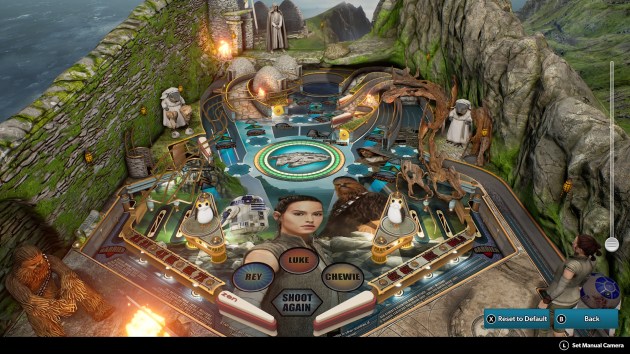

 Cathy: GOOD (3 out of 5)
 Adventure Land
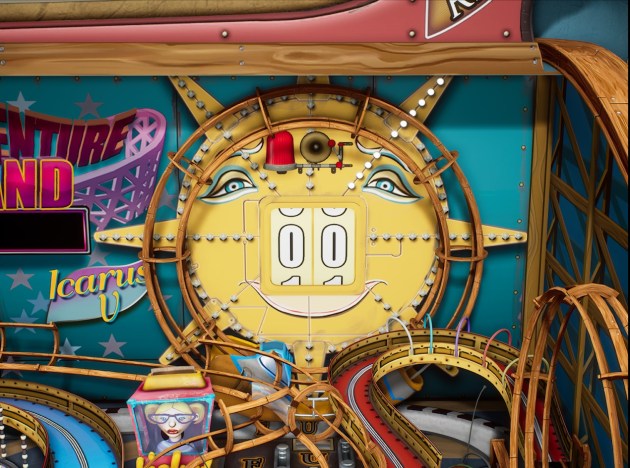
 Cathy:
 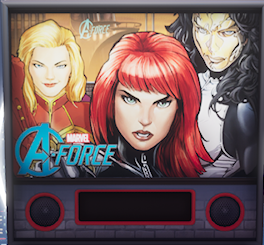 A-Force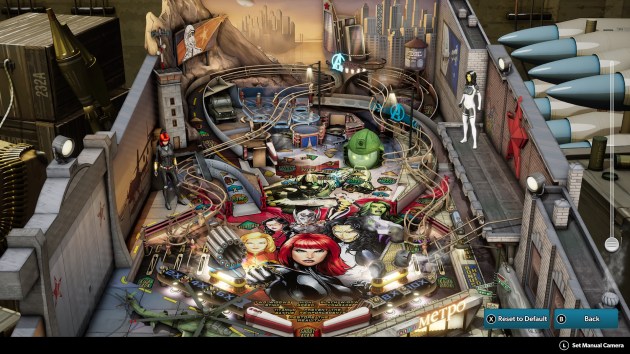

 Cathy:
  A Charlie Brown Christmas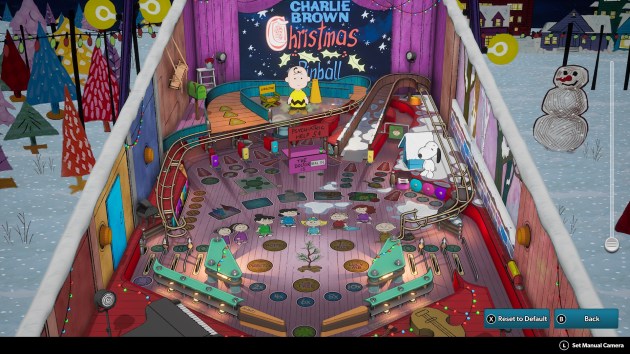

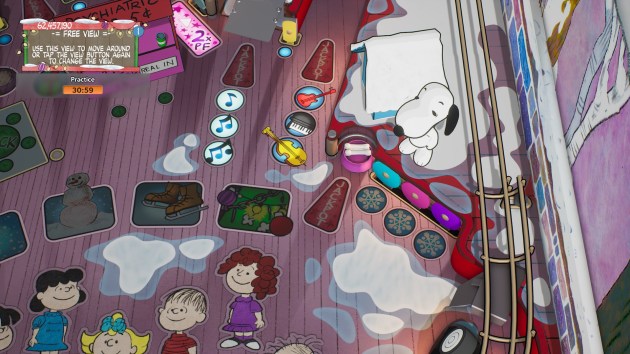
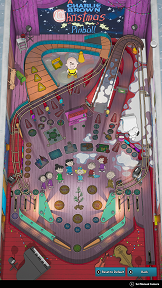 Cathy:


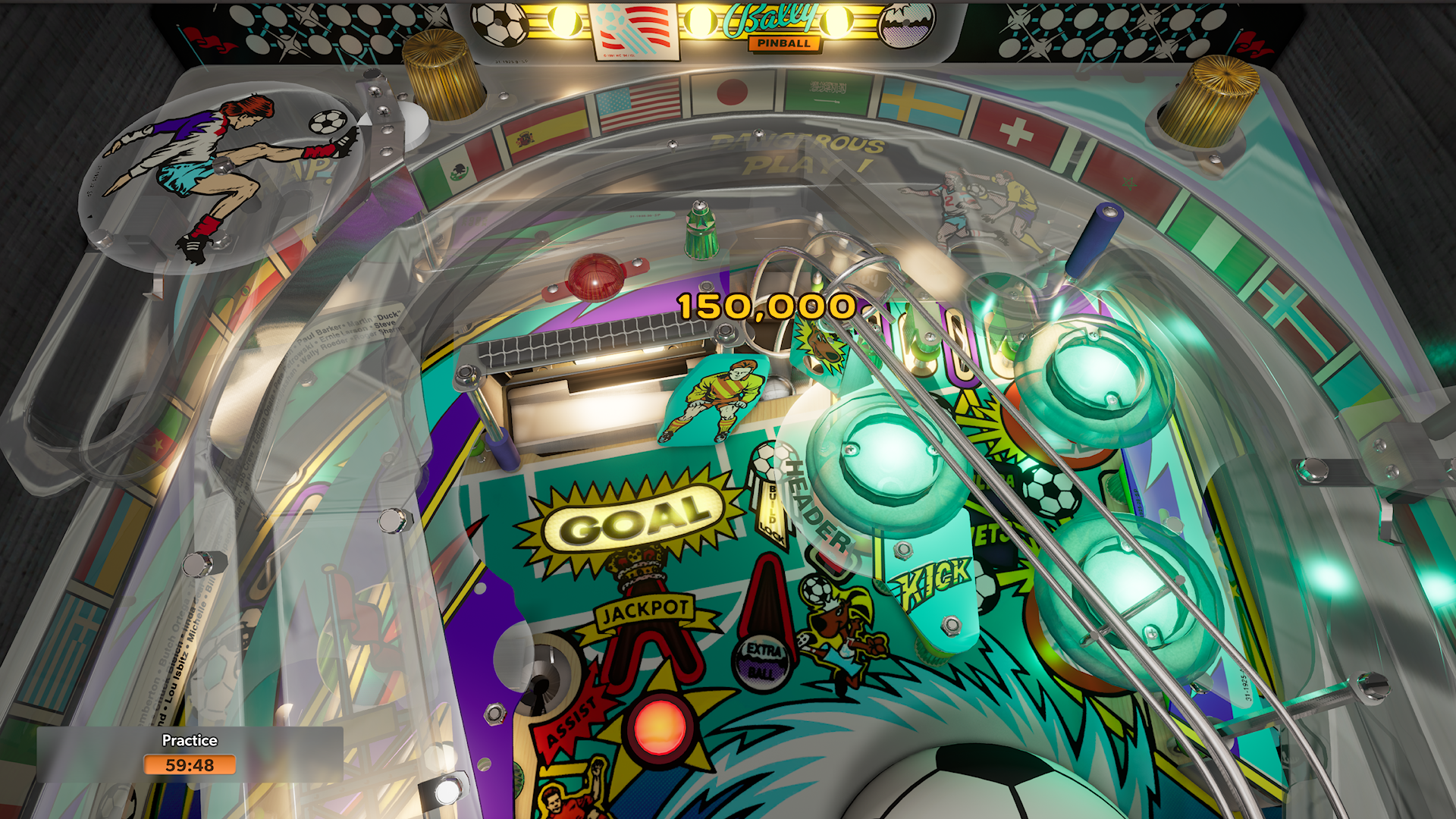

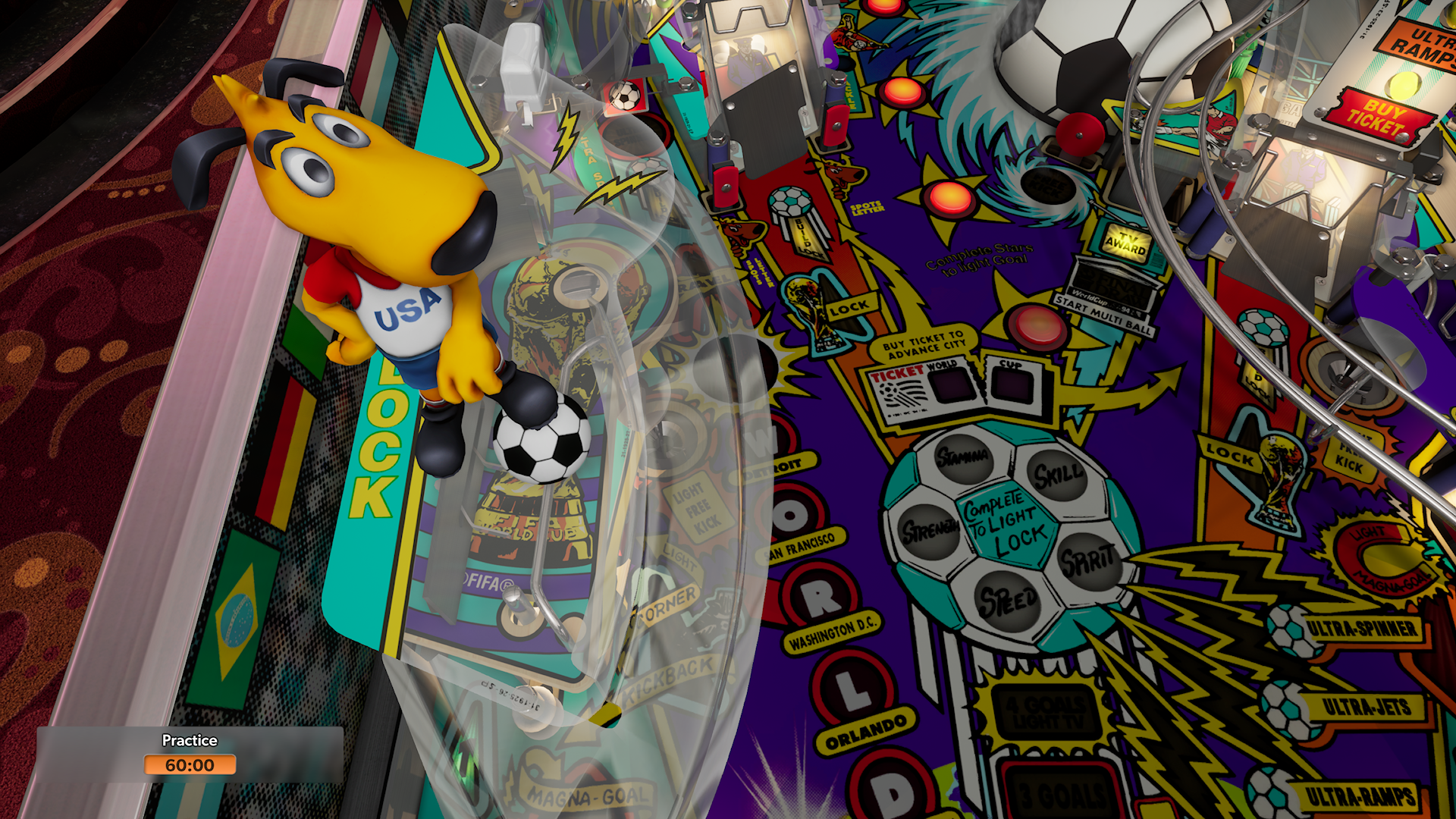
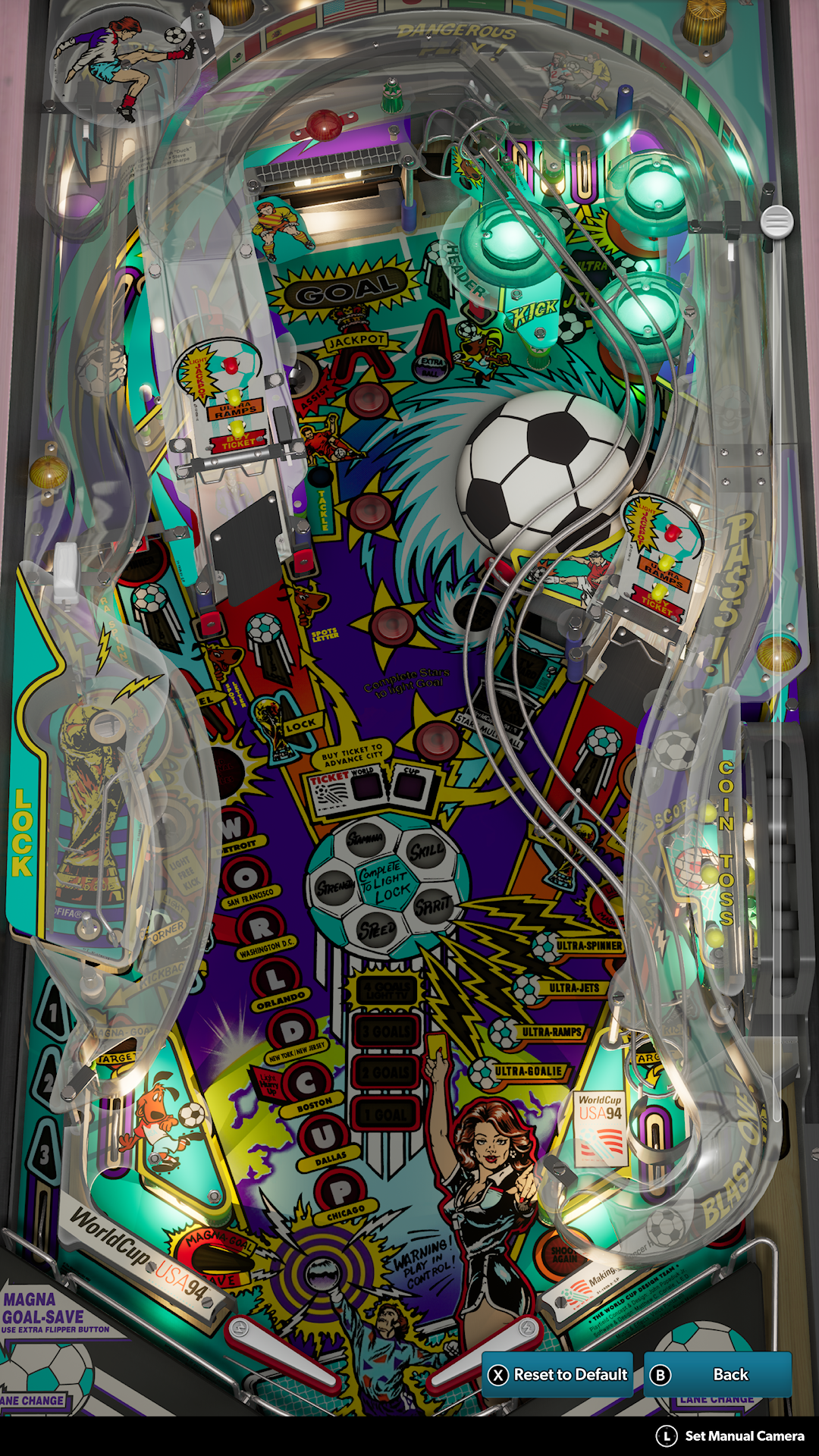


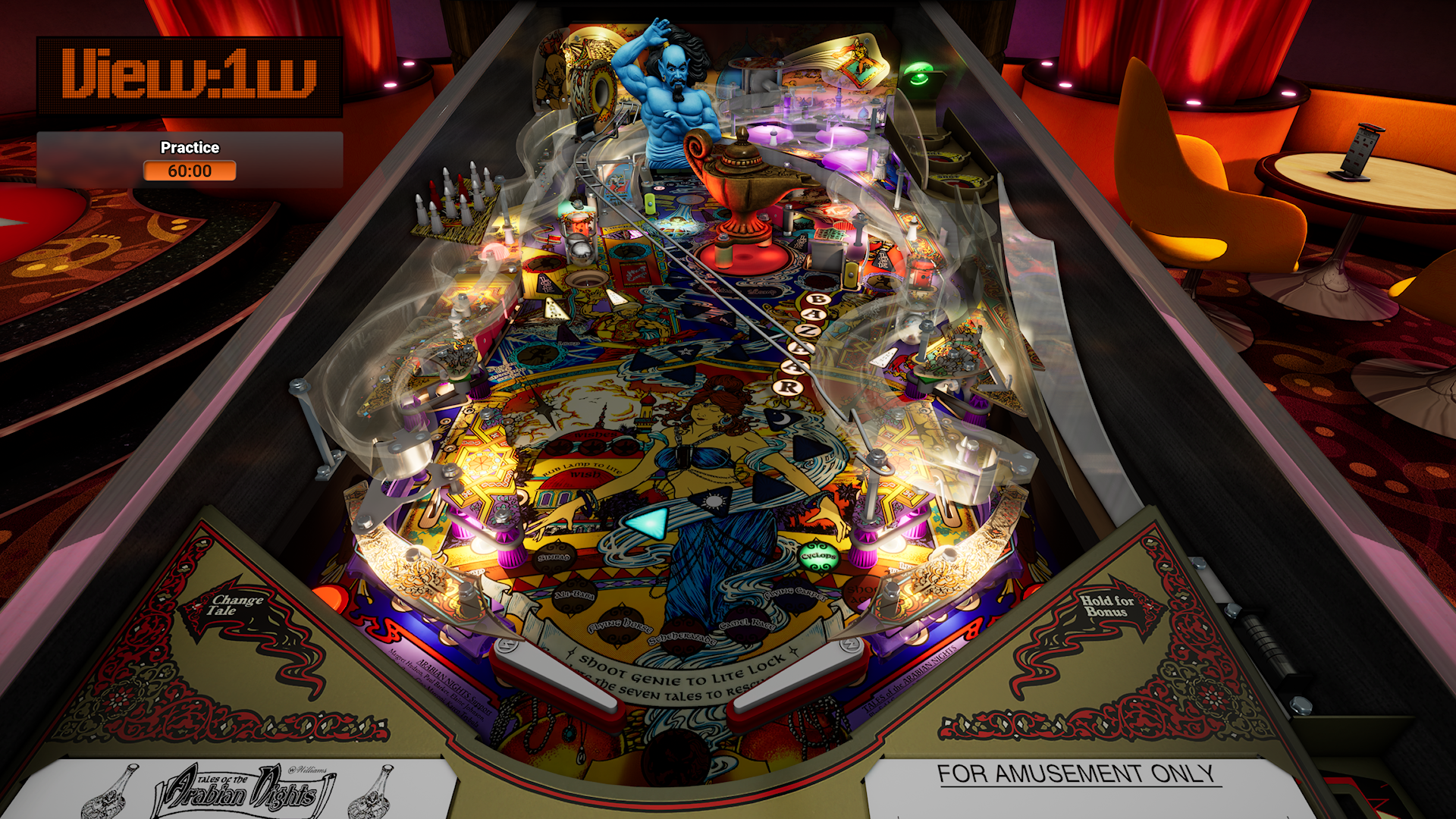

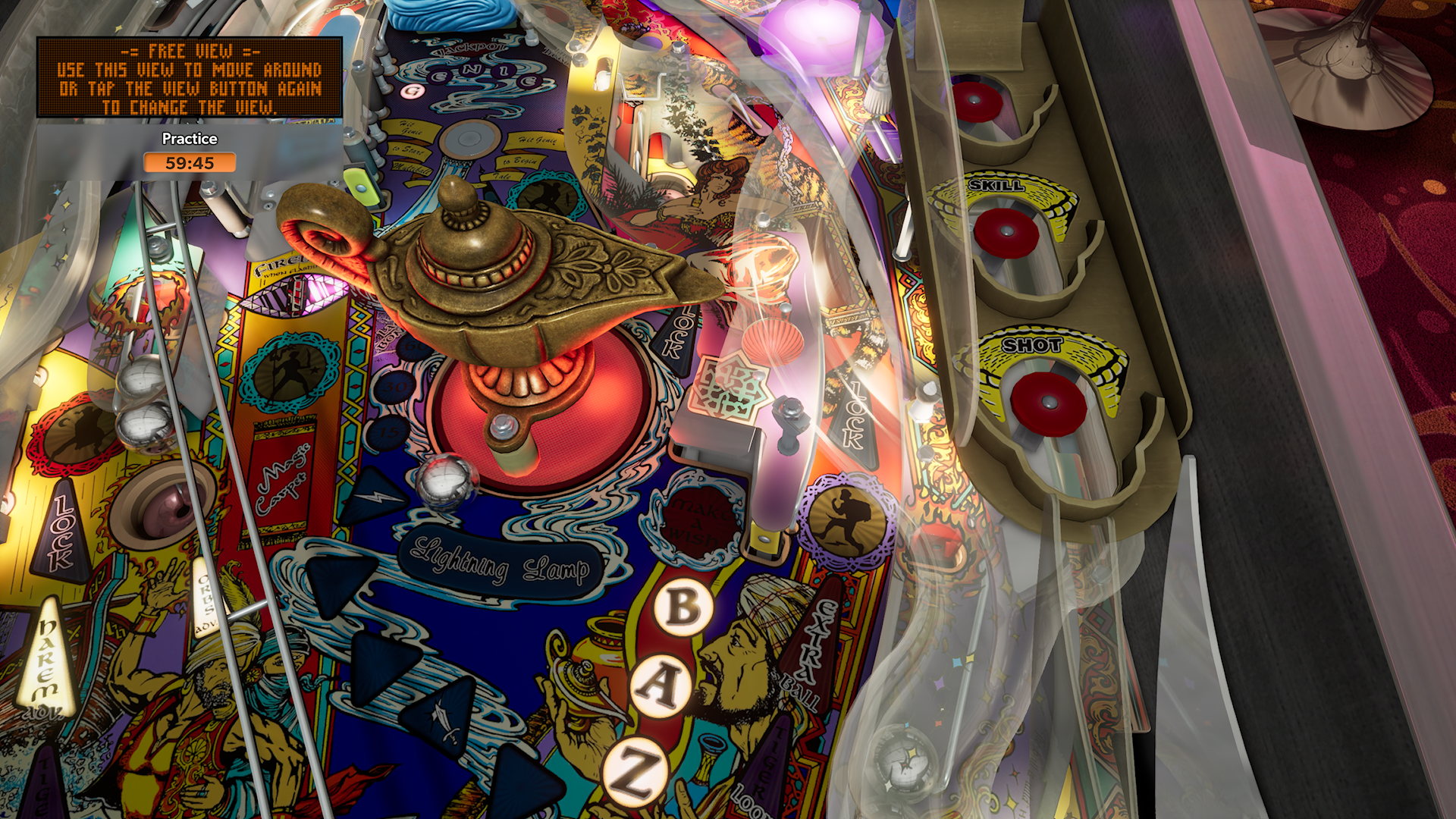

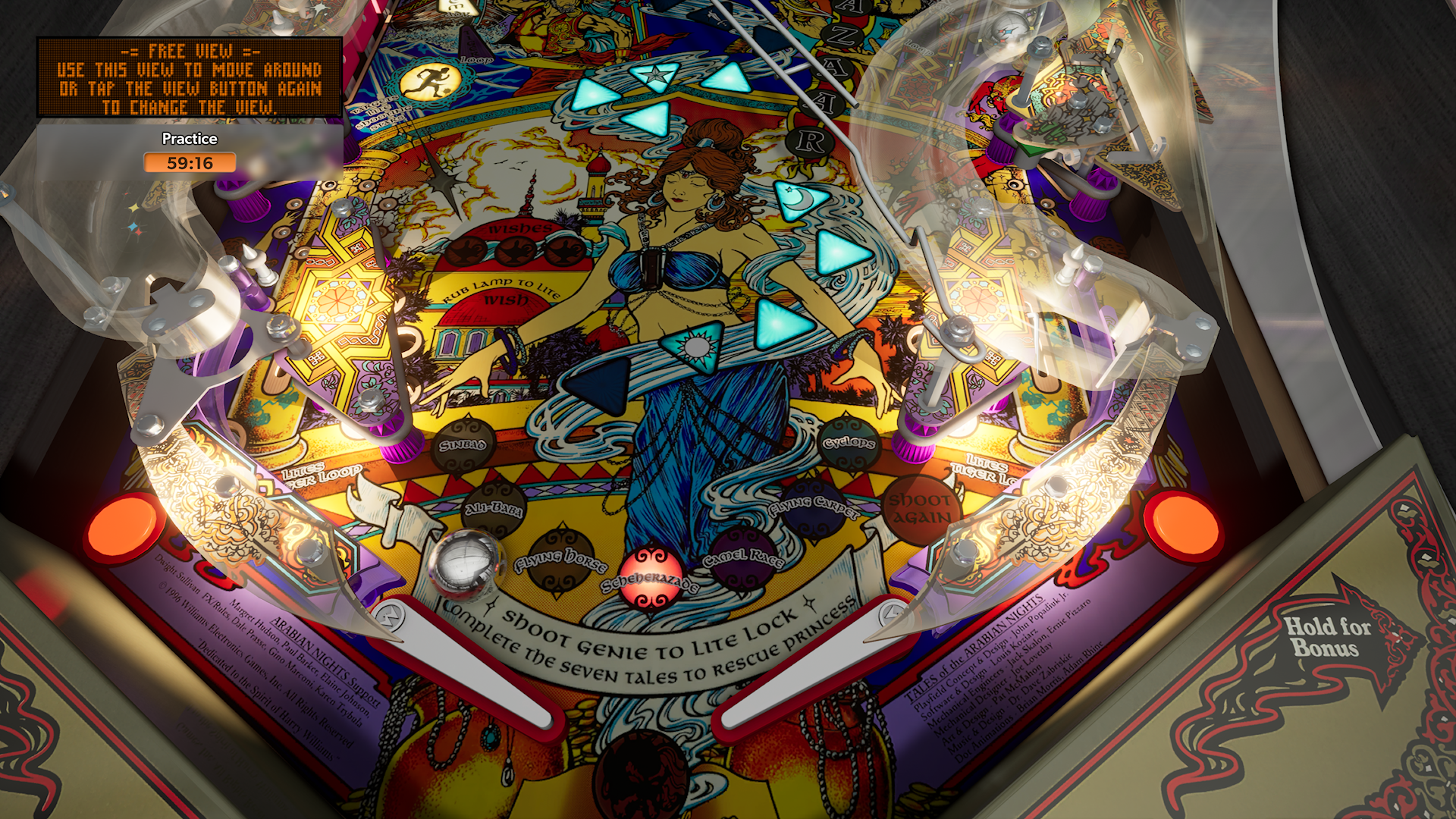
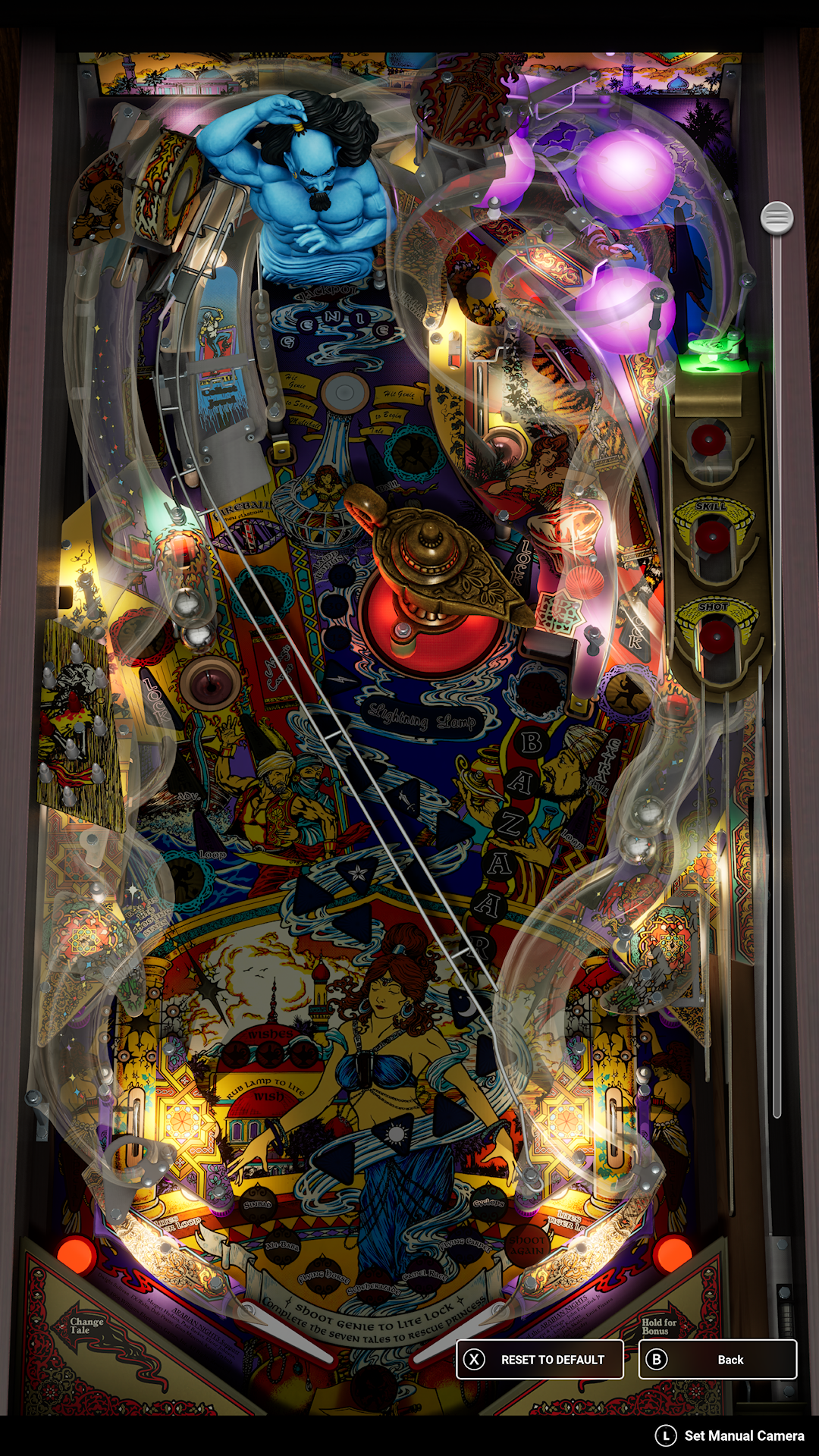



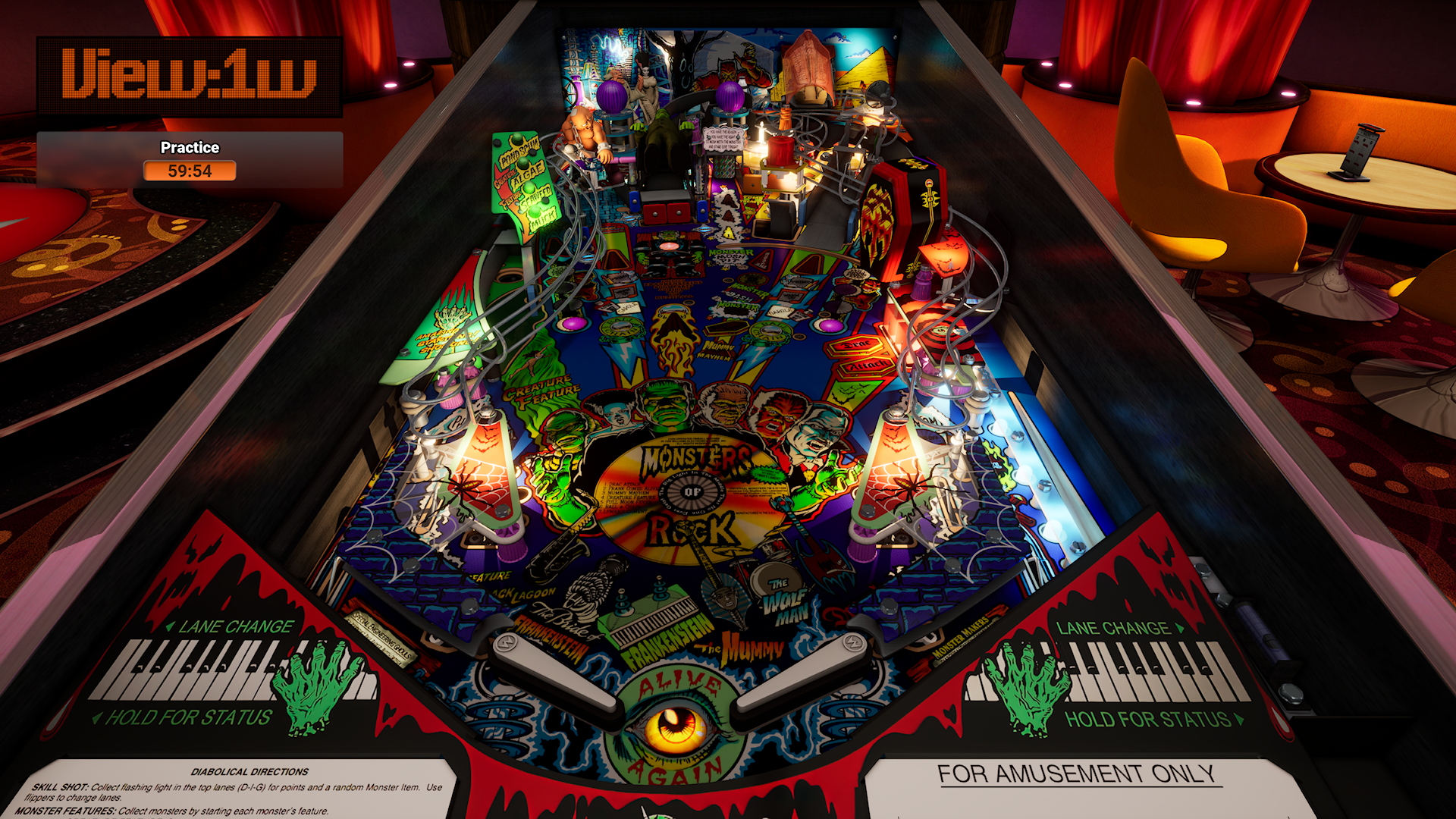


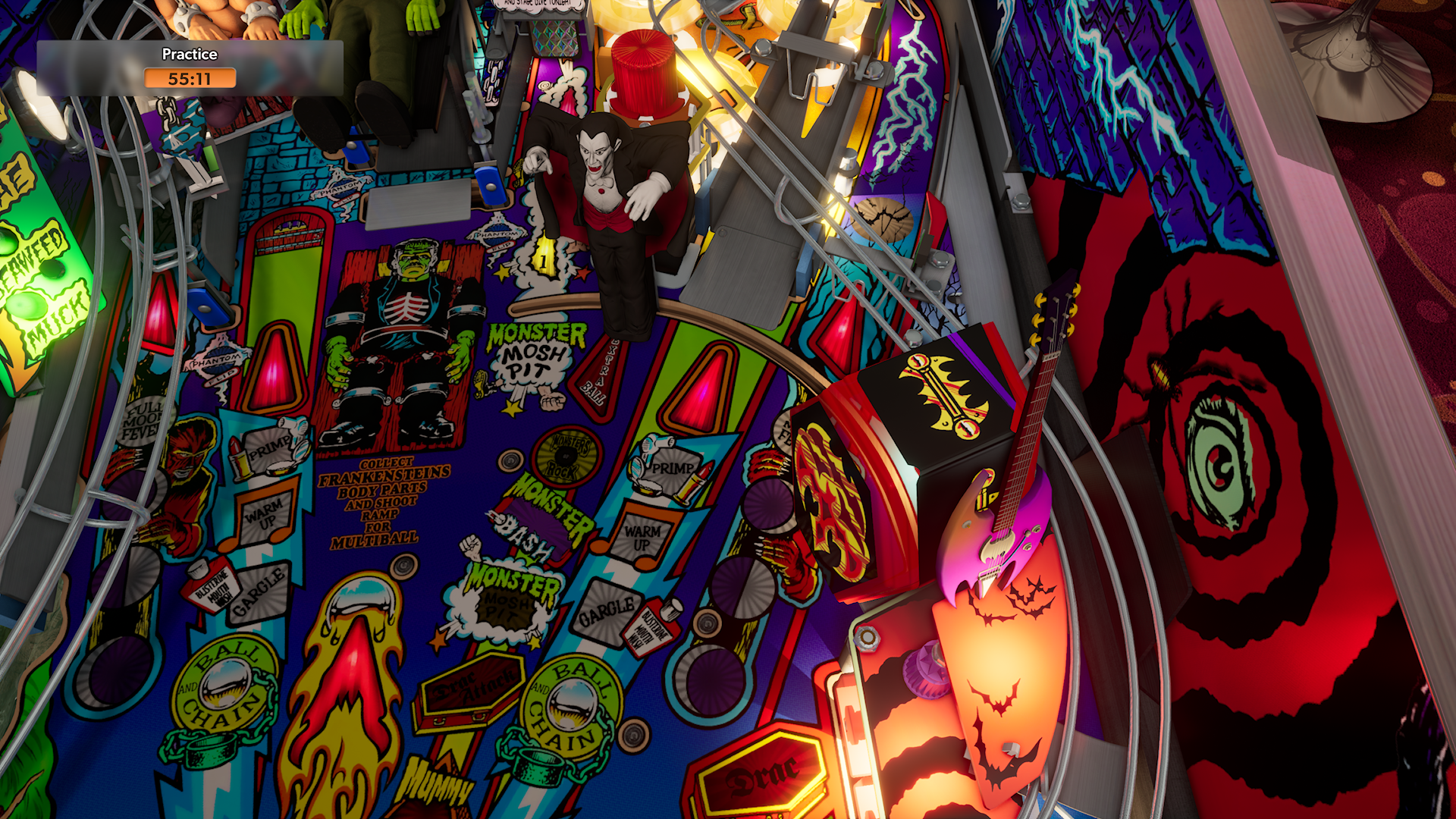


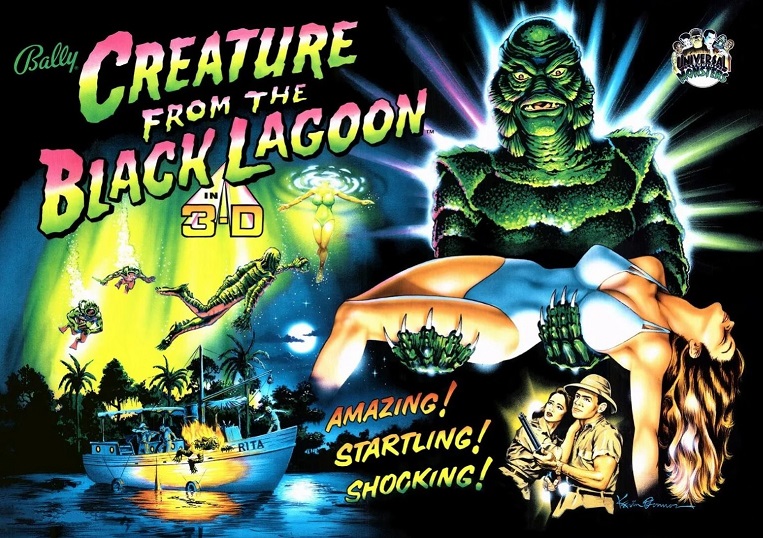


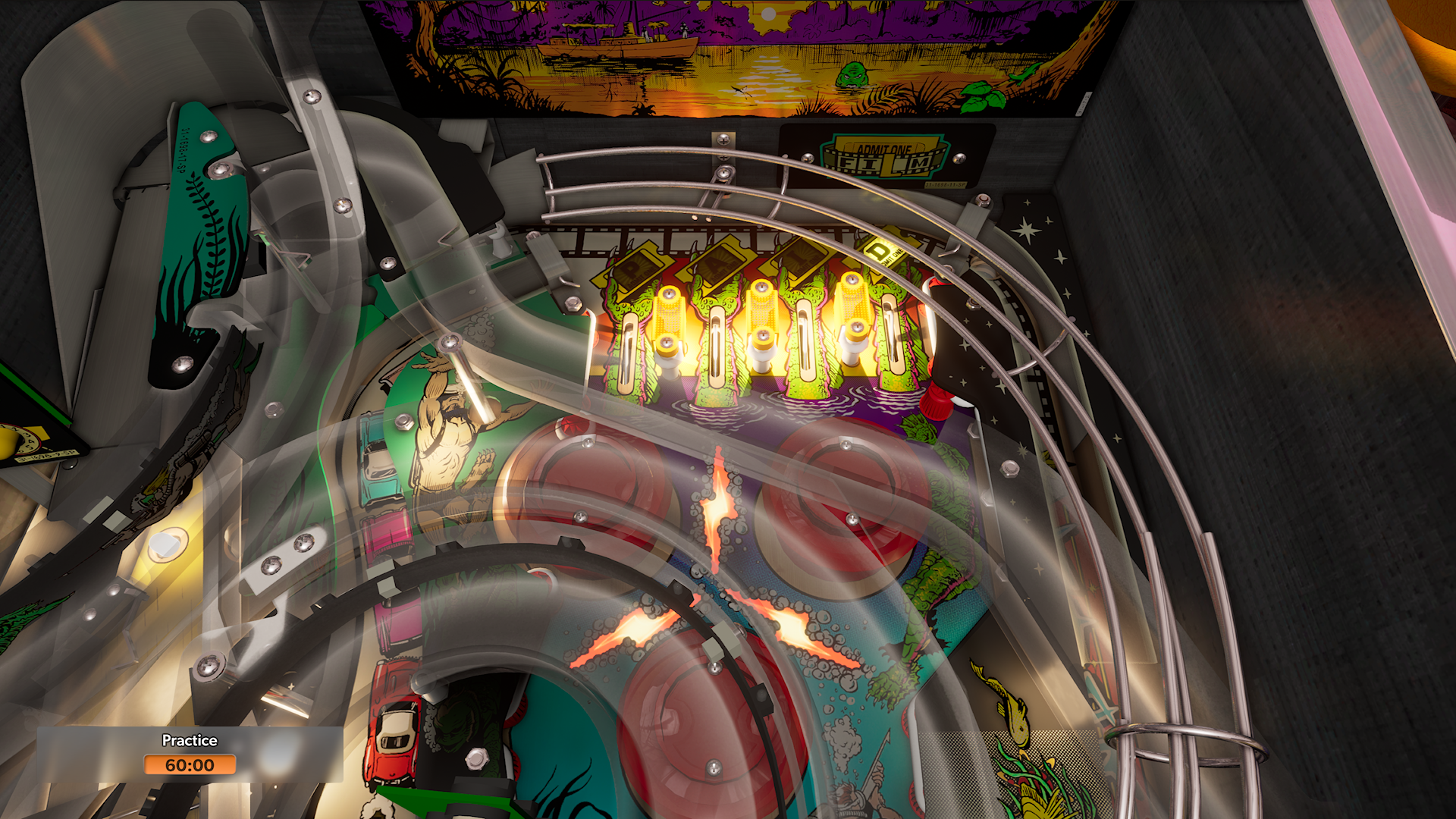

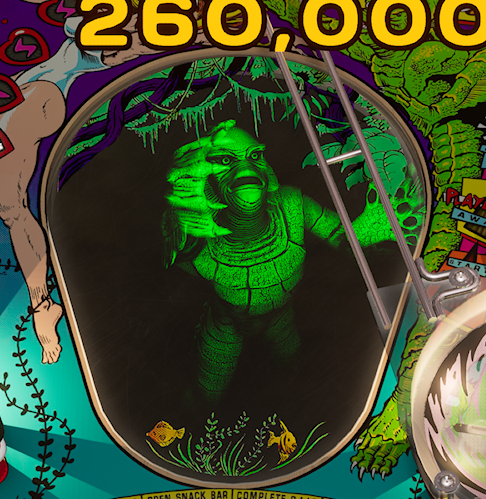


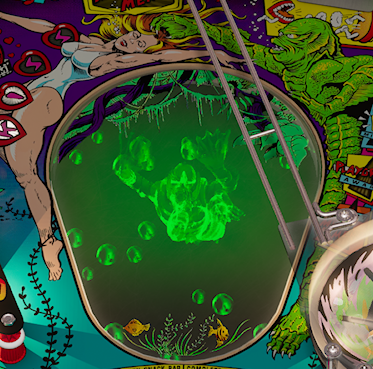

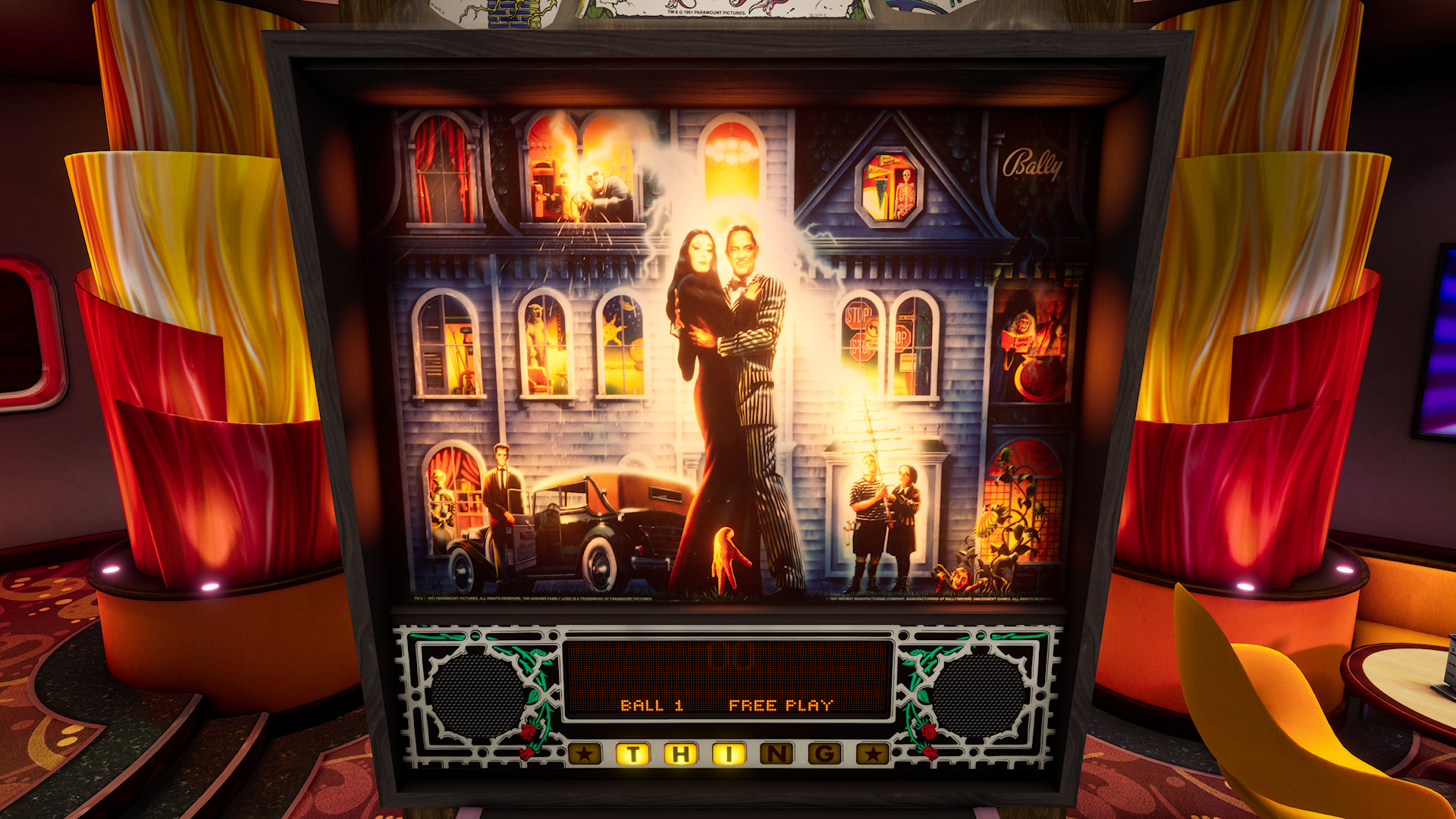


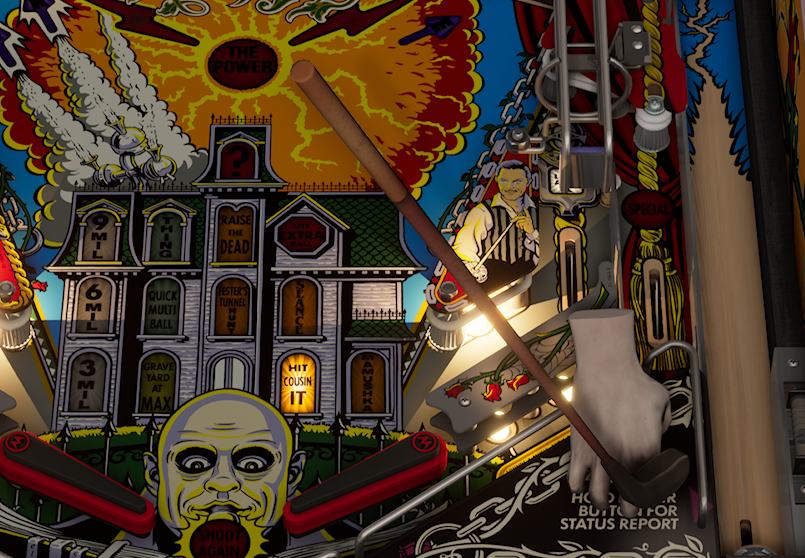


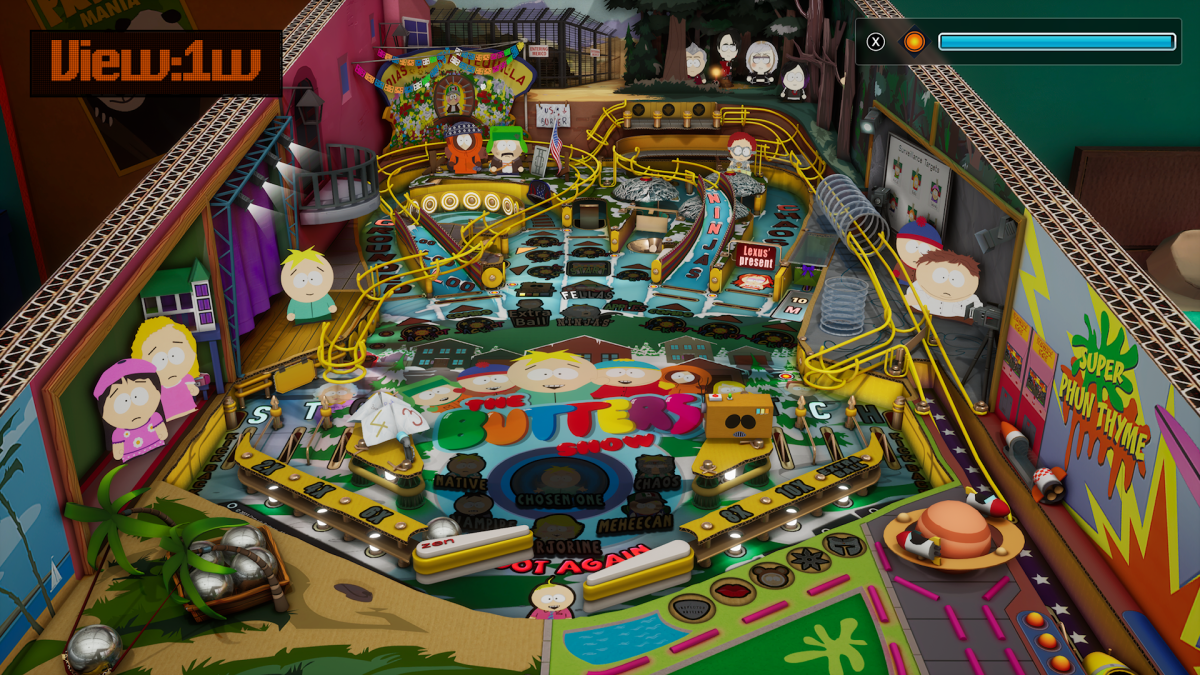
 South Park: Butters Very Own Pinball Game


 The Pinball Chick
You must be logged in to post a comment.