Grimm Tales First Released February 16, 2023 Main Platform: Pinball FX Switch Platform: NOT RELEASED ON SWITCH Designed by Zoltan ’Pazo’ Pataki Stand Alone Release ($4.99)
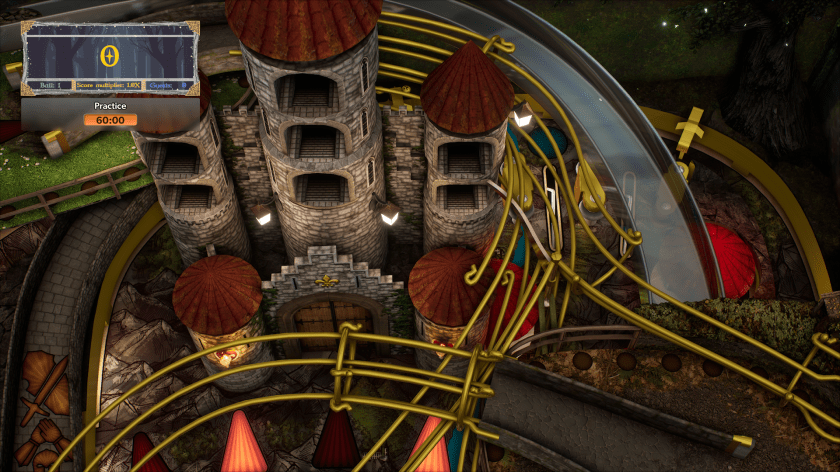
Okay, so using a gigantic castle placed in the center of a table isn’t exactly original. But don’t mistake this as a Medieval Madness wannabe. This is a fantastic original table.
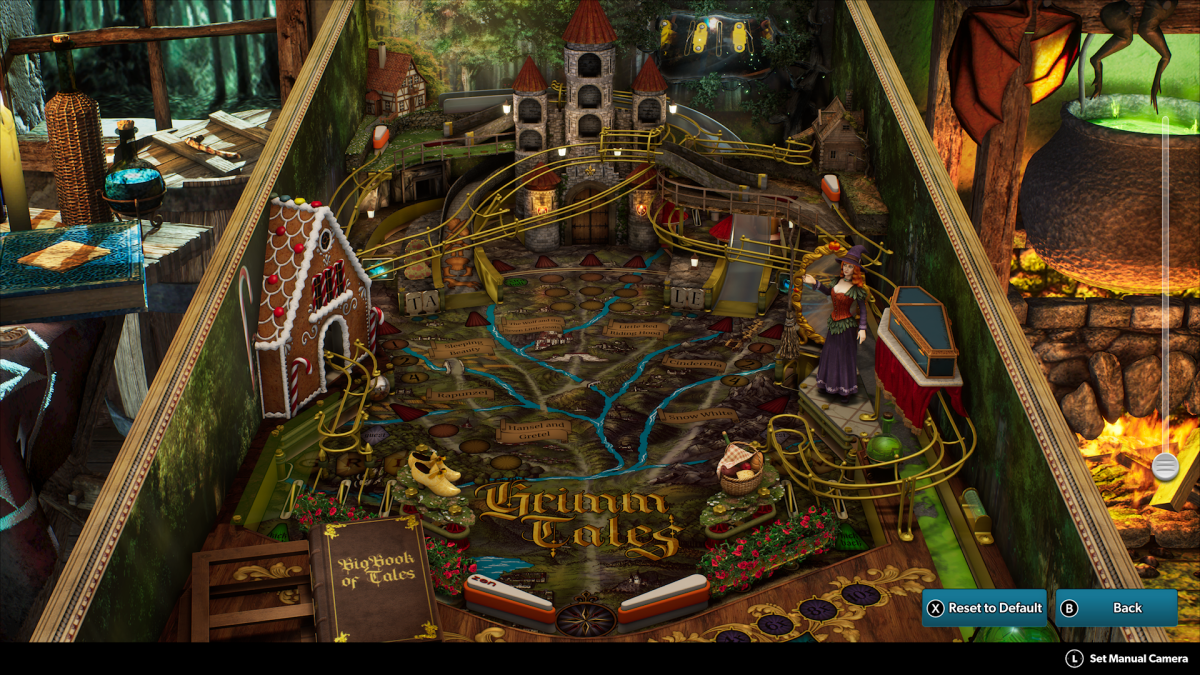
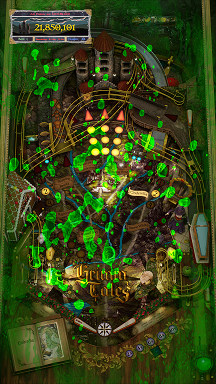
Think of Grimm as being the unholy offspring of Medieval Madness and Tales of the Arabian Nights. The layout borrows heavily from Medieval Madness, maybe a little too closely. Oscar really thought it was just a touch too derivative, and not just because of the castle. Both the left and right long orbits feel very close to MM’s side shots and are such a cinch to shoot and spoon-feed the bumpers that tying a multiball just to them he thinks might have been foolish. I don’t disagree with him about the layout, either, but there’s plenty of effort to make it feel different as well. The ultra-steep damsel ramp has no evil twin in Grimm Tales. Instead, the game utilizes two very tough but fairly well-done toe shots for the gingerbread house (which lights modes) and Magic Mirror. The castle includes new angles as well, including a deceptively tricky “sneak around the back” shot that’s actually the REAL driver of the table, acting as both the mode start and extra ball shot. This is a table that has a lot of very fun shots, and while the ramps share similar placement as Madness, they don’t feel like the ramps on that table. The flow load is completely different.
Signature Shots – The Castle: Grimm Tales’ castle is four shots in one. The table’s driver is in a tiny orbit just left of the castle, and is also the extra ball shot. The gate switches which mode is lit and is always the final shot to end any mode. The two gatehouses act as ball locks for Crystal Multiball and might be too easy to hit, but there’s an inspired twist to that. The locks are still active when you actually start the multiball, and NOT locking a ball doubles the value of jackpots, adding a layer to ball management that we all thought was very clever. That was the part that sealed Sasha’s MASTERPIECEvote when she couldn’t decide which way she was going.One of the “ANGRY MODE” effects. You’re lucky if you get this one.
The Tales of the Arabian Nights DNA is in the modes. Each mode is based on a fairy tale instead of an Arabian Night, but they’re all relatively short. So short that it’s kind of surprising for a Zen table. Plus, most of the modes are actually a lot of fun. The problem is not every angle is. The “grandmother’s house” bat flipper pathways are maddening to shoot (see the caption below), and the Snow White mode uses the bumpers, which are overvalued in a table with THIS easy of access to them. The easiest extra ball to light is done by juicing the end of ball bonus to past 10x. In our duel, not a single Vice missed that EB in any game. Otherwise, the modes are punchy and rewarding, along with a pair of multiballs that are quick to activate and can be used to finish the modes. I also like the concept of being able to charge-up the table’s score via T-A-L-E lights, which could potentially multiply your score by 2.4x the playfield values. Not after the ball, mind you. DURING PLAY! That’s bold.
Signature Mode – Little Red Riding Hood: as unlikely as it seems, this short little shot is the hardest in the game. Nobody could get a feel for it, but if you’re going to miss, miss late instead of early. Just under the path is a hidden Ritchie Loop that gives you another crack at the shot. Neat. Not neat, and in fact one of the most annoying features on the table, is that in the Little Red Riding Hood mode, the ball is held over the flipper for far too long. “Slow pitch softball” is what Oscar called it, and he HATED it. Cussed a blue streak every time. Angela said “I’m never teasing the dogs by holding the ball too long when we play fetch ever again.” None of us hated the shots. On their own, as part of the Crystal Multiball? They’re fine. Tough, but we like tough. The delay before serving the ball in the Red Riding Hood mode? Well, it didn’t cause Dad or me to drop our score by itself, but we were certainly thinking about it when we voted GREATinstead of MASTERPIECE. It’s so bad that it feels almost like a glitch left in the game. It happens on the lower shot too.
VUKs that aim for the tip of the flippers? Not so much bold as it is annoying, but at least the physics are good enough to be able to clock the throw and take control of the ball. Actually, this is one of the rare Pinball FX tables that doesn’t feel like it’s specifically trying to prevent ball control, which is why I think the Vices all liked it so much. I’d even say Grimm would make a great trainer table, except one thing: the table seemingly randomly enters “Angry Mode” that screws with the physics or visibility of the ball. One of the “curses” is having a very strong wind push the ball to the left. I’m almost never a fan of screwing with live balls using video game physics. There’s also a witch who flies over the playfield during multiball modes and it’s so distracting. Don’t let any of that turn you off of trying Grimm, though. It’s one of the best stand alone pins you can get for FX and easily worth the $4.99 asking price. There’s a LOT to like about this table, and for some of us, it does enough to reach elite status.
For me, it’s GREATbut just short of the upper echelon. Jordi and Dash were frustrated by the stop-and-go nature of the table and the distracting ANGRY MODE and photo-bombing witch, which are also the reasons I didn’t vote MASTERPIECE. Oscar didn’t because he thought it didn’t have any stand-out shots. It was two kids who really loved it, (but don’t mistake this for a kids table, as both Angela and Sasha are highly skilled pinballers). Sasha was just barely MASTERPIECE, almost agreeing with Oscar that the lack of transcendent shots hurt, but the shot selection and heavy emphasis on flexible strategy won her over. Meanwhile, Angela said Grimm Tales was second only to Battle of Mimban as her favorite Zen original. “Maybe there’s more balanced tables or tables with better shots, but Grimm is just fun. It’s everything I love about pinball and isn’t afraid to be silly. Originally I felt bad giving it MASTERPIECE, but if I had more fun with it than some tables where I did vote that way, why can’t I? It does offer everything pros love, too. Maybe not as well as other top tier pins, fine, so don’t play it for flow. Don’t play it as a test of your skills either, even though it offers that as well. Play it to remind you that pinball is a game and games are supposed to be fun!” Cathy: GREAT (4 out of 5)
Sasha the Kid: MASTERPIECE (5 out of 5) Angela: MASTERPIECE Oscar: GREAT Jordi: GOOD (3 out of 5) Dash: GOOD Scoring Average: 4.0 📜CERTIFIED EXCELLENT📜
Curse of the Mummy
Pinball FX Debuting Pin First Released February 16, 2023 Main Platform: Pinball FX Switch Platform: Not Yet Released Designed by Anna Lengyel & Peter Grafl Set: Zen Secrets & Shadows Pack ($14.99)
Links: Pinball FX Wiki
I kind of wish that Zen went all-out on original ideas like this one. I mean, it’s not ENTIRELY original. Hell, when I was a little kid, one of our computers had an Egyptian-themed pinball table that I always thought was part of the 3D Ultra Pinball line, but upon further research, I’m now almost certain it was called The Tomb. Anyway, more of this, Zen.
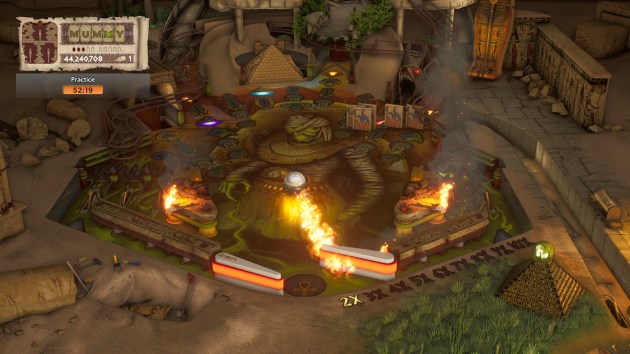
After years of developing tables based on classic Williams/Bally pins and licensed properties like Star Wars or Marvel, I find it comforting that Zen will still crank out generic themes that feel like something a lower-budget competitor would make. I’m not knocking that. I LOVE IT, because this lets them stretch their legs and come up with some inventive ideas using boilerplate themes. Curse of the Mummy hearkens back to a time when video pinball centered around tropes like Ancient Egypt or UFOs or Haunted Houses. The classics are classics for a reason. We originally had Cursed of the Mummy pegged as an instant-classic, but the VUK spitting the ball directly at the drain, and the waterfall that carries a ball down the drain? Yea, that became annoying, especially when you can’t really nudge to defend against it, and sometimes the VUK spits the ball out with just enough wobble to miss the flippers entirely and go right down the drink. Thankfully, following some patch work, they bandaged the table with an invisible ball save if the ball is bouncing around the bumpers or any other targets that hang directly above the drain. Using ball save to patch problematic design is the refuge of the desperate, but we’ll take it.
Signature Mode – Maze Blaze: A traditional light-chasing mode with a delightful twist. The inlanes have lit torches that ignite the ball, which you then use to light torches. To really sell it, the lighting changes to give the mode a darker, more foreboding tone. It’s WONDERFUL! The theme might be generic, but Anna Lengyel & Peter Grafl went all-out with it.
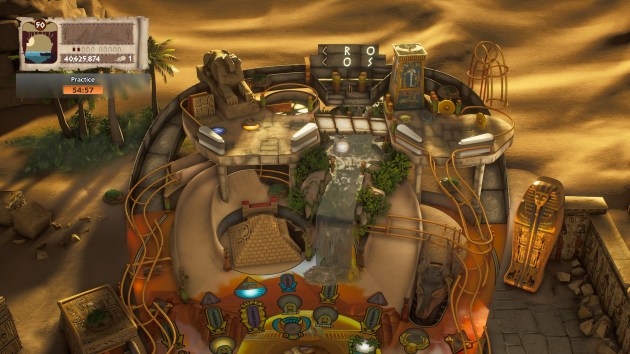
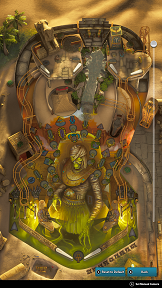
I really like the rest of the layout for Curse of the Mummy. A very classic design that has no driver, yet multiple thrilling shots. The Pyramid ramp that doubles as a jump-ramp AND a lock? Inspired. Both mini-tables in the upper corners have sharp, nail-biting angles on their shot selection, but they work really well too. Pretty much all the standard modes are fantastic. In addition to the great balls of fire in the above caption, there’s ones where a colony of scarabs flood the playfield and a couple modes that involve shooting clay tablets. Curse of the Mummy is also tailored especially well for multiball, which is a true rarity among tables that debuted in Pinball FX. It even has an old-fashioned video mode with a DMD display, even though Curse of the Mummy features an LCD scoreboard. It goes so far towards helping with the retro vibe. The funny thing is, Curse of the Mummy is packed with Pinball Noir, but that table doesn’t feel like a modern table with old fashioned sensibilities. Mummy does.
Signature Element – The Upper Playfield: Curse of the Mummy’s corners feature not one, not three, but TWO completely different mini-fields, both of which have a variety of shots. It’s insane how much action is squeezed into such a little space. They try this a lot in Pinball FX and Pinball M, often with disastrous results (see Star Trek: Discovery for an example of a mini-field gone horribly wrong). Curse of the Mummy’s mini-fields don’t feel like they fundamentally halt the table’s flow. The claustrophobic space works well with the monster theme, but it’s the transition from the mini-fields to the main playfield that makes these work. It’s pretty much instantaneous, making it feel like part of a greater whole instead of a completely different pinball-like thing growing out of the table like a tumor. Fantastic job!
There’s a second video mode where you have to catch falling balls of light that goes too long and it’s awful, but that’s really the table’s one and only stinker. There’s also typical Zen problems with grinding, but the shot selection is fun enough that it takes the edge off that. Post patch, the biggest complaint is probably just mild scoring imbalance issues, as some of the easier modes pay off too much compared to more difficult modes. There’s also almost no consideration for how much work goes into activating a mode in the scoring balance. But, that’s nit-picky, and Curse of the Mummy certainly isn’t guilty of anything that could be said about 90% of Zen’s work. A bigger question is “did the bandages they put on Curse of the Mummy to fix the house ball problem go too far?” Dad certainly thinks so. “You can deliberately let the ball drain off the waterfall and/or bumpers in order to get a more playable ball from the left VUK.” He’s not wrong, but at the same time, he admits that’s better than burning all your tilt warnings on a common ball path. The whole ball save thing didn’t bother me at all. I’m all for doing whatever it takes to make tables fair. Curse of the Mummy is proof that it’s a good thing, because the table was pretty mediocre before the patch. Now, we’re giving it an award. The irony that bandages helped a mummy-themed table isn’t lost on me. Cathy: GREAT (4 out of 5) Angela: GREAT Oscar: GOOD (3 out of 5) Jordi: GREAT
Sasha: GREAT
Overall Scoring Average: 3.8 📜CERTIFIED EXCELLENT📜
Some review copies were provided in this review, others were paid for.
Brothers in Arms: Win the War
Pinball FX Debuting Pin First Released February 16, 2023 Main Platform: Pinball FX Switch Platform: Pinball FX Designed by Thomas Crofts Set: Gearbox Pinball ($14.99)
The first time I heard about this table, I remember thinking “Brothers in Arms? Why the hell would they go to gaming’s graveyard and dig this license up?” Now that I’ve played it, I.. feel exactly the same way. Brothers in Arms? REALLY? Why even bother with the license? Just make a generic war-themed table that you don’t have to pay the royalty for! I get that Gearbox doesn’t have a ton of options to choose from in order to pad the set’s table count, but is anyone really nostalgic for the further two-fisted adventures of Matt Baker, only this time, it’s pinball?! What they should have done is two completely different Borderlands pins. The one we reviewed already, and one that’s actually fun.
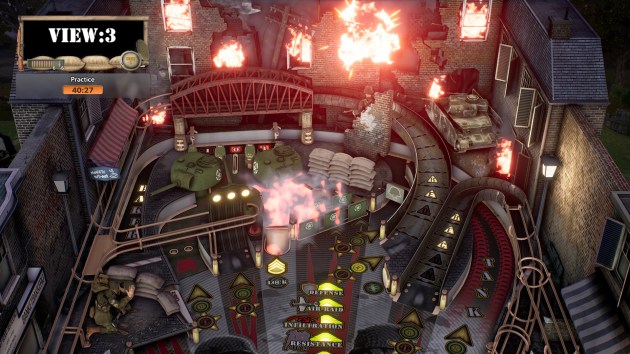
Do you know what Brothers in Arms’ problem is? Well, besides the fact that everyone at Zen Studios should be charged with desecration of a corpse for taking THIS license? Brothers in Arms is a pinball version of a gritty war first person shooter. So, why’s there no grit to it? Look at the best war pinball game ever: Battle of Mimban. It looks ramshackle, like a rickety barracks thrown together in fifteen minutes that’s expected to collapse from the elements not long after they pack their bags and leave. It’s just a facade: that table has elegant target placement and a nice zip to the ramps, but it feels gritty. Then you have Brothers in Arms, and it looks like.. well, any other generic pinball table. Could be any theme, really! War is ugly, and cold, and raw. Brothers in Arms doesn’t capture that at all. It looks like a propaganda poster, and that’s certainly one way of going about it. But even when the table adds things like explosion effects or rainfall or fires, it just looks too clean cut. Everyone says I don’t focus enough on theme integration. Here, the failures of using the theme stand out. I’m just too spoiled by Mimban.
Signature Shot(s) – Mode Start: The old school layout of Brothers in Arms is punctuated with a cluster of drop targets protecting the mode start hole. These targets also become stationary for some of the modes. Sometimes the target cluster concept works. I don’t think this quite pulls it off. Like every other element on Brothers in Arms, it’s efficient. It gets the job done. And there’s nothing exciting about it.
Otherwise, Brothers in Arms is a genuinely solid table with a nice layout and variety of solid but unremarkable shots. The biggest problem is there’s no truly memorable elements to Brothers in Arms. The modes in Win the War are “mid” as the kids say. The ones that use multiball all feel samey, but at least they don’t have a timer. By far the best mode is infiltration, where you have to hit an orbit to sneak into a base, and if you miss, it alerts the Germans, AND THEN the timer starts, but you can turn off by hitting the mode start. I liked that one a lot more than the spam-multiball stuff. I suppose those technically fit the theme, but it happens too much and becomes mundane. Besides, this is NOT a table situated for multiball. The outlanes are too bloodthirsty, and the slingshots are their Renfield (I was saving that line for Bram Stoker’s Dracula but I’m not holding my breath for that one coming anytime soon). The kickbacks are often completely worthless. I lost count of how many times the left outlane threw the ball directly at the right outlane. When you devalue kickbacks, Zen designers, you’re only turning table features into busy work for no reason. The table has nothing to gain from this. That’s not a challenge. That’s not difficulty. It’s just a coin flip, over and done so fast that it’s not exciting for the player. It just ruins the fun of the table. YOUR table. Knock it off.
Signature Mode – Air Raid: Air Raid mode is terrible. How about adding time to the clock when you make a shot? Some of those shots you have to make take the ball to the bumpers, where they bounce around as the clock is ticking. And the mode isn’t even over when you DO make the three shots. You have to do it again because of the tried and true mentality of “why be three shots when it can be six? Why six when it can be eighteen?” Yes, EIGHTEEN shots in a single mode: six with a single ball, twelve multiball, all while the table shakes in regular intervals. By the way, the answer to those questions is and always has been “because it becomes boring.”
I initially had Brothers in Arms rated GREAT, but I think that was just excitement for a new table that wasn’t a trash fire. Now, eh, I think it’s just barely okay. This is a table with shot selection that feels like it would be a shoe-in for a Certificate of Excellence, and instead it’s struggling to keep its head above the water. Dad REALLY likes it. He loves the bat flippers and the loot drops, though even he concedes that Zen’s kickbacks throwing the balls down the drain is so tiring at this point. The best thing I can say about Brothers in Arms is, despite the flaws, you don’t need to be a fan of the franchise to enjoy the pinball table. That’s normally an underrated achievement, but it means nothing here because this is a generic World War II-themed pin based on a generic World War II-themed game franchise. Actually, I was wrong when I said A Samurai’s Vengeance was Zen’s version of a Zaccaria pin. No, THIS is that table, right down to snatching the license to the washed-up gaming franchise. And by the way, there’s nothing wrong with that. It’s pinball! If you can’t cement your tongue firmly in your cheek with this, I don’t want a part of it. The problem is, you can’t try to make THIS style of shooter’s pinball table when your only goal as a designer is apparently making it hard to control the ball above all else. It just becomes a lot less fun than it should be. If Goat Simulator is any indication, Mr. Crofts finally figured that out, but a little too late for Brothers in Arms. Cathy: GOOD (3 out of 5) Angela: GOOD Oscar: GREAT (4 out of 5) Jordi: GOOD
Sasha: GOOD
Overall Scoring Average: 3.2 🧹CLEAN SCORECARD🧹 Some review copies were provided in this review, others were paid for.
Boba Fett First Released February 27, 2013 Main Platform: Pinball FX Switch Platform: Star Wars Pinball Designed by Zoltan Vari Set: Star Wars Pinball Collection 1 ($23.99)
Links: Strategy Guides – Pinball FX Wiki
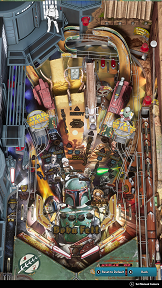
I have no idea how anyone has fun with this thing. Right now, my best theory is it just looks like it’s going to be fun, and maybe even historically fun. Even though I already know Boba Fett is one of the worst tables in Pinball FX, every single time I see a screenshot, for just a brief second, my brain says “damn, that looks really fun.” It’s an actual succubi that lures you in and then eats you alive. There’s never been a table that looks as good as Boba Fett that plays as bad as Boba Fett.
Boba Fett is one of two Pinball FX tables that plays so incredibly, unfathomably poorly that you’d swear it was a different company besides Zen Studios that produced it. It always leaves me dumbfounded when this table shows up on anyone’s “best of” list. It’s like we’re playing completely different tables. First off, the slope feels too steep, and so the table runs very fast. The around-the-world orbits dive-bomb into the drain like they’ve lost their will to live. It doesn’t help that the table is a total brick-layer. The ball feels like it has a wobble, making already tough shots that much tougher since the ball can’t complete them. The ramps are the most incredibly rejection-heavy of any older pin, especially the two corner ramps. I’ve had flush, full-power shots still eat a rejection. For a table with a ball speed permanently stuck on HOLY SH*T, it sure takes forever for a ball to return off one of those rejections, too. It’s like space time itself folds around the top of the table to add three times the visible length. It’s Star Wars so I suppose you can’t rule this out.
Signature Shot – Ball Lock: In order to start Mandalorian Multiball, you have to turn off Boba Fett and boot-up the much better table Mandalorian. No wait, actually you have to get his ship, Slave I, to land on the board then lock one ball at a time three times. This and the teeter-totter shot that’s a fixture on the playfield are Boba Fett’s only good shots. See, I’m not a total hater. Of course, the multiball that happens when you lock all three balls sucks, because this table isn’t made to play multiball. Hell, I’m not sure it was made to play one ball.
Honestly, I think there’s something wrong with the physics of Boba Fett, because these are easily the worst ramps among legacy tables in Pinball FX. There’s just no consistency to them, and the ball speed just feels incorrect in general. Passes I can easily make on other tables I can’t here. As for the central orbits, they might as well be ramps since a giant chasm cuts through the top of the table that your ball can easily fall into. The slings are violent, tilted to an absurd angle, and feature hair triggers. There’s some neat ideas here, like the “choose your difficulty” Bounty system. I just wish it were on a better table. What’s here was enough newest Vice Family member Sasha and honorary Vice Jordi to keep Boba Fett out of the cellar (and actually both are in agreement that Boba Fett isn’t THAT bad and if the slingshots were fixed, this layout might earn from them a mild GOOD). As for the rest of the Vices, it was between this, Classic Collectables, and Han Solo for worst Star Wars table. It took me a long time to get here (I used to have this table rated BAD), but I actually now think this has emerged as the Star Wars table I want to play the least. Not the worst, mind you. That’s undoubtedly, undeniably, unequivocally Han Solo. But at least I’ll have fun laughing with my family. Boba Fett is all brutality and no charm. Just a terrible, no good, very bad table. And now that I’ve finished this review and never have to play it again, I can finally close the book on Boba Fett. See, I did a thing there. I’m sure you got it. Cathy: THE PITS (1 out of 5) Angela: THE PITS Oscar: THE PITS Jordi: BAD (2 out of 5)
Sasha: BAD
Elias: THE PITS (Star Wars Pinball)
Overall Scoring Average: 1.3* 💩CERTIFIED TURD💩
Primary Scoring Average: 1.4 💩CERTIFIED TURD💩
Star Wars Pinball Scoring Average: 1.4 💩CERTIFIED TURD💩
*Nintendo Switch version is, more or less, identical to all other platforms.
Some review copies were provided in this review, others were paid for.
Blade First Released December 8, 2010 Main Platform: Pinball FX Switch Platform: Pinball FX Designed by Imre “Emeric” Szigeti Set: Marvel Pinball Collection 1 ($23.99)
Links: Strategy Guide – Pinball FX Wiki
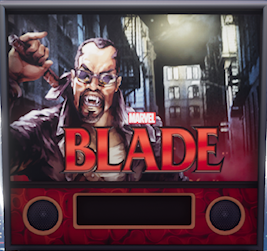
Oddly enough, only a handful of the Marvel pins actually attempt to feel like they’re tied to comic books. You’d think Blade would be one of those that didn’t, but it’s really second only to Spider-Man in creating that comic-like energy using fonts and key art. We really like how this looks.
Blade does two things really well. First, it’s a pretty good tribute to early-to-mid 90s William/Bally tables. A clean, simple layout that flows really nice. Second, as stated above, this is a no doubt about it COMIC BOOK pin in the same way that Ed Kryinski’s Incredible Hulk (1979 Gottlieb) and Amazing Spider-Man (1980 Gottlieb) were. Blade isn’t anywhere near as good as Zen’s take on Spidey, but it’s a damn good table. Modes zip right on by after a couple shots, instead of the typical Zen grind. A novel monetary system allows you to buy a variety of upgrades, like kickbacks and extended ball save for the cowardly, or high-yielding scoring opportunities. Oh, and this could have easily been Castlevania II: Simon’s Quest Pinball. The table shifts from day to night and back again, with modes and bonuses exclusive to each. This could have come across as gimmicky, but it actually does work thanks to balancing what is and isn’t available during each cycle.
Signature Feature – Day/Night Cycles: All the missions (main modes) must be done during night by shooting the Lawlor Trail between the flippers, which is a shockingly tough shot. Night also has some of the best hurry-ups in Pinball FX, where you have to shoot specific lanes to slay vampires for money. The shop where you spend that money is only open during the day, along with the path to the valuable items. Our main knock with the day/night concept is that the clock for it is on the left slingshot. It would have been really great to have a separate ticking clock somewhere. Make it optional if people are afraid about ruining the purity of the visuals.
Blade’s layout looks conservative, but actually, it’s one of the more elegant and deceptively complex shooters we’ve seen from Zen. And that’s just the layout! The rules are very ambitious, with RPG-like mechanics such as stamina, money, upgrades, and collecting items. You build your Stamina (and avoid shots that drain it) so that you get more time to complete the modes. If there’s a problem with Blade, it’s that it’s the rare Zen table that doesn’t quite have enough shots. What shots are here are perfectly fine, but it can wear thin in extended play. It’s also very conservative in scoring, but without any of the balance that type of scoresheet requires. It makes Blade a table where shooting combos is just as exciting as making jackpots, which might not necessarily be a good thing because it means excitement doesn’t build. It’s incidental, and that’s before I get to an absurdly overpowered scoring device so wildly imbalanced that it broke my father and has me cracking up. It’s a whole new level of badly balanced.
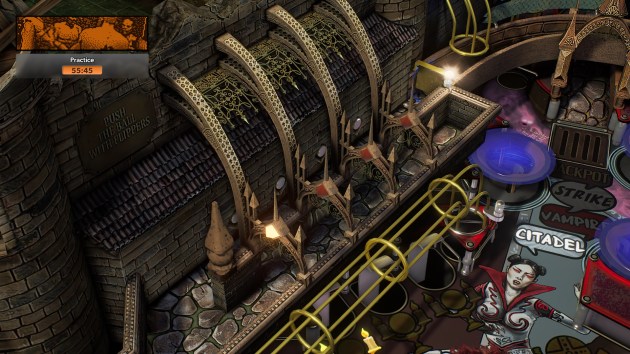
Signature Element – Citadel: This mini-table is where you collect the items. This is one of those kinds where you have to poke the ball off the correct rail. It’s the second one from the bottom that you want to light (which is done via the spinner), though it’s also that item which completely throws Blade’s scoring balance out of whack. You’ll see why..
During a day cycle, the path between the flippers will take you to the Citadel instead of the mode start. Trust me, you’ll want to go here first. There’s four total items. One adds 100 points to every score, which is basically worthless. One cuts the cost of items in half, while one cuts the amount of mode start targets you need to hit in half. Those two are good ideas. The fourth and final item, Azu’s Belt, doubles all scoring permanently. Wow. Yea, that’s insane and I have no way to spin that where it makes any sense. It badly hurts Blade’s flexibility, because the only logical strategy to start the game is work towards getting the belt as soon as possible. I don’t think it’s a deal breaker, but it does sting quite a bit. While I think this does a better job than most at ambitious RPG-like gameplay, I kinda wish they’d just stuck with the old school gameplay with new-school surroundings layout. It’s one of my favorite designs, but Blade throws a lot at you and the results are more mixed than a table that shoots this well should be. Special Consideration – Nintendo Switch: On Switch, Blade has orbits aimed straight at the drain, which doesn’t happen in the Primary Pinball FX builds. They need to fix this, since you need to hit those shots sometimes. Until then, we consider the Switch version to be ⚠OUT OF ORDER⚠ Cathy: GREAT (4 out of 5) Angela: GREAT Oscar: GOOD (3 out of 5) Jordi: GREAT
Sasha: GOOD
Primary Scoring Average: 3.6 📜CERTIFIED EXCELLENT📜
Some review copies were provided in this review, others were paid for.
Battle of Mimban
aka Star Wars: Battle of Mimban
First Released September 12, 2018 Main Platform: Pinball FX Switch Platform: Star Wars Pinball Designed by Peter Horvath Set: Star Wars Pinball Collection 2 ($23.99)
Links: Strategy Guide – Pinball FX Wiki
You certainly don’t have to be a fan of the Han Solo movie to love what Mimban has to offer. I’m not at all, but the difficult production of that film feels worth it just for this pin. I don’t want to say this table single-handedly justified our purchase of Arcade1Up’s Star Wars pinball table, but it’s DAMN close.
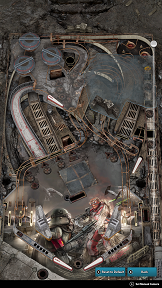
Battle of Mimban is Peter Horvath’s finest table and almost certainly the best original design to come out of Zen Studios. The ultimate marriage of all-encompassing environments that can only exist in video games with the sport of pinball. Mimban is, for my money, the greatest war-themed pinball table ever made. It’s gritty, and dirty, and raw, and visceral. The layout has that feeling too, like a freshly dug foxhole. A ramshackle network of orbits and targets that are so simply placed and accessible that it feels like a table thrown together in five minutes, and I mean that in a good way. Like a base camp set up by a front line battalion that could be broken down and moved on a moment’s notice. But, wash away the grime and the dirt and you’ll discover an elegantly-crafted, smoothly flowing table. Getting the bad stuff out of the way, the slingshots are a little aggressive and the left outlane is brutal. You’ll want to light the kickbacks, which is simple: shoot the spinner. That’s it. No complicated multi-step process. Even better is that these aren’t violent kickbacks. They catch the ball and drop it in the outlane. AWESOME!
Signature Element – Split Level: Zen has done many multi-story tables, but only Mimban has successfully pulled off the degree of realism that makes you believe the layout is the offspring of real world split-level tables. Specifically, this shares a lot of DNA with Black Knight 2000. Hey, that’s one of my all-time favs so I ain’t complaining.
Zen has a love for cardboard targets, and no table by them has better usage of them. It shifts Battle of Mimban from combo-centric finesse gameplay to white-knuckle sharpshooting on the fly, and it WORKS. It doesn’t feel jarring or gimmicky at all. Instead of clashing, the play-styles complement each-other. It helps that, despite the complex idea of an actual battlefield with attack waves, the gameplay couldn’t be more simple or intuitive. The clean layout leaves little in the way of distraction, making it easy to know which shots are lit and how to get to them. It also really helps that this probably has the best written rules of any of the more complicated Zen original creations. Thanks to the clever concept of alternating between attack formation and defense, modes that would be dangerously close to samey and repetitive instead feel high in stakes. There’s also enough options to allow players to come up with their own strategies in order to tackle them, including high risk side-missions that usually pay off with extra balls.
Signature Mode – Infiltration: In this short but sweet shooting gallery video mode, you use the flippers to aim a close-range cannon to shoot cardboard targets. Just remember: red guys bad, Stormtroopers good. Don’t shoot the Stormtroopers.
In a way, Mimban kind of reminded me of my first game of Risk. The rules felt overwhelming and complicated at first, but it took only like fifteen minutes for me to learn what I was doing. Battle of Mimban does exactly that for pinball, and it can be overwhelming. But actually the flow is really simple to learn and the targets are clear enough that it makes for an awesome shooting pin. One that has none of the typical problems with modern Zen. Just getting the ball isn’t the hard part. You have to make your shots in a way where you don’t kill yourself. Retheme this as any other property, or any other setting, and Mimban wouldn’t work. You’d ask yourself “why is this layout so.. so.. rudimentary?” Simplicity works in a tactical war setting, especially with spot-on scoring balance. Hell, this pin feels more like it’s based on a board game than any of the tables in their three-table pack themed around board games! The end result is a table that has to enter the discussion of the greatest digital-only pinball table ever. It has my vote. Cathy: MASTERPIECE Angela: MASTERPIECE Oscar: MASTERPIECE Jordi: MASTERPIECE
Sasha: MASTERPIECE
Elias: MASTERPIECE (Star Wars Pinball on Nintendo Switch)
Overall Scoring Average: 5.0* 🏛️PANTHEON INDUCTEE🏛️
*Nintendo Switch version is, more or less, identical to all other platforms.
Some review copies were provided in this review, others were paid for.
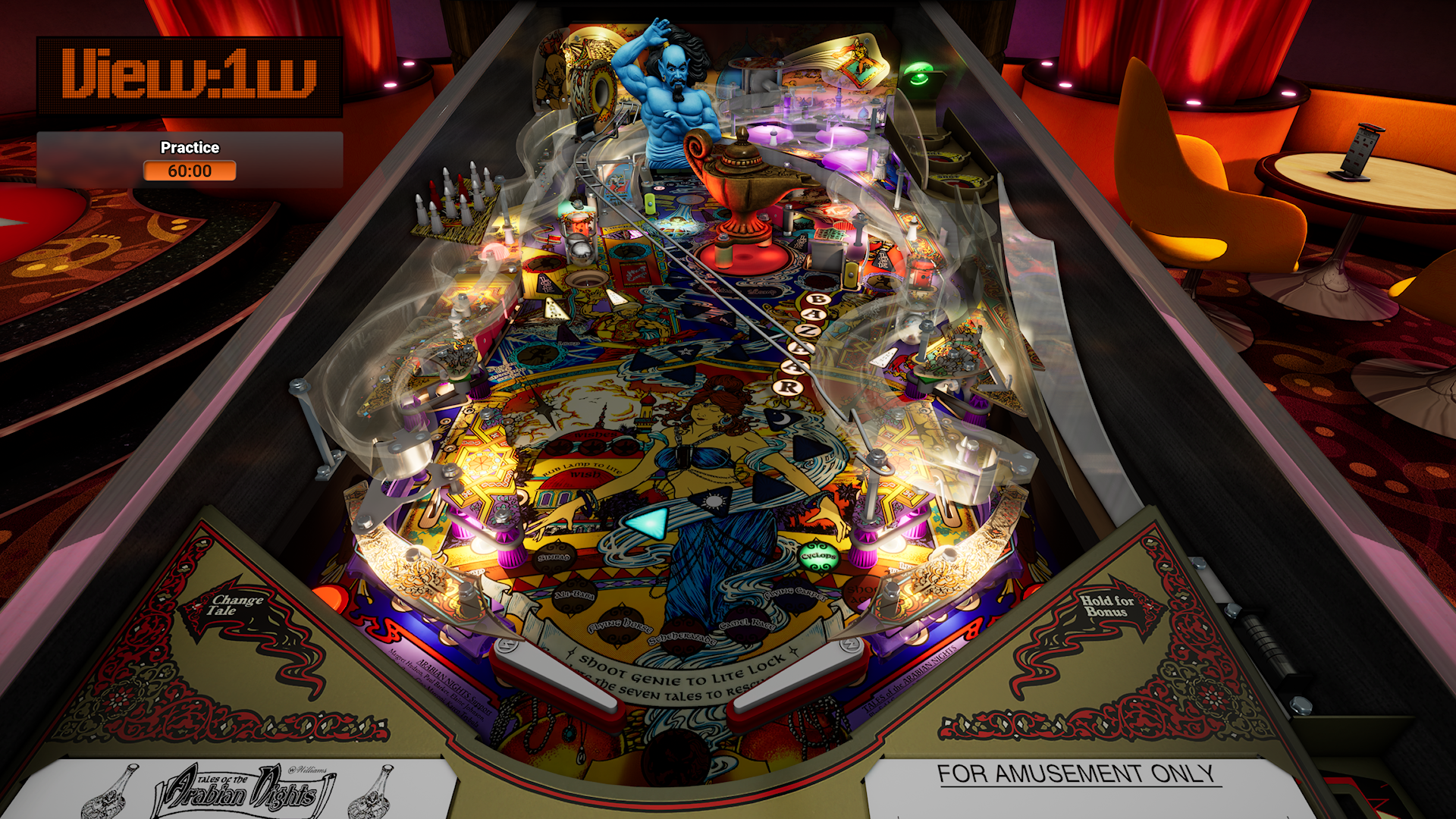
Tales of the Arabian Nights First Released May, 1996 Zen Build Released December 10, 2019 Main Platform: Pinball FX Switch Platform: Pinball FX 3 Designed by John Popadiuk Conversion by Zoltan Vari Set: Williams Pinball Collection 2 ($23.99) Link to Strategy Guide
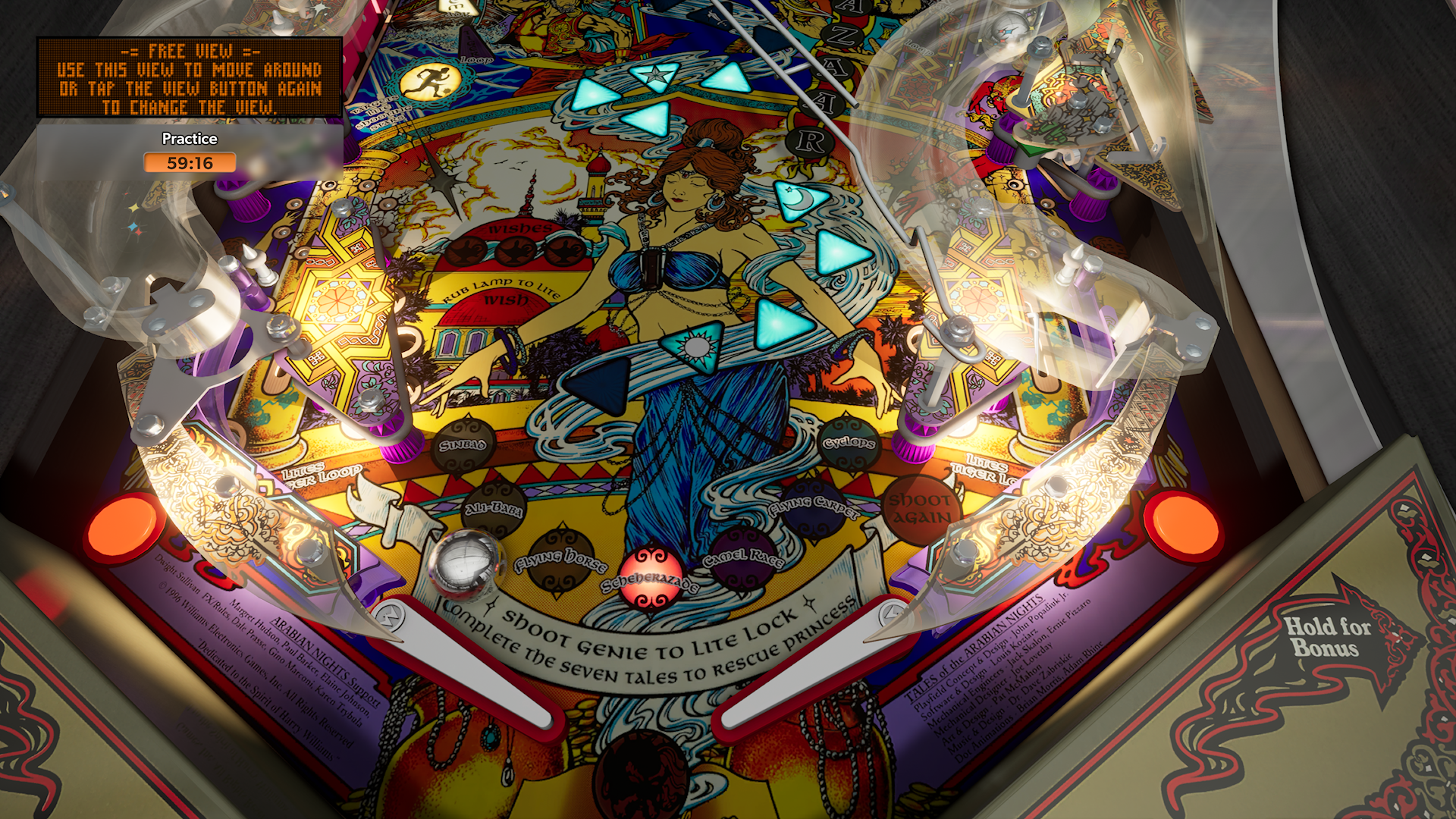
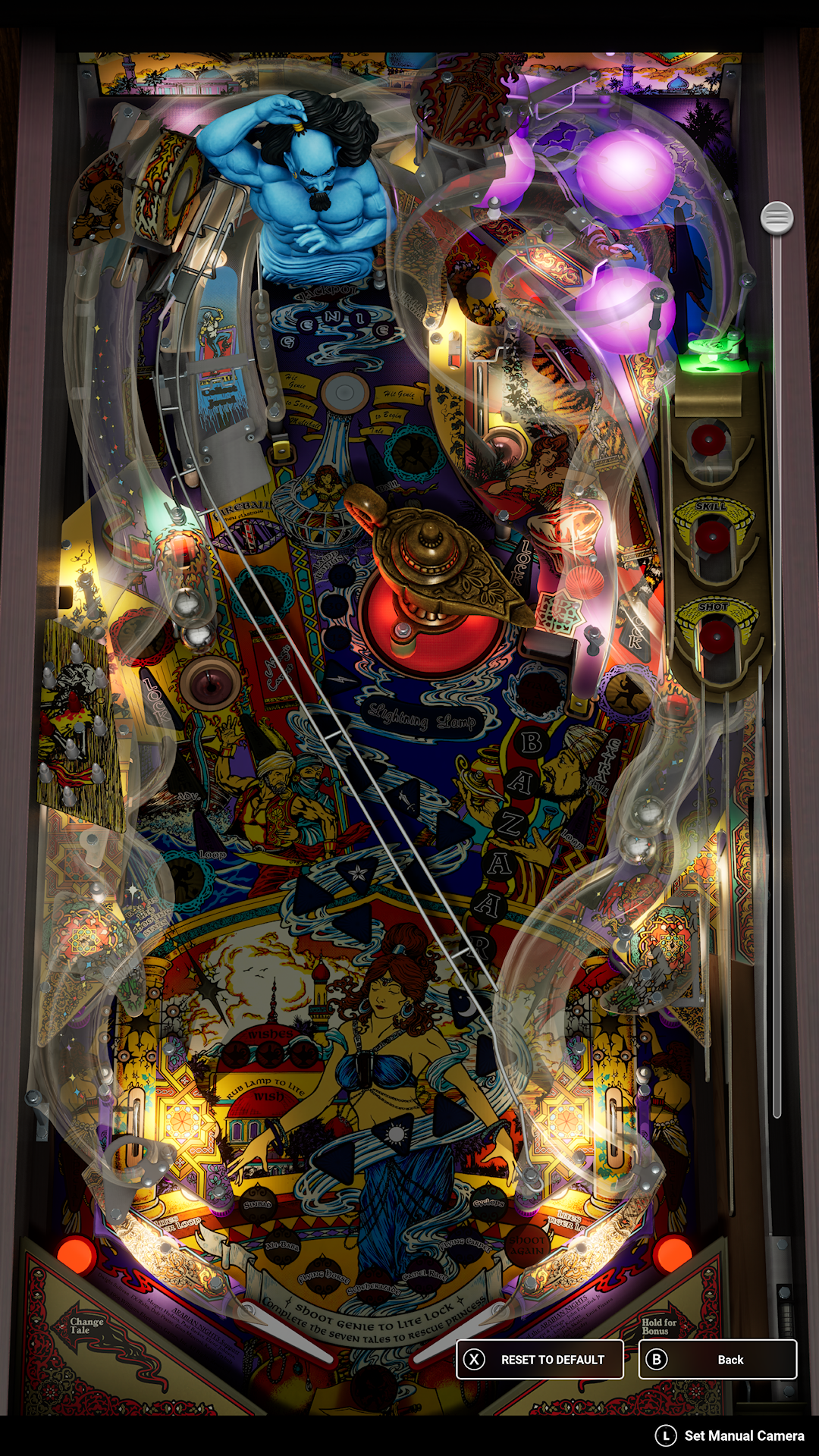
Tales of the Arabian Nights might be the most beautiful 90s pin. Maybe it’s the Golden State Warriors fan in me, but I love the gold and blue, along with the clashing red. The genie design is great too. It could have looked dangerously close to the Genie design from Aladdin, but it looks nothing like it despite being blue and having similar facial hair. I hope fans of TOTAN (one of the great pinball acronyms) remember that I love the look of this and I’m giving it a GOODscore after I say lots of mean things about it.
We came pretty close to saddling Zen’s version of the unfathomably popular Tales of the Arabian Nights with a rating of BROKEN. Angela, our undisputed best pinball player, was the main advocate for the rating. Among other hiccups that haven’t been addressed in all the revisions and patches Pinball FX has had so far:
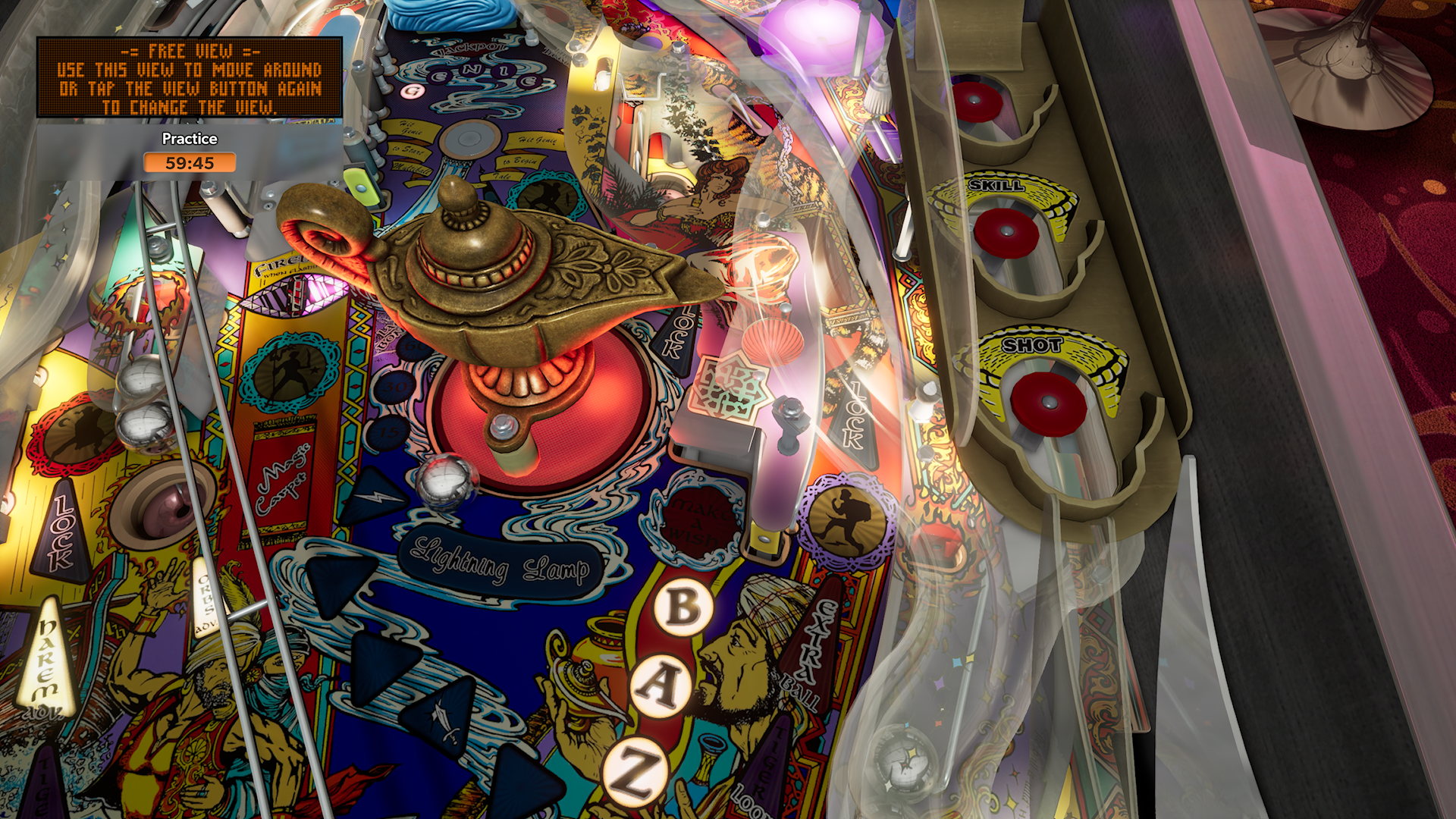
The most common glitches are tied to the skill shot. While we’ve never had any instance of a made skill shot being called a miss, we’ve had PLENTY of instances where it simply didn’t register anything at all. Even if the ball cleanly falls through the correct hole, it’s not uncommon for nothing to happen except the ball entering the playfield while the scoreboard is still anticipating your plunge. The Vice Family couldn’t agree if it was more common for the failure to happen when the skill shot was the middle or bottom hole, which probably says a lot about how bad the entire mechanism is. Meanwhile, if the top hole is lit as the skill shot, the game almost always awards you for a made shot from any full-force plunge, regardless of what hole the ball ultimately falls through. This whole mechanism DOES NOT WORK and needs a full rebuild from Zen’s side.
The magnet can cause unpredictable behavior well away from the magnet section of the table. We’ve had instances where it causes strange ball behavior as far down as around the left flipper and slingshot, which should be impossible unless it’s one of those Wile E. Coyote magnets (and those NEVER work). We’ve even had it happen when there’s no logical reason for the magnet to activate, meaning the ball isn’t close to where it should be affected by the genie, but also the genie hasn’t been hit for a while anyway. This is a lot rarer than the skill shot issues, but it happens enough that I had to mention it. It’s quite peculiar.
Like with so many other Williams pins in Pinball FX, we’re comfortable rating TOTAN’s PRO mode as BROKENin multiple ways. We’ve had instances where multiball should have started but didn’t and instead keeps cycling between Ball Lock #1 and #2. In PRO mode, starting multiball requires you to lock all three balls in a single ball. If you lock one or two and then die, it seems to have trouble counting to “three” in each subsequent ball. When this happens, we’ve also had instances where all three balls are launched but multiball mode doesn’t start. Also, the ball frequently valleys on the right ramp in PRO mode, something that rarely occurs in any other mode. When it happens, instead of the game performing a soft reset to the plunger, the ball is magically pushed upward and drops down into the bumpers. We’ve never lost a ball by this means, but it’s immersion-breaking. Finally, the skill shot glitches mentioned above are most likely to happen on PRO.
Sasha on Genie Shot: I wish Popadiuk had instead used a traditional cellar instead of a magnetic element for the genie. I get that it’s supposed to be the antagonist of the table, but the magnet and its house balls (and glitches in Pinball FX) is why I’m giving a rating of GOODfor TOTAN instead of GREAT. It looks cool when it works, but it just as often wrecks a game.
Tales of the Arabian Nights is one of the most popular pins of the 90s. A mainstay in the Internet Pinball Database top 10 until Godzilla came along and finally bumped it down to #11, where it remains. Of the tables that I disagree with the high IPDB standing, which also includes White Water and Scared Stiff, I probably like TOTAN the most. So, it kind of feels like a table that Zen Studios needs to do a better job with, because it’s one of their most unstable Williams/Bally pins, if not THE most unstable. And yet, it ran away with ratings of GOODfrom all eight members of The Pinball Chick team. Tales of the Arabian Nights is one of those pins nearly everyone wants to like, even in the face of multiple problems. There’s no denying the lamp is one of the best shots of the 90s. The genius use of two targets on it that change position depending on where the spin stops makes for some exciting wood chopping. That’s before you even consider the fact that every single spin matters to your overall score, with various associated bonuses and perks tied to the spins. It really is special.
I easily prefer Zen’s version of the lamp to Farsight’s, as it doesn’t feel as weightless.
Very few pins offer the levels of flexibility and sheer volume of risk/reward choices as it does. Put all your muscle into spinning the lamp and increasing the value of the lightning lamp. That’s Angela and Sasha’s strategy, with Angela throwing in “build-up extra balls ASAP” on top of that. Totally doable. Totally viable. Both have set Xbox records using that specific strategy. Dad prefers to go for the wizard as fast as possible by shoring up the jewels. Totally doable. Totally viable. I prefer to dance between those two strategies but with a focus on building-up the multiplier for the massive end-ball bonuses (I smile EVERY TIME I get a “hold bonus” random award). Totally doable. Totally viable.
Sometimes the “enhanced graphics” aren’t bad. In TOTAN’s case, this is Star Wars Special Editions of needlessly gaudy to the point of distraction.
And that’s not even factoring in MAKE A WISH (lit every seven-and-a-half lamp spins) and the choices it puts to players. You have two jewels left to complete the modes and have a hot ball with a high multiplier and lots of lamp spins. You light and convert MAKE A WISH and it gives you the option of COLLECT TWO JEWELS or COLLECT BONUS, and then you stare at the screen like “jeez.” It happens all the time in TOTAN, and since games can turn on a dime thanks to brutal outlanes and the possibility of the genie’s magnet having about a 1 in 10 chance of dunking the ball straight down the middle, the MAKE A WISH choices aren’t really easy to make. I’m someone who puts the highest premium in tables that give you the ability to create your own strategy, and in the case of TOTAN, that alone carries it over the finish line. If not for that, I’d probably be inclined to give this a BADrating. Those outlanes ARE brutal, and the shallow angles assure that every ball has a chance of dancing right over the slings and rails and down the poop chutes. And while I’m whining, good lord, does this have the worst type of “kickback” ever. They’re more like the world’s most paranoid magna-saves. The “shooting stars” only last ten seconds, and the f*cking things goes off even when the ball doesn’t need saving. Thankfully, if the ball dies anyway, you get it back.
Even with easy-to-light pseudo-magna-saves, this is one of the most intense 90s in. You can’t relax, for any shot or mode.
The rest of the table is surprisingly kind hearted. Every mode can be skipped by lighting MAKE A WISH and choosing the jewel. But, I’m not a fan of the Wizard mode thanks to the need to manually launch the balls, and this is frankly a terrible multiball table. But, I loved the seemingly limitless strategy variations, even if the outlanes can kiss my butt. So, what gives? My dad pointed out to me the risk/reward wouldn’t be as good without the brutal outlanes, since the scoring isn’t really that balanced. And he’s right. Tales of the Arabian Nights’ brutality enhances the very thing I value most about a 90s-era pinball table. Yes, every shot is risky because of the outlanes and a weirdly hard-to-defend drain, making this a table that always feels like a series of bad breaks. It’s a MADDENING pin. But without that, the temptations of the random awards, multipliers, and MAKE A WISH choices would vanish and a lone self-evident strategy would emerge: grind high-yielding lighting lamps. At their max, they yield 600K per spin, and it’s only because of its unpredictable angles that it doesn’t break the entire table. Whoa. That means the flexibility I cherish so much would be non-existent. I’m calling it the TOTAN Paradox, and the TOTAN Paradox states “the more strategic options you give players, the harder the table MUST BE in order to precisely balance all of them, which in turn limits how enjoyable the table will ultimately be.” Tales of the Arabian Nights offers so much more flexibility than my favorite pins often do, but it’s not even close to being one of my favorite pins. Apparently I want flexibility, but not too much flexibility. Cathy: GOOD (3/5) Angela: GOOD Oscar: GOOD Jordi: GOOD Dash: GOOD Dave: GOOD Elias: GOOD Sasha: GOOD Scoring Average: 3.0 – OKAY
🧹Awarded a Clean Scorecard🧹 N00b Factor: Because of the house balls and hungry outlanes, Tales of the Arabian Nights might not be the best pin for brand new pinballers or casual fans who aren’t looking for a challenge. But, it’s not a total wash, either. The lamp is one of the all-time great toy elements in pinball history. Truly the fidget spinner of the sport, and it’s SO rewarding to get good at shooting it. TOTAN is also an excellent table for learning to anticipate rebounds, especially when aiming at the lamp. The genie makes for a less impressive target. It’s just not as satisfying to hit as it should be given the amount of real estate it takes up, which is to say nothing of the insanity that the magnet leads to. Oddly enough, if you ignore the outlane factors, this is one of the easiest wizards to get in Pinball FX. You literally can finish zero modes and get it. Verdict: Newcomers should approach with caution, but if you’re struggling to learn how to grab rebounds, this might be a good choice to hone your skills in that field. But overall, we don’t think this is a good choice for newbies.
VICE VERSUS
TOTAN is one of the better tables to challenge your friends at. The spectator factor is high, and in fact, this was what convinced Angela to rate it GOODand not bust the table’s Clean Scorecard award. For all its many problems, it’s genuinely entertaining to watch a match-up against your friends or family in a game of Tales of the Arabian Nights. Part of that is the nature of the table means there’s tons of near-deaths and close calls with the outlanes offer plenty of cheer out-loud moments. Of course, that also means there’s plenty of groans when those close calls go the other way. At one point, I scored only 30,230 in a game of one-ball. You read that right: 30,230, which led to my father saying “that’s not a score. That’s a zip code!” Not my proudest moment, though a victory for the good people of Hogansville, Georgia, since my father was right about it being a zip code. On the bright side, my family set four Xbox world records between us, and hey, I did win the duel! Tales of the Arabian Nights is far from perfect, but it’s one of the top versus pins in Pinball FX.
GAME TWO: PRO MODE
Cathy: 18,910,090
Angela: 16,354,010
Oscar: 19,241,060 (#20 All-Time, #2 Xbox)
Sasha: 13,571,990 WINNER: Oscar (1)
GAME THREE: PRO MODE
Angela: 9,703,570
Oscar: 19,657,040
Sasha: 12,670,130
Cathy: 26,673,100 (#14 All-Time) WINNER: Cathy (2)
GAME FOUR: PRO MODE
Oscar: 14,293,800
Sasha: 15,080,350
Cathy: 21,527,240
Angela: 34,930,820 (#10 All-Time, Xbox Record) WINNER – NEW XBOX WORLD CHAMPION: Angela (1)
GAME FIVE: ARCADE MODE
Sasha: 77,624,990
Cathy: 151,129,850 (#3 All-Time, Xbox Record)
Angela: 103,394,650
Oscar: 88,635,220 WINNER – NEW XBOX WORLD CHAMPION: Cathy (3)
GAME SEVEN ONE BALL CHALLENGE – BEST OF TWO
Angela: 3,321,880, 2,176,550
Oscar: 8,824,390, 7,358,970
Sasha: 3,087,610, 16,054,010 (#13 All-Time)
Cathy: 5,182,020, 30,230 WINNER: Sasha (1)
GAME EIGHT: FIVE MINUTE CHALLENGE
Oscar: 8,993,310
Sasha: 24,932,040
Cathy: 33,809,490
Angela: 37,838,590 (#8 All-Time, #2 on Xbox) Winner: Angela (2)
GAME NINE: FIVE MINUTE CHALLENGE
Sasha: 39,414,430
Cathy: 30,397,880
Angela: 47,268,830 (#6 All-Time, Xbox Record)
Oscar: 30,370,620 WINNER – NEW XBOX WORLD CHAMPION: Sasha (2)
GAME TEN: DISTANCE CHALLENGE
Cathy: 108,170,620
Angela: 75,770,880
Oscar: 101,935,010
Sasha: 142,576,870 (#2 All-Time, Xbox Record) WINNER – NEW XBOX WORLD CHAMPION: Sasha (3)
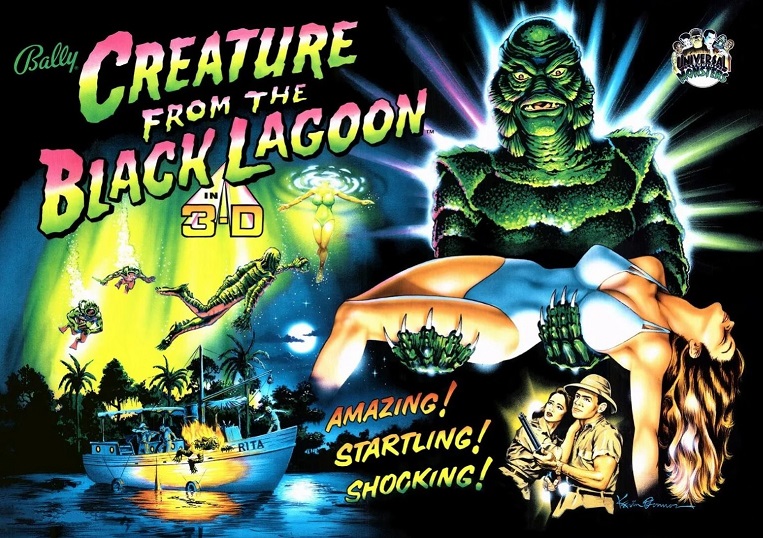
Creature From the Black Lagoon aka Creech First Released December, 1992 Zen Build Released October 29, 2019 Main Platform: Pinball FX Switch Platform: Pinball FX 3 Designed by a different sort of creature. Conversion by Zoltan Vari Set: Universal Monster Pack ($6.99) Link to Strategy Guide
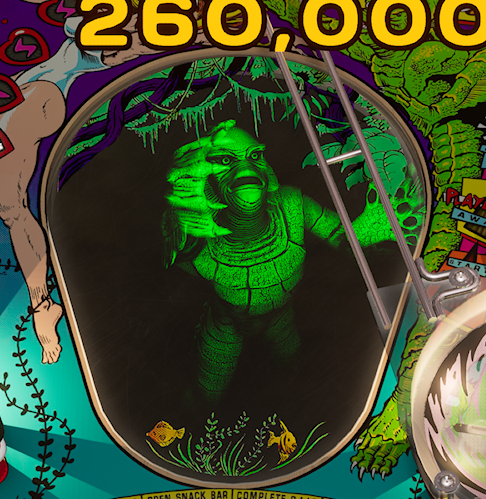
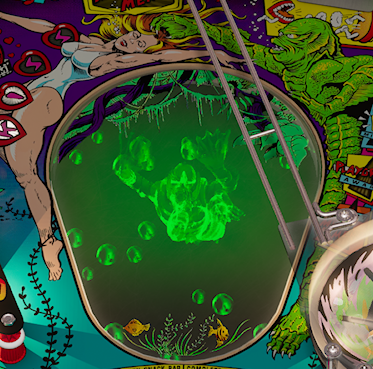
Angela on Color: While I don’t like Creech’s layout or scoring, I think it’s one of the prettiest tables out there. Lagoon stands out among its 80s and 90s brethren thanks to its use of pastels. You might see the odd teal or light pink here and there, but Creech is fully committed to the faded look. There’s a thematic reason for it: I’m guessing it’s trying to replicate the look of Technicolor film posters that one would expect to see if going to the movies in 1959. Ironically, Creature from the Black Lagoon is a black-and-white film, albeit one shot in 3D. The hologram is a tribute to that aspect of the film.
When I think of Creature From the Black Lagoon, I think of two things. I think of the 50s drive-in theme, one of THE great themes of the DMD era. I also think “the table where the ball flies around like a hockey puck.” It’s one of the era’s most popular tables, though our ratings don’t reflect that at all. With the exception of my father, who really likes Creech, we all agree that it’s a middle-of-the-pack table. So why is this such a famous pin? It can’t just be a cheap hologram sticker, can it? Nah. I think the theme plays the largest role in the table’s legacy. It’s so unexpected, too. You hear the name “Creature from The Black Lagoon” and you perhaps imagine a macabre Addams-like “chaotic wickedness” affair. Instead, the theme is date night in 1959, watching the Universal classic Creature from the Black Lagoon at a drive-in. Presumably this table would have happened even if they hadn’t gotten the license from Universal under a generic name like “Drive-In” or “Silver Screen” or something along those lines. The movie is completely arbitrary. It could have been any film, because the film isn’t the point. It’s everything around the viewing of that film, and it’s a wonderful premise. I just wish the gameplay was better.
Creech’s bumpers are the stuff of nightmares. Some of the most violent and time-consuming bumpers in all of Pinball FX. When we competed in the distance challenge, Sasha got what would, in normal circumstances, be a lucky break: the ball got stuck in the bumpers for nearly a full minute. The problem is this ate-up a whopping 60 of her 200 distance points. It was surreal to watch, and the look on her face was pure agony, because she had just relit the multiball, but the bumpers ate up the distance points she would have needed to score one final, game-winning jackpot. Not even a super jackpot. A normal jackpot would have been enough. Alas.
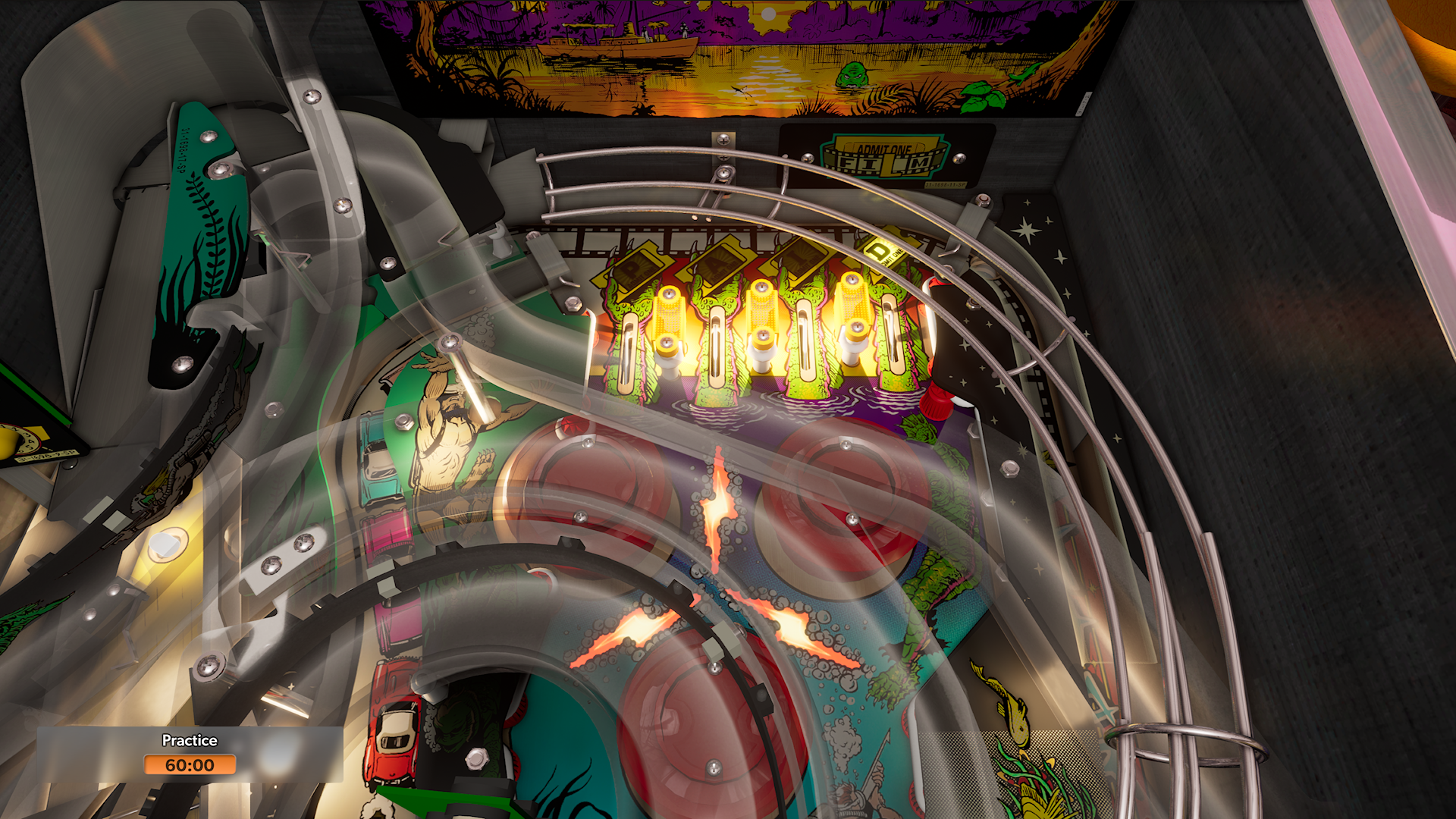
Creature’s shot selection, at least individually, is well done. There’s really only five main shots, but each is satisfying enough. The most notable, and perhaps the most famous cherry bomb shot of the era, is the straight-up-the-middle lane known as the MOVE YOUR CAR shot. Cleanly accessible with either flipper and essential to both the 80M-max MOVE YOUR CAR hurry-up and for charging-up the high-paying super jackpot, it’s one of the better switch-hitters in pinball. It even has the table’s extra ball light mapped to it. Both ramps are well-placed, but it’s the left ramp especially that’s deceptively challenging. It was the perfect shot to attach the oh so tempting multiball scoring multiplier to. Trust me, it needed it, because the good stuff is already over.
The most difficult and highest-risk shot in the game is one you don’t have to worry about until after your first jackpot. The snackbar lights are off-angle and hard to access directly via the flippers. All four also hang precariously over the drain. BUT, these must be lit in order to gain the “I” light in F-I-L-M in order to start multiball. Before your first multiball jackpot, shooting the unlit Snack Bar cellar will give you a light every time. Unlike the targets that light the shot, the Snack Bar is low-risk and hangs over the left flipper. It’s also a shot that lights AND collects the jackpot, and later collects the lit super jackpot. We all have a shooting average of around 90% to 95% for the snack bar, so it’s a cinchy shot. After the jackpot? None of us have found a comfortable angle for the upper Snack Bar lights. Oh, and in Pro-mode, the Snack Bar trick doesn’t work. Have fun!
Creech’s most important shot, the aforementioned MOVE YOUR CAR shot, will reliably feed the right flipper every single time. When the ball finally clears the bumpers, it has plenty of run-off to lose whatever momentum it has before falling gently to the right flipper. That flipper just so happens to have clean access to both the Snack Bar and to MOVE YOUR CAR. The second is the most important, because it creates the safest, lowest-risk complete circuit in DMD pinball. If one were to play at VERY conservative pace and had the luck of the Creature hiding in the Snack Bar shot during the two-ball multiball, you can grind-out a respectable score without ever slapping a single high risk shot. I put a 5.7 billion point game in the One Ball challenge. 5.6 billion of that was shooting just those two shots, all while trapping the second ball with the left flipper.
The hologram uses up real estate that could have been used for lights for additional modes. It’s a neat gimmick in real life and I’m sure it was an attraction in 1993 (even though it’s essentially just one of those hologram stickers grocery store vending machines sell for $0.50 – $1.00 in quarters), but the charm is lost in translation. So, we weren’t sure if this is supposed to represent the drive-in screen or not. If that’s not the case, how the hell did they do a drive-in theater theme without a screen as a target? It’s not shaped like a movie screen! No projector either except as the REPLAY animation in the DMD. They didn’t take the concept as far as they could have.
That two-shot circuit is sort of indicative of a much broader problem: all the shots are good by themselves, but they just never flow harmoniously together. There’s absolutely no rhythm to Creech, and if you feel that’s important to pinball, chances are you’ll quickly lose interest in it. That happened with Sasha. My niece thought the table was okay at first, but the more she played it, the more she grew bored with its repetitive modes and a pace that can be described as leisurely. Our resident expert, professional designer Dave Sanders, calls Creature from the Black Lagoon “boring.” Even though I’m voting GOOD, I can also see how someone might not like it. Creech is a table that’s less than the sum of its parts, even if a couple of those shots are very well done. I normally don’t like toe shots, and Creech has two of them. I should hate that, but the attached stakes and relatively sparse required usage make them worth shooting. And yet, all shots exist as an island unto themselves, with little to no flow to any other shot. That’s probably why the ramp modes are based on repeating one shot, not consecutive shots. The table was built to accommodate a set-shot style, and not quick combo shooting.
Sasha on the Creech Cup: My least favorite element of Creature from the Black Lagoon, besides the bumpers, is the cup that hangs over the right flipper lanes. I don’t understand why this is even here. Why would a designer trade so much visibility for such a little-used element that isn’t all that satisfying to begin with? I could understand if the Cup tied to other modes and got more usage. But that’s not the case. The Creech Cup is a fully optional shot tied to a high-risk ramp. Shooting the ramp adds too much chaos to the area over the drain during multiball. I’d rather have had a standard spinner charge the multiplier. Actually, I’d rather had no scoring multiplier at all, as it wrecks the already messy scoring balance.
And yet, it’s popular. Really popular. I think it’s the simplicity of the game design combined with an all-time great theme. People LIKE Creech. People you wouldn’t expect. It’s especially weird that Oscar gave Black Lagoon the highest score of all of us. He claims to cherish scoring balance and famously hates Theatre of Magic on the grounds of its scoresheet. Oh, delicious irony, because Theatre’s scoresheet was drafted by none other than Jeff Johnson, whose first table was.. Creature from the Black Lagoon. ♫ IT’S THE CIRCLE OF LIFE!! ♫ Dad justifies his rating of GREATfor Creech because of the shot selection. “How are we rating a table we all agree is made mostly of enjoyable shots so low?” Well, because we actually don’t agree on it. Jordi and I are sort of on the same page as Dad in terms of enjoying the shots themselves, and I personally like the strange glide the ball has.
This slideshow requires JavaScript.
Meanwhile, Angela is in total disagreement on the shots being good at all, even on their own. Dave agrees with her, and neither are entirely sure what we, or anyone, sees in Black Lagoon. Both think it’s a fundamentally unexciting pin. And you know what? They’re not wrong even if I still find it to be okay. What EVERYONE agreed on is that the wide flipper gap is cruelty for cruelty’s sake and that the scoring balance is just awful. The jackpots and super jackpots are so overvalued that they almost negate everything else, including a fully-charged MOVE YOUR CAR. Since the sequence that gets you the jackpots has a random one in three chance of being made entirely out of low-risk shots, that’s not cool. And, we all agree that Creech has no cadence to it. We’ve forgotten who coined the phrase “Anti-Flow” to describe Creature, but it still fits. The highlight of this review was the debate we had amongst ourselves over its value and quality. Say what you will about Creature from the Black Lagoon, but few tables invoke a more lively discussion among pinball fans quite like it does. Perhaps that’s why it’s become the legend that it is! Cathy: GOOD (3 out of 5) Angela: BAD (2 out of 5) Oscar: GREAT (4 out of 5) Jordi: GOOD (3 out of 5)
Dash: BAD (2 out of 5)
Elias: GOOD (3 out of 5) Dave: BAD (2 out of 5)
SASHA: BAD (2 out of 5)
Scoring Average: 2.65 – OKAY AT BEST ❄️POLARIZING TABLE❄️ N00b Factor: Creech has easy to learn shots with modes that typically require only one shot be repeated until time runs out. The most difficult aspect comes from its wide flipper gap, but because the shots are simple and easy to master, this might be more ideal for learning how to work with a bigger flipper gap than, say, Fish Tales. Creech’s multiball requires a relatively complex sequence of shots to build towards the super jackpot. Verdict: A solid next-step-up for n00bs ready to learn set-shooting and working with a larger drain.
VICE VERSUS
The added VFX to this build are some of Zen’s best. Subtle. Non-evasive.
Like our main review, Creech’s dueling status is polarizing. One aspect we disagreed on was how fun it is to watch others when it’s not your turn, which might be the most important element of a good competitive table. Angela and Sasha both agreed the low-risk shots make this a snooze to watch. Well, unless their sister/aunt can’t hit a single shot to save her life, since they were cackling their malicious little heads off while I missed every toe shot for an extended run of three long balls. On the other hand, I enjoy watching Creech because this is a table that really puts modern pinball fundamentals to the test, and the rejection-heavy left ramp generates plenty of OOOHs and AHHHs from on-lookers. It’s certainly not the best game for exciting close matches. Creech is a streaky table where you tend to be either on or off, and so most games end in blowouts. We had plenty of those during this duel, including two world records that my father wasn’t here to see.
GAME ONE – CLASSIC
Cathy: 547,147,700
Angela: 1,681,814,880
Sasha: 395,425,380 WINNER: Angela (1)
GAME TWO – PRO
Angela: 134,290,960
Sasha: 87,350,780
Cathy: 78,466,790 WINNER: Angela (2)
GAME THREE – ARCADE
Sasha: 442,814,210
Cathy: 3,926,036,350 (#7 All-Time)
Angela: 702,142,860 WINNER: Cathy (1)
GAME FOUR – 200 FLIPS CHALLENGE
Cathy: 328,707,690
Angela: 455,397,650
Sasha: 1,882,396,590 (New Xbox World Record) WINNER – NEW XBOX WORLD CHAMPION: Sasha (1)
GAME FIVE – ONE BALL – BEST OF THREE BALLS
Angela: 137,592,770, 108,977,340, 173,283,090
Sasha: 276,353,560, 27,465,320, 150,357,610
Cathy: 166,985,020, 150,850,460, 5,758,931,220 (New Xbox World Record) WINNER – NEW XBOX WORLD CHAMPION: Cathy (2)
GAME SIX – FIVE MINUTE CHALLENGE
Sasha: 183,527,470
Cathy: 261,724,380
Angela: 351,738,530 (#25 All-Time) WINNER: Angela (3)
 Grimm Tales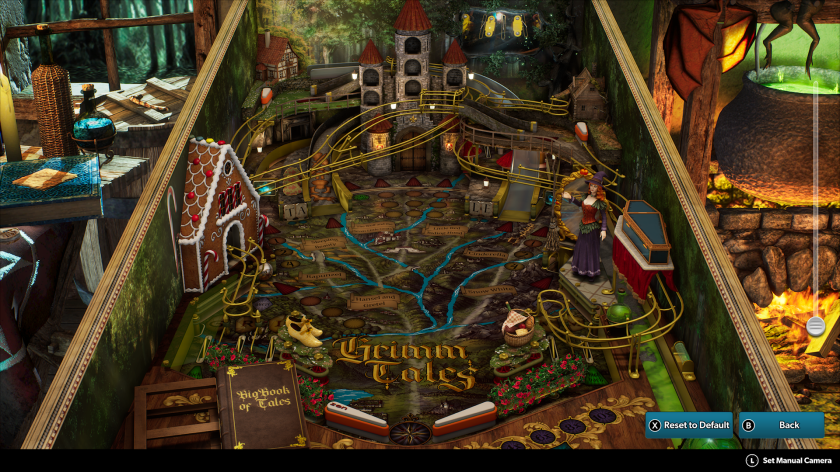

 Cathy: GREAT (4 out of 5)
 Curse of the Mummy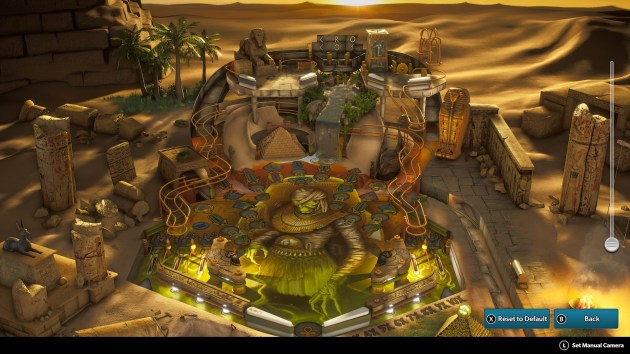
 Cathy:
  Brothers in Arms: Win the War

 Cathy:
  Boba Fett

 Cathy:
  Blade
Blade

 Cathy:
  Battle of Mimban


 Cathy:









 The Pinball Chick
You must be logged in to post a comment.