Clone Wars First Released February 27, 2013 Main Platform: Pinball FX Switch Platform: Star Wars Pinball Designed by Ivan “Mad_Boy” Nicoara Set: Star Wars Pinball Collection 1 ($23.99)
Links: Strategy Guide – Pinball FX Wiki
STOP! If you’re not able to play Clone Wars in the vertical table view mode, it will affect your enjoyment. You could probably drop our scoring average by a full point, if not more. Clone Wars already has massive visibility issues due to the loudly busy playfield, but in standard horizontal viewing angles, you just plain can’t see some of the shots. This NEEDS to be viewed like a standard table. It’s criminal that this wasn’t included in their Arcade1Up.
Ah. Clone Wars. You sweet, sweet thing, you. I was actually surprised to learn this is a more polarizing choice for the Pantheon. I mean, it was close for most of us. Myself, Angela, and Jordi would consider this the lowest of any of our MASTERPIECEvotes, while only Oscar is tapping his wrist and saying “more of this. Put it in my veins. Nom nom!” Clone Wars features a layout that feels like a real, honest-to-God Stern table, probably more so than any other Zen original. Is it really that hard to imagine this sitting alongside their versions of Godzilla, Guardians of the Galaxy, Iron Maiden, etc? And it’s not that Clone Wars is hated outside of our circle. I’ve never seen anyone say it’s a bad pin. They just don’t think it’s as good as we do. When Elias joined our team and gave it a GOODrating, we were disappointed, but not surprised. If you had told me “Elias is going to put the screws to one of our Pantheon pins” I would have said “is it Clone Wars?” Any of us would have guessed Clone Wars, but why? Maybe the loud visuals, or the fast running flipper zone, or maybe unforgiving rails and outlanes. Or, perhaps it’s too life-like, and those playing Pinball FX, or Star Wars Pinball on Switch are seeking a more video game-like experience. Well, no, that can be it. This thing has modes that cannot be done in real life. Really, really good modes, at that. There are plenty of reasons to not rate this as an elite pin.
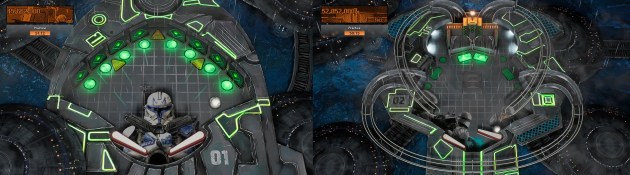
Signature Mode – War on Christophosis: You’ve never seen anything like this in pinball before. In this mode, a gigantic force field that you can’t penetrate from the outside covers the playfield, leaving only two entry points. You have to convert your ball into a bomb, then flick the bomb against the designated targets. A microcosm of Clone Wars in general, the mode is fun and intense, but far too visually loud. I think every player who genuinely wants to make a go at this one will want to experiment with the visual settings, because it’s too damn hard to see what’s going on. On a lesser table, we’d probably score against it. Elias, who didn’t love Clone Wars as much as we did and, in fact, seems to have barely tolerated it, for sure scored against the visuals. And you know what? We can’t argue with him. It’s totally fair.
So, why do most of us rate Clone Wars a MASTERPIECE? Because gameplay is king. Clone Wars is chock-full of unconventionally-angled orbits that are a joy to shoot combos on. And, unlike many Zen finesse pins, it doesn’t grossly overvalue basic orbital combos. Part of why the shots feel so rewarding is Clone Wars is one of Pinball FX’s fastest-running tables, especially around the flippers. Oh and for anyone who read the last several table reviews and thinks I can’t handle mean-spirited outlanes, hey, I think Clone Wars is a MASTERPIECE, and it has serial killers for outlanes. Clone Wars is probably the most difficult Zen original design to enter the Pantheon. I think that’s why a lot of people think we’re nuts for rating it this high. It can be quite unforgiving if you brick your shots, and snap-shots are harder to pull off here than on any other Star Wars table. You need Jedi-like reflexes for this one. On the other hand, this is one of the few Zen tables that awards extra balls automatically. It’s just a shame they didn’t go all the way with “this is a REAL table” concept and have a replay extra ball after a certain point threshold, like say, 60,000,000. Actually, Zen really needs to start adding replay EBs in general. They’re just fun.
Signature Mode – Clone Training: We’re not big fans of Zen’s mini-fields in general, but Clone Wars stands out for having one of the best ones. Or two of the best, really. Spelling TRAINING while shooting targets lights the sinkhole to the mini-fields, which have their own physics that feels more like a handheld novelty game. The flipper gap is huge, which is normally a problem, but even a grazing shot should be enough to save the ball. Like everything else with Clone Wars, there’s too many shots required, but at least it’s fun.
Admittedly, all the modes have the same problems common to Zen’s original pins, IE “why have a mode require six shots when it can require ten? Why ten when it can be twelve?” Like the force field mode above? That’s twelve total shots, assuming you shoot completely perfectly. Six shots to turn the ball into a bomb and six to deliver the payload. I’ve spent a lot of time pondering “what if Zen reduced the required shots in Clone Wars by 40% or so? Would that finally put Clone Wars in the discussion for Zen’s best table?” I honestly don’t know. You can’t know until you experience it firsthand. Clone Wars is in the 99th percentile of Zen pins, and also none of us feel that it’s even within sniffing distance of Mimban. Is Clone Wars an ELITE digital pinball table? Absolutely. It’s one of the best shooters in Pinball FX. Is it one of the best digital-only tables ever made? Now that’s a debate, and it shouldn’t be. Not with a layout THIS good. Not with scoring this balanced. Not with gameplay so elegant. *I* think it’s one of the best, but I can see why someone wouldn’t. Clone Wars might be the ugly duckling of the Pantheon.. but it belongs in the Pantheon. Cathy: MASTERPIECE (5 out of 5) Angela: MASTERPIECE Oscar: MASTERPIECE Jordi: MASTERPIECE Sasha: MASTERPIECE Elias: GOOD (3 out of 5, Star Wars Pinball) Overall Scoring Average: 4.66 🏛️PANTHEON INDUCTEE🏛️
Primary Scoring Average: 5.0 🏛️PANTHEON INDUCTEE🏛️
The Champion Pub First Released April, 1998 Zen Build Released March 19, 2019 Main Platform: Pinball FX Switch Platform: Pinball FX 3 Based on a Concept by Pete Piotrowski Conversion by Peter “Deep” Grafl Set: Williams Pinball Collection 1 ($23.99)
Links: Internet Pinball Database Listing – Strategy Guide – Pinball FX Wiki
Champion Pub finished dead last among 100 tables in our review guide to The Pinball Arcade. Even Farsight’s god awful broken piece of sh*t Doctor Who: Master of Time didn’t play as bad as their version of The Champion Pub. For Pinball FX, while it’s near the bottom of MY rankings, that’s not unanimous anymore. Not even close. Champion Pub has emerged as the most polarizing Williams pin in the entire collection. Though, I will say that I found it telling that those who love it declined to defend it with a Kickback. Angela told me to put down “guilty pleasure” and not a word more.
Well, I suppose a celebration is in order. Champion Pub is no longer the worst table in a collection of pinball tables. While I rank Champion Pub second-to-last among the Williams pins, the gap between it and Safe Cracker is so big I’d need to create one or two extra tiers just to properly put it in context. At least Champion Pub, godawful as it is, has an unforgettable driver. It often doesn’t work, but hey, it’s the thought that counts, I guess. As a critic, I can’t look the other way on glitches and gameplay hangups, even if I sympathize with the historically difficult-to-port task given. Nobody has ever gotten this table right, including the people who originally made it. This build is probably the most stable I’ve seen, and it still has balls getting caught in the boxer, or vanishing and having to perform a soft reset, and shots on the boxer just plain not registering. This and Safe Cracker are the only Williams pins where I’d actually be okay with Zen redoing the mechanics to make more logical sense. Keep the original build for those who want to play it, of course. But, also create an entirely new version of Champion Pub that keeps the targets and scoring, but replaces the attempts at replicating real-life mechanisms with newer, more predictable digital targets. Why not? You own the license! Hell, Zen’s designers should already be making sequels to Williams pins anyway.
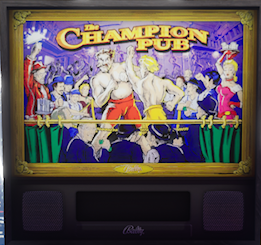
Signature Shot – The Boxer: Your enjoyment of The Champion Pub, or lack thereof, will come down to how much fun you have shooting Knuckles O’Brien. I personally don’t think it’s as satisfying as it probably should be. It doesn’t help that you never know what will register and what won’t. Sometimes a love tap scores a hit. And sometimes the ball flies off one of the curved ramps, pops the son of a bitch full-force in the jaw and nothing happens. Since hits slow down the rate your health depletes, even getting hosed out of one hit you earned could be very costly. The Champion Pub would have probably made a better Pinball 2000 release, and this concept would certainly work better as a modern digital exclusive that doesn’t have to try to replicate the mechanics of a toy that never worked all that great in the first place.
Sometimes the glitches benefit you. Like sometimes the drain post just jams and stays jammed for entire balls. This happened to each of the Vices, including twice for me, for a grand total of four stuck posts in about thirty or so full games. So, it’s a thing, and that means when you look at the online leaderboards, you can never know if the top scores were done with or without the benefit of that glitch. With that out of the way, my father and I agree that we’d rank a full-realized, glitch-free version of Pub THE PITS regardless. Pub has horrible scoring balance. It has miserable outlanes. It has dull ramps and loops. The best thing we can say about it is that it actually does play well in multiball, which is a good thing because the table is so heavy with them. Meanwhile, the jump rope and punching bag just feel harder than they should be. The Champion Pub is one of the most overrated tables ever made and I get that people love the idea behind it, but the reality is so putrid that I can’t even say “at least it’s different.” I literally can’t believe this got the votes to crawl out of the sewer and no longer be a 💩CERTIFIED TURD💩 In fact, it got three positive votes to go with the three original Pinball Chick team members (me, Oscar, and Jordi) sticking to our guns on Pub being one of the worst pins ever made. Cathy: THE PITS (1 out of 5) Angela: GOOD (3 out of 5) Oscar: THE PITS Jordi: BAD (2 out of 5) Dash: GREAT (4 out of 5)
Sasha: BAD
Dave: GOOD (Pinball FX3)*
Elias: THE PITS (Pinball FX3)*
Overall Scoring Average: 2.125 – BAD
Primary Scoring Average: 2.16 – BAD
*Pinball FX3 plays different than Pinball FX
Some review copies were provided in this review, others were paid for.
Attack From Mars
First Released December, 1995
Zen Build Released December 4, 2018 Main Platform: Pinball FX Switch Platform: Pinball FX 3 Coin-Op Designed by Brian Eddy Conversion by Thomas Crofts Set: Williams Pinball Collection 1 ($23.99)
Links: Internet Pinball Database Listing – Strategy Guide – Pinball FX Wiki
Angela on Attack from Mars: Attack from Mars is Thanksgiving dinner with my family. It’s weekends with my friends. It’s Christmas morning with the family I’ll make for myself some day. Attack from Mars will always be tied to most of my happiest memories. The table I use when I need to unwind. The table I use to organize my thoughts and find perspective when I’m feeling lost. My own little space. Just me, Attack from Mars, and my state of being. I can’t imagine any other table being all that and more. It even helped me learn math faster. I have Dyscalculia, which is kind of like dyslexia for numbers and math. Attack from Mars didn’t cure it. It didn’t even make it better. Instead, it contributed to my determination to overcome it. I loved this table so much that I wanted to be able to play it by myself and know how good my score was without asking Cathy or our father. My family tells everyone that Attack from Mars taught me how to play pinball, but they’re wrong. They taught me how to play pinball. Attack from Mars just happened to be my classroom, in more ways than one.
Shrug. It’s Attack From Mars! What can I say about it? While it’s not my personal favorite table, it’s the only pin I’ve ever considered to be perfect. Literally perfect. Perfect layout. Perfect sound effects and call-outs. Perfect scoring balance. Any player of any age or experience can walk up to Attack From Mars and enjoy a round of pinball, with no asterisk or strings attached. It’s simple and straightforward, but very challenging. The saucer is THE undisputed greatest driver in the history of the sport, and from there, it slowly eases players into the notion of greater goals and advanced modes. AFM defies any of the labels we’ve created to classify a table, yet it also matches all of them. It requires the precision aim of a Sharpshooter, but it offers gigantic flexibility to create your own strategy, like a Pick ‘n Flick. You can elegantly shoot combos and string together sequence shots, like a Finesse table, but it’s also a pinball machine where your main challenge will be taking control of the ball, like a Kinetic. Whatever your taste in pinball, and whatever era you love, you can have fun. There’s not a lot of pinball machines you can say that about.
Signature Shot – The Saucer: Attack from Mars’ iconic saucer is one of the all-time satisfying targets. The sound design played a big part of that, but I think the gate is understated. You almost breathe a sigh of relief when you lower that gate (assuming you don’t burn your Stroke of Luck on it right off the bat). It’s one of the more nail-biting shots around. Deceptively dangerous. Once the gate is lowered, nothing beats hearing the damage that each shot inflicts. Do a double or even triple shot on the saucer? Ahhh, that’s the good stuff.
If I have to think of something to not like about Attack from Mars, gosh.. okay, I guess the video mode is kind of underwhelming. Go figure that got recycled in Junk Yard, right? And everyone else disagrees with me about it anyway. I mean, even my video mode hating father likes it. I have no complaints about this interpretation from physical to digital. Zen Pinball has created a port that I feel accurately replicates the fast-rolling, frantic white-knuckle gameplay. Even the issues Pinball FX has with bounce don’t feel present here. You can tell they realized this was a table they absolutely had to get right, and they did. No, Attack From Mars isn’t my #1 table, but it’s the table I owe the most to, for it was Attack From Mars that turned Angela into a legitimate pinball player. No, change that. It turned her into a phenomenal pinball player, and it assured the Vice Family’s love of silverball didn’t end with my father and I. For that, it will always have my gratitude. Cathy: MASTERPIECE Angela: MASTERPIECE (#1 Rated Pinball FX Table) Oscar: MASTERPIECE Jordi: MASTERPIECE
Dash: MASTERPIECE
Sasha: MASTERPIECE
Dave: MASTERPIECE (Pinball FX3) Elias: MASTERPIECE (Pinball FX3)
Overall Scoring Average: 5.0* 🏛️PANTHEON INDUCTEE🏛️
Pinball FX Scoring Average: 5.0 🏛️PANTHEON INDUCTEE🏛️
*Pinball FX3′ Williams tables run slightly different.
Some review copies were provided in this review, others were paid for.
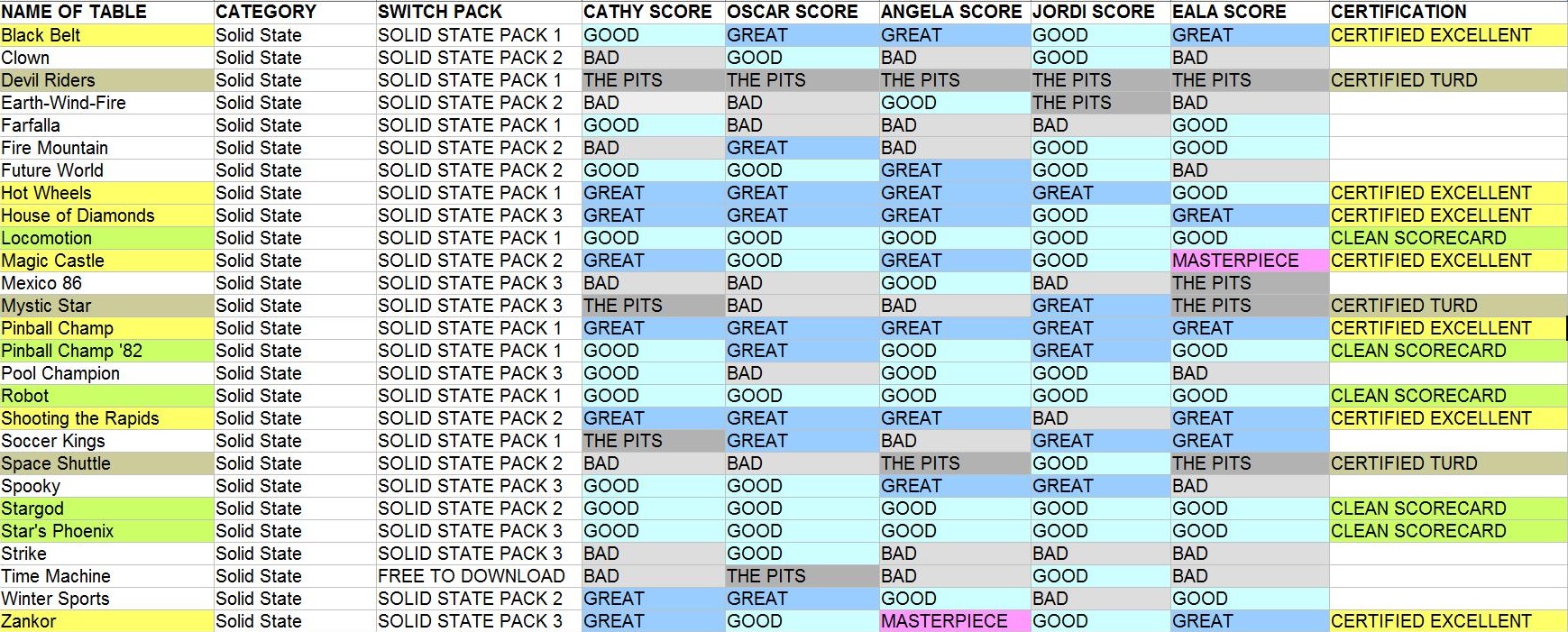
Writing a guide for over 100 tables is a time-consuming thing. But, we know a lot of people want to know which tables are the ones to get. Our ratings are in for all Zaccaria Pinball tables in the Solid State, Electro Mechanical, and Retro categories for Switch, Xbox One, PS4, and Steam. We’re currently working our way through Remake and Deluxe tables. None of these ratings are likely to change, but if you have further questions, you can hit me up on Twitter. The guide IS coming.
We are awarding two Electro-Mechanical tables Certificates of Excellence. We are awarding seven Solid State tables Certificates of Excellence. We are awarding one Retro table a Certificate of Excellence.
Please note: the Retro pack contains twenty-seven tables, sixteen of which we’ve declared Certified Turds, and one of which (Robot) we’ve determined to be the worst digital pinball table of the modern era. BUT, the entire pack costs only $2.99 or less depending on which platform you buy it on, and $2.99 for a Certified Excellent table (Mystic Star) is a bargain no matter how many bad tables you get with it. So we do universally recommend it (except Angela, who was indifferent).
These ratings apply to every platform, including playing on a digital table using Steam.
You don’t always get what you deserve. George Gomez deserves to be a household name. He’s a certifiable legend, responsible for tens of millions of dollars in coin-drops over the last forty years. This is a man put on this Earth to entertain. A game maker. A toy maker. A pinball maker. He created Spy Hunter AND Monster Bash, and between that he made darts you fill with water, which I totally would have used if I had been alive when they came out. And I’d probably aimed for people’s eyes with them, because that’s how I roll. Anyway, I got to talk to George, who currently is Executive Vice President and Chief Creative Officer at Stern, the current leaders in pinball, because I am that lucky. We discussed his career, his projects, and general thoughts on the nature of game and pinball design.
Robert Downy Jr explains how he got into character for Iron M.. hey wait. THAT’S GEORGE? No. That dude is too cute to be an arcade/pinball designer.
Cathy: I feel that you’re maybe the most unsung legend of the industry. You did arguably the most iconic licensed game of the Golden Age of Arcades in Tron. You created Spy Hunter. You transitioned to pinball and created the most beautiful swan song for Williams in Monster Bash. You are still going strong today, leading Stern. Yet, you’re largely unknown to even hardcore gamers. So, how does the nickname “The Low Key Legend” sound to you?
George Gomez: Wow, well “Legend” anywhere near my name seems like you’re talking about somebody else. I’ve been really fortunate and I’ve designed coin-op vids, toys, novelty games, pinball, and even Xbox & PlayStation games. I’m just happy to have been able to do what I’ve wanted to do at a variety of different companies, with super talented people all around me.
Cathy: Humble too. I know what that’s like. I, myself, have been admired for my humility. Ahem. My readers are genuinely fascinated by the “road not traveled” with pinball (and so am I). Legends like that Star Trek: The Next Generation was designed with the Steven Seagal movie Under Siege in mind, or Safe Cracker was to be Monopoly. Those kind of things. With that in mind, rumor has it that a Mortal Kombat table was on the drawing board and possibly that’s what Monster Bash WAS to be. Any truth to that? Also heard that Game of Thrones at Stern was maybe originally Harry Potter?
George: Well, speaking of legends some of those fall into the category of urban legend. On Star Trek, what I recall hearing is that before Star Trek came up as an option, the license he was pushing for was Under Siege. He had been talking about a battleship that took up the whole side of the playfield but I don’t think that got very far. There was never any Game of Thrones relationship to Harry Potter other than we would have loved to do Harry Potter.
On Mortal Kombat, there is some truth to that; except it would have taken the place of my second game Johnny Mnemonic, not Monster Bash. At the time I was just starting out at Williams and I asked Ed Boon if he would mind and he said, he had no issues with that. I had a vision that I could do justice to the game, work thru a series of challenge ladders and face an Uber Boss. Steve Ritchie got wind of it and said he had wanted to do it before I asked and that along with the marketing guys saying that they felt that the 2 audiences didn’t really cross over, pretty much killed it. That said Johnny Mnemonic was a from scratch design, none of the stuff I was working on for MK transferred over.
Cathy: Can you name any “Table X” was originally going to be based on something entirely different stories?
George: The most resent example of that is pretty well known; when we saw Keith Elwin’s “Archer” home brew, we were pretty impressed with his design and hired him. An evolution of the Archer design became Iron Maiden. Amongst my own games; I wanted to use the kitschy “Monster Mash” song from the 60’s as the theme for Monster Bash, but when the owner of the rights to the song wanted too much money, I made “Mash” into “Bash” and never looked back. The reality is that we didn’t miss it.
I spend a LOT of my time these days playing retro games or digital versions of old pinball machines, and I’m constantly asked what the hold-up is for licensed games getting re-released is. It often comes down to “license holder wants more money than reasonable.” It’s reassuring to know that it’s not a recent phenomena. A popular pinball machine carrying your, let’s face it, NOVELTY SONG’s branding could have given it modern relevance besides being a really bad punchline to a twenty-five-year-old episode of the Simpsons. Seriously, I’m thrity-one years old and that’s the first thing I think of when I think of Monster Mash. Dumb decision, but it worked out good for the table.
Cathy: Along the same lines, I asked my readers if they had any questions, and the #1 question by far was “do you design tables with the license in mind or do you have a series of concepts that you then tailor for licenses?”
George: All modern era game designs are conceptualized with and driven by the themes. Up until the 80’s it used to be that the designer created a game and the artist dressed it. I’ve never worked that way on any product. I believe that integrating the theme is pivotal, because the idea is to immerse the player in the world of the theme’s fiction and everything in the game should do that.
Cathy: I think the one thing that keeps Monster Bash from being maybe the perfect table is the top-heavy scoring balance. That Monsters of Rock is so necessary to a high score that any game you don’t get it, no matter how well played, is a scrub. I’ve noticed every table you’ve done since then has really fine-tuned scoring above any other design signature. Is that the one “take back” you’d do if you could?
George: So the thing we were trying to achieve with Bash was to create a simple game that you could play without having to dedicate your life to it. I wanted it to be fun and light. My partner on the game, Lyman Sheats, really balanced the score and we both worked on trying to make the progression thru the game a very novice friendly achievable thing. I’m fortunate that I have a few games in my portfolio that are considered significant to the genre. Certainly Monster Bash and Lord of the Rings are in that group. I think Deadpool will be in that group one day. I have to say that while the world tends to be very “designer” centric, in every game, the people that have been on my teams have made significant and impactful contributions to the games. I think that a good designer leads by allowing his teams to express their creativity and contribute. The magic is to edit and keep the work focused. The game needs to feel integrated and cohesive even though it’s the work and creativity of many people. Every one of my teams thru the years has elevated my work and any designer that thinks it’s all about his vision, is delusional.
Now THIS is cool, and as far as I can tell, this has never been seen anywhere. This is the complete layout for Armed & Dangerous, a one-of-a-kind game that would have replaced the normal three-ball concept with a lifebar. Here’s George describing the game: “It was intended to be a tank game that linked two games and it used video game rules, meaning that you were dead when your life ended not when you drained the ball three times. The tank at the bottom of the image had illuminated inserts that represented your life- as you took hits the lights went out. You also had a limited “force field” and all balls in the game drained back to feed your flippers such that you had constant fire power. The enemy tanks “fired” using lights that “walked” down playfield to hit your tank. It had one more twist, you could link two games together, in which case the tanks on my playfield represented your life and vice versa. When I destroyed all of your tanks you were dead. Williams didn’t quite know what to do with this concept, it wasn’t a true pinball and it wasn’t a true novelty game ticket spitter, so they killed it in development. We did save the linked game concept and used it in the game that I moved on to, NBA Fastbreak.”
Cathy: This isn’t a question so much as a threat. It’s 2021 and there’s no pinball machine based on the iconic game show Price is Right. Next year is its 50th Anniversary and George, I know how to cut a brake line. Just sayin’.
George: (Laughs) Bring it!
Cathy: (nods, puts down wire cutters) Ahem. Was there any license where you wanted to do specific stuff with and the IP owners put the screws to you, said “no, you can’t do that?”
George: Yeah, every licensed game faces this challenge. Developing a game with a license is one of the most difficult things we do. One of the licensors prime directives is to assure a consistent presentation of the brand to the world. The licensor has guidelines, usually developed by the creators of the brand to preserve the character of the brand. When I was working on “Batman: The Dark Knight”, I submitted the script of game speech for approval and a bunch of stuff that I felt was harmless was denied. I decided to push back and the reply I got was: “Batman would never say that.” (Shrug) Be assured that there is someone in the world, that knows exactly what Batman would or wouldn’t say.
Cathy: Apparently he does say the F-word now. They’re making a big deal of that with the Zack Snyder Justice League cut. See, you came around ten years too late. Do you have a dream license to work with that you’ve never been able to get?
George: There are a few that are elusive, some that I can’t talk about because we’re still chasing them. After the MK concept was killed I wanted to do Aliens, based on the second film. At the time there was an awesome toy line that had a lot “new” Aliens and they were molded with a lot of colored translucent plastics and I thought that we could do something similar and introduce some cool illumination into the Aliens to create features on the playfield. I was also fascinated by the final scene in the film, where all hell broke loose and the facility is going to self-destruct and Ripley has to get out with the little girl and the Alien Queen is in the way and the female computer voice is counting it down. A lot of potential game play tension in that scene. But it was several years after the film and the company felt it wasn’t relevant. The management guys pushed me toward Johnny Mnemonic. I was a fan of the short story and of William Gibson’s books, so I took it. I ended up doing my own take on the countdown tension in JM with the Powerdown Final Mode. It’s basically a spinning plates game, where you need to stay alive by maintain areas of the playfield “energized” and time is running out and the computer voice is counting it down. It begins slowly and builds a lot of tension. I’m actually surprised you didn’t beat me up about score balancing in JM, that’s the one I always get hassled about.
Cathy: You know, I haven’t played it extensively. I’m pretty limited to either tables we really have or ones that have had an official digital release. Oscar has and says it’s actually one of THE underrated tables of the entire 90s. But, he admits it’s not desirable from a collecting standpoint because it wears the albatross of being a table based on, well, Johnny Mnemonic. When you finally saw the movie, did you consider faking a heart attack to get out of the assignment? I’ve heard that’s a thing pinball makers do.
George: (Laughs) I should have faked a heart attack. The truth is that the Johnny Mnemonic fiction is a little.. out there. If you didn’t know the short story, it’s hard to convey. Think of the games released around JM; Theater of Magic was simple and the theme is instantly obvious. Sega Pinball had the green Batman game with Val Kilmer, also fairly obvious. Neil Nicastro, in those days the CEO, approached me when he heard that I wanted to do Aliens and told me that Sony was going to spend 20 million advertising the film and Keanu Reeves was coming off a big hit with Speed. It was my second pinball design, I wasn’t used to the CEO making suggestions, so I did it. As I said earlier, I knew the story and it seemed cool and edgy in light of the rise of the “internet”. To put this in context, in those days, Williams Electronics had no external facing email and few if any of us had a home internet connection. So a film that presented a visual construct for this thing called “the internet”, was conceptually, on the cutting edge. I didn’t get a movie screening until it was too late. I did call back to Chicago and try to get them to pull the plug 20 minutes after seeing the film. (Cathy would like to note at this point my Dad is laughing so hard I’m afraid HE might be having a heart attack) I should have known something was up, because they made us sign something that said we couldn’t change our minds about anything if they screened it for us. I’ve heard that William Gibson owns the game and given how much I’ve enjoyed his books over the years, I’m happy about that.
It actually is a semi-common practice that movie makers will ban licensees from backing out of a contract once they’ve seen the movie. True story: a preview screening of Hudson Hawk for licensees in 1991 ended prematurely when everyone in attendance set themselves on fire. NEVER FORGET!
Cathy: Of course he owns it. He wanted SOMETHING good that came out it. But you never really know how these things will turn out. I always tell indie developers to expect their plans to be compromised. You have such a story, with the Corvette table. Slated to be a SuperPin, but then Midway decided to cancel the line. Popadiuk thought that helped World Cup Soccer. Is Corvette better for being a standard body? Were their any major changes as a result?
George: Yes, well in the case of Corvette, I’m really glad that I had to make it a narrow body. I didn’t know then but in my opinion, wide-bodies are inherently flawed. The kinetics are compromised. Shots outside the standard 20.25“ width are weak shots, given the available stroke on standard flippers. The stroke of a flipper is approx. 50 degrees. You can rotate the entire flipper to help that but then you compromise the shots in the center of the playfield. One constraint is that the flipper is a lever and it accelerates thru its arc of travel as a function of the force applied by the solenoid. The position of the ball on the flipper, combined with its weight and velocity when you engage the solenoid, is what determines the direction of the shot. All of the widebodies I’ve played feel really soft on those outside shots and fairly unsatisfying. The reason the older ones from the 70’s and before feel fine, is because the nature of those old games was slower and the ball was what we now call “floaty”. Neil Falconer who was a software developer at the earliest versions of our company, used to say: “when the company you work at starts talking about making wide bodies, its time to dust off the resume because they are a recipe for disaster”. Of course in the virtual world its not an issue, playfields could be enormous.
Cathy: There was going to be a Spy Hunter movie starring the Rock that never got off the ground. Gaming is full of those stories, and you have at least that one. Are there any other dangled carrots that never came to pass?
George: In the last dying days at Midway I pitched a new Spy Hunter. It was to be on the Xbox 360 and PS3- I’ll send you the sizzle video that we made as part of the pitch. I think that pitch is still relevant today. Remember, that I had nothing to do with the resurrected Spy Hunters that the company made for the consoles in the 2000’s and I really felt a sense of loss that I wasn’t involved. So I called my pitch Spy Hunter Renaissance and I wanted to take it in new directions. I wanted to add jump jets and rotate the wheels such that they made the car hover a few feet off the ground. This was so that I could introduce a new driving dynamic that had the physics of a hover vehicle in addition to the physics of the car. I also created story line that the car had a very dangerous power source and for that reason it was a closely guarded secret known only to the designers of the car and select people in government. As the pilot of the car (the pilots were nicknamed “Spy Hunters”) even you were unaware of what it was. As the story evolved and you completed missions, you began to discover what in fact the power source was. In the end you faced an enemy threat so great that you had to sacrifice your self by turning the car itself into a destructive weapon to destroy the enemy threat. Oh well, the stuff of my dreams or maybe I should say my nightmares.
The insane thing is, they could finally make this movie today, in 2021, and it’d probably bank more money now than it would have then, in 2005/2006. The Rock is INSANELY hot now. At the time this was planned? He was doing crap like the Doom movie and Gridiron Gang. The Tooth Fairy and Fast Five hadn’t saved his career yet. By the way, that Spy Hunter game is easily one of the ten worst “major” games I’ve ever played.
Cathy: Legend has it you had no knowledge of Lord of the Rings when you started development of the table for it. My friend and Pinball Chick writer Eala says I’m supposed to yell “IT’S CALLED THE F—ING BALROG” at you. But I won’t do that. Instead, I’ll ask how much of a license’s “lore” do you assimilate while making the table for it, and did you ever become a fan of a property you did the table for?
George: I think its key that design teams relate to the things they work on. The passion for the theme clearly impacts the work. In my current role, I try very hard to make that happen with my studio. On “no knowledge of LOTR”, that’s an exaggeration, I read the Hobbit in college and I liked it but I had not read the other books. Your friend is referring to a story I’ve told many times, where the other guys on the team were completely geeked out on the fiction and every time I mispronounced something they would roll their eyes at me. When I met with the team one day to pitch changing what was originally a cave troll into the Balrog, I referred to the Balrog as the “big red fire guy” and Keith Johnson and Chris Granner, shouted in dismay “Dude, that’s the Balrog!!!!”
Cathy: We’re focused on digital pinball here at The Pinball Chick, and we’re big advocates for doing digital recreations of real tables. Stern did have a deal with Farsight, but nothing has come out recently. Have we seen the end of you guys licensing your tables for those who can’t afford $6,000+ per table?
George: No, not at all. We are actually so interested in that business that we are taking a step back and strategizing how to make a bigger impact in that area. Stay tuned, you’re going to be pleasantly surprised. But you know that really cool things take time, it’s not around the corner.
Cathy: You’ve made some truly incredible pins, so I want to ask you, George Gomez: how do YOU define “flow” in pinball?
George: To me, flow is not strictly about a series of smooth shots, although clearly they are the most obvious component of it. There is an intensity that occurs when one shot sets up another shot or a possible transition in the midst of accomplishing a greater game goal like a hurry up or a scoring frenzy. The feedback the game gives you with sounds as you complete consecutive shots is vital to enhancing that feeling. Its about getting the player so intensely focused on making the subsequent shot to continue the combination, that it becomes all consuming.
He could have just answered “Monster Bash. That’s flow.” It really is. Except that Creature shot. That’s the shot I’ll be thinking of when I cut his brake line.
Cathy: Most of my readers are actually in game design themselves, and I can tell you that many of your games come-up in discussions of what inspired our current generation of indie game designers. Especially those who do white-knuckle action stuff. Even your hidden gem type stuff like Satan’s Hollow still comes up in discussions. What is one thing about making a great arcade action game you know NOW that you wish you had known back then?
George: Iterate, iterate, iterate. Try stuff as fast as you can, it’s the only way you can get to fun. You can’t just stare at your screen, you have to make stuff. Whether it’s code or art or mechanism or whatever. Making things informs you in ways that you can’t imagine; just thinking about a problem wont solve it. You make it, you play it, it sucks, you do it again and again and again.
Cathy: Have you ever gotten the itch to go back and develop one more really great arcade-style action game before you retire?
George: Yes! I actually think about it a lot because ideas come to me and I want to try them. A fun play mechanic is timeless. The Angry Birds frenzy years back re-enforced this in my mind. In the late 70’s early 80’s the vid game companies were truly innovating. Think about the diversity in the play mechanics of Space Invaders, Pac Man, Missile Command, Defender, Robotron, Centipede, etc. We don’t have anywhere near that diversity in creative play in today’s games. Too many games fall into genres where the core mechanic is predetermined; drivers, shooters, RPGs, fighters, sports, such that the points of difference become presentation and storytelling. Don’t get me wrong, I still own and buy every console and I play when I can and there is plenty of amazing entertainment still in games. My commentary is strictly a personal introspection about the significance of a solid core play mechanic. What is fun and how do you make it?
Cathy: You mentioned Angry Birds. That’s one of two “modern” properties (along with Geometry Wars) that I thought could have been massive in arcades in the 80s. Now, I want to flip that: is there any game you worked on during the Golden Age whose time had yet come but would have been a huge hit later down the road?
George: Uhm, I think I worked inside of existing play mechanics and enhanced them, I don’t think I invented a new mechanic. Spy Hunter is a driving game and I added the notion of a car with weapons and you get music when you have weapons in an attempt to make the game feel cinematic. I was inspired by the common scene in James Bond movies where he is faced with overwhelming odds and you know there is going to be a major confrontation (the Little Nellie helicopter fight in You Only Live Twice or the final underwater fight in Thunderball) and they bring up the Bond theme and it feels just epic. Things like the weapons truck are a great example of figuring something out by doing. When we brought up the game, the car just “grew” weapons and ammo in video game fashion based on checkpoints. This felt wrong to me, because cars don’t just grow weapons and ammo just because you drove further down the road. I looked at Knight Rider and said we need a truck that he drives into. Tom Leon, my partner on the game, hated the idea of the truck. I talked him into putting it in and once we had it in, we figured out that calling up the truck and having to avoid getting killed and negotiating the car to line up with the truck and trying to stay in the fight all the while, was a big strategy thing. Things happen when you make stuff. So the reality is that I didn’t invent the core mechanic of the game; it’s a driving game, I just created an extension of the genre.
You know you’ve made it when your work is a Robot Chicken sketch. Then again, Spy Hunter was also the solution in an episode of Murder She Wrote. Jeez.
Cathy: I have to ask about probably the most famous Golden Age licensed game: Tron. How did you get that assignment? Because I’m sure everyone at the time was chomping at the bit to get it!
George: Tom Nieman was Bally Midway’s Licensing guy and he told us that Disney was going to make a movie about video games, that was going to feature state of the art computer graphics and that they were looking for a video game partner. At the time Midway was the largest manufacturer of coin operated video games in North America. It had achieved that partially by establishing itself with the Japanese game companies as the manufacturing and sales agent of their products in the Americas and Western Europe. It had relationships with Namco, Taito, etc. I’m sure you are aware of this but some of your audience may not know it. It also had 2 captive R&D groups that developed products not licensed from Japan. Those groups were Dave Nutting and Assoc.(GORF, Wizard of WOR, etc.) in Arlington Heights, IL and Arcade Engineering(Omega Race, Solar Fox, etc.) in Ft. Lauderdale, FL. Bill Adams and I worked for the in house engineering group and at the time while Bill was allowed to make and pitch game ideas; I was attached to a group that mostly focused on making the licensed designs and the designs from Dave Nutting and Arcade Engineering production ready. Most of what we got from the external groups were very rough working prototypes.
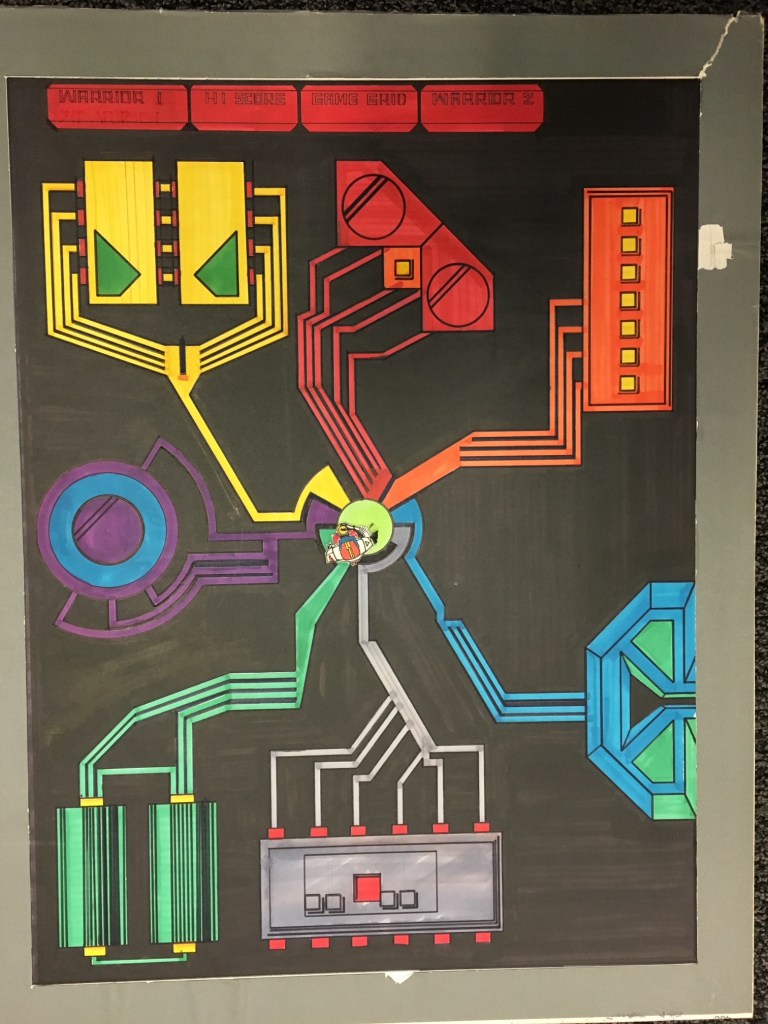
Concept art for Tron, or outline of Bob Hope? Only George knows.
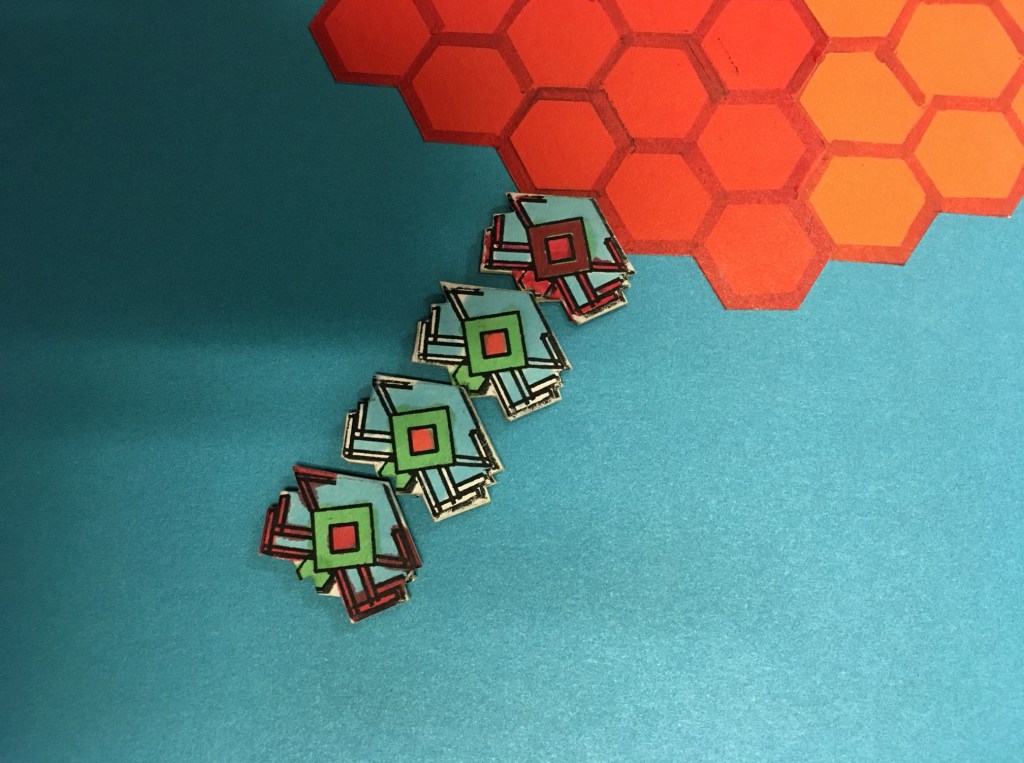
The company had decided to solicit designs for TRON from DNA and Arcade Engineering and then they would select which direction to go in. Bill and I begged to be allowed to pitch a concept. John Pasierb and Dr. Marty Keane were running development at the time for Midway and they allowed us to pitch. I don’t think anyone believed that we would actually land the opportunity. Three of us; Bill Adams, a young electronics design genius called Attish Ghosh and I got the script for the film from Disney and started talking about what to do with the game. Attish had designed the MCR2 hardware set (first used to power Satan’s Hollow). The company and Disney’s plan was to hold a nationwide TRON competition at the Aladdin’s Castle Arcade chain, which was owned by Bally. The competition would launch a few months before the film; leading up to a play-off to be held at Madison Square Garden in NYC, then the winners would all go to the premiere of the film. So there was a lot of pressure to deliver the game in time, not just for manufacturing but to enable the tournament and all of the associated PR events. Bill and Attish decided that using the MCR2 Satan’s Hollow hardware would be a huge advantage, because we could start developing right away. We worked like crazy in the weeks leading up to the presentation of ideas and when we showed up I had these big poster boards that outlined what we thought would be the waves in the game and Bill had stuff moving on screen and I had a mockup of the cabinet with the glowing grip and some very rough art concepts. I think Dave’s group was focused on building the game on what was a bleeding edge hardware system using the first true 3d vector graphics that I had ever seen. The reality was that had we gone in that direction, it wouldn’t have been done in time. I think Arcade wasn’t that interested in the project, so I don’t recall what they pitched. We were the only ones that had actual stuff in the pitch and I think management decided that we really wanted to do it, so we got our shot.
Concept art for George’s iconic controller that was used for Gorf, Satan’s Hollow, and Tron. Arcade1Up really should get on this. They probably could do their first $1,000 project by doing an environmental cabinet with the two Tron games and Gorf thrown-in for good measure.
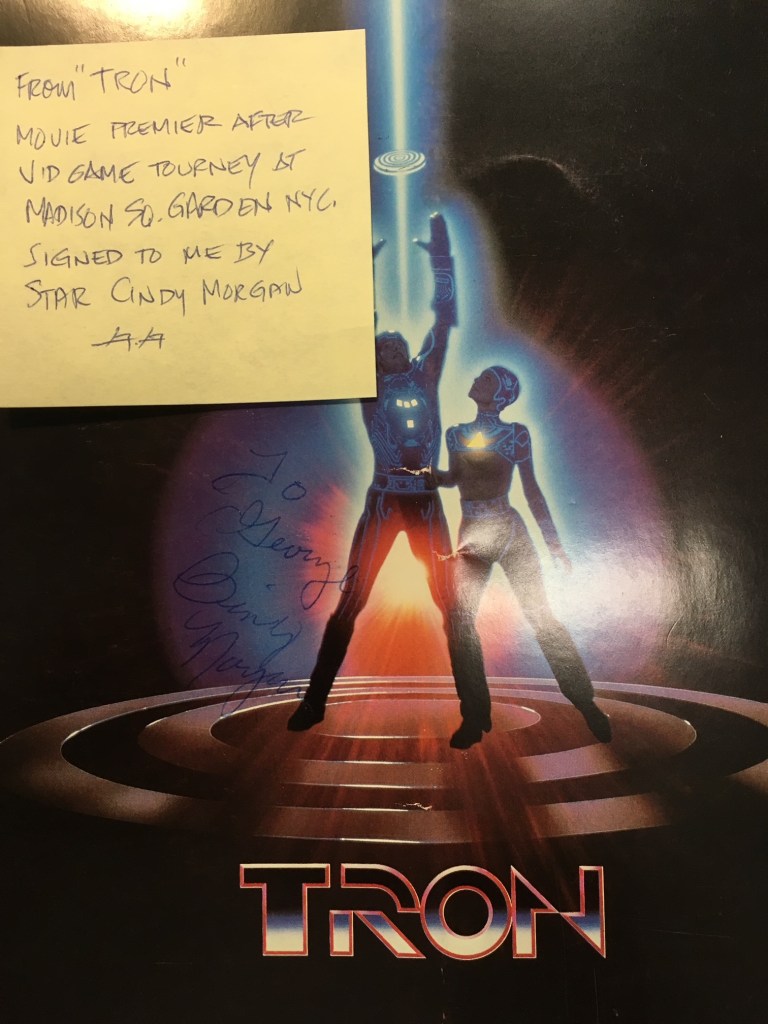
Bill was very intelligent about how we attacked it; he gave each wave to a different programmer and he focused on bringing everything together and tuning the game. Famously the discs wave consumed all of the resources of the system early on and so we abandoned it to be come the sequel. That game went thru its own iteration in that we had to invent an aiming system and many other techniques. I’m most proud of having come up with the notion of running the cursor around the stripes on the perimeter of the virtual arena and being able to move it up and down to select the stripes. That game was programmed by Bob Dinnerman, who was a young engineer hired around the time that the first game was shipping. So after many months of craziness, we made it, we went to NY, watched the tournament, went to lunch at Tavern on Green with the movie stars and then saw the movie premiere.
Cathy: This is one of my longstanding “personal curiosity” things. I’m a fan of Satan’s Hollow. But, it’s not a huge hit, and my theory is you released a game with the word SATAN in it right in the middle of the Satanic Panic. I’m a godless Californian, so I have to ask, were there any arcade operators or chains that put up a stink over the name?
George: Satan’s Hollow was designed and programmed by Bill Adams. Bill is the guy that moved me into actual game design. He had a very clear vision for the game, a very evil villain boss, building the bridge, the moat, a castle, birds, etc. The evil boss became Satan because at the time there were lots of films featuring Satan; the Exorcist, The Omen, the Damian series, etc. Again we used a common technique of listing 2 columns of words and matching to pick the name. My biggest contribution to the game was drawing the flight patterns of the birds. At the time there was some push back from what the sales guys referred to as the “Bible Belt states; they just would not have games that showed or even had Satan in the name, even if he was the villain.
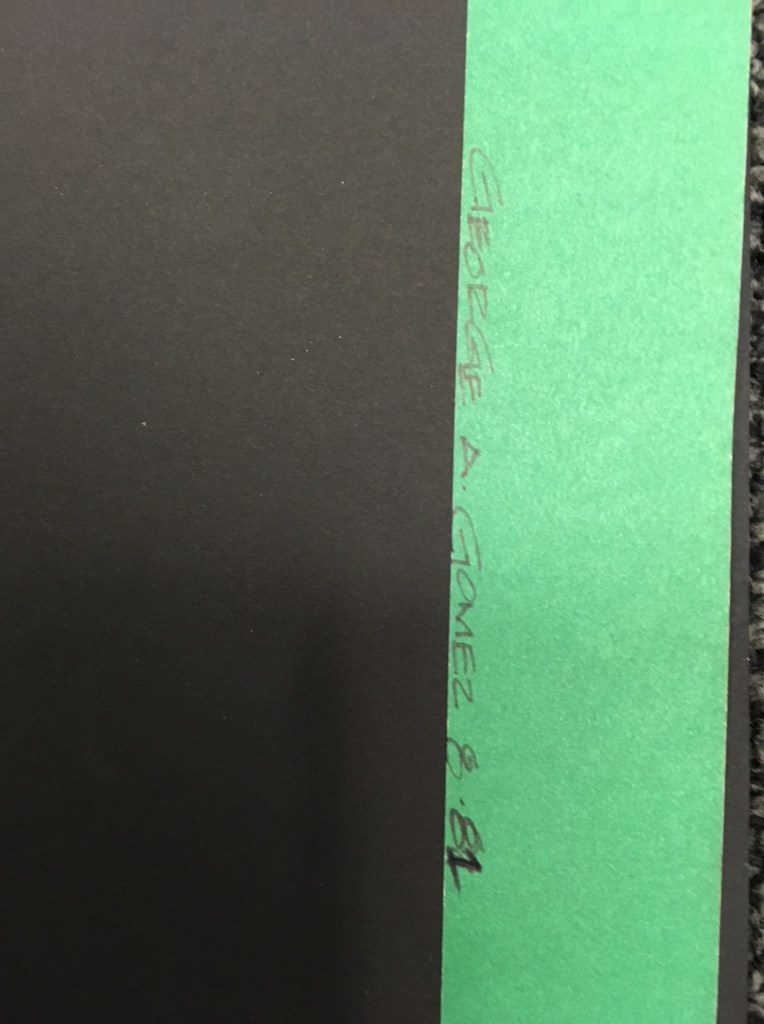
I can’t thank George enough for sending me really cool concept art for a lot of his projects. Even more are included below the interview. My Dad is tickled pink. He’s a huge Tron fan. I admit, the first movie isn’t my cup of tea, but I liked Tron: Legacy.
Cathy: Finally, pinball is probably the most popular it has been since the mid 90s, but stuff like Stern’s output or even Jersey Jack are tables being made by the same designers who thrived in the 80s and 90s. Steve Ritchie: still making pins. You: still making pins. Pat Lawlor? Still making pins. Hell, American Pinball found the storage locker Joe Balcer had been left in, dusted him off, gave him a hot meal, and he just made the Hot Wheels machine for them. I must confess that I do worry the art of real table design might be lost when your generation takes their final bow. How is the art form going to make it through the next few decades when the industry still relies so heavily on these legends?
George: I think I’m doing my part to ensure a bright future. I hired Keith Elwin and his contribution has been very impactful, high energy, new ideas, great attitude. I think he still cant believe he’s getting paid to make games. I have 2 more up and coming designers in my studio right now that you haven’t heard from yet but in the next few years you will. I have a great balance of new and experienced talent in my studio in every discipline; artists, animators, designers, ME’s, software devs; you name it. It’s a great dynamic, there is a tremendous buzz and energy in that place, it’s probably what I miss most since Covid.
The Pinball Chick aspires to be the premier source of digital pinball reviews and study. That’s why every table is rated by five different players of different experience, skill, and preferences. But, we also know that many players fall in-love with specific types of tables. We do it too! That’s why we’ve created a classification system to help players track down the digital tables that best suit their tastes. After putting thousands of hours into digital pinball in 2020, we’ve determined that there are five primary types of tables.
Sharpshooter
Sharpshooters are tables based around a wide-variety of traditional targets and narrow orbits. The primary table type from the 1970s through 1991, sharpshooters challenge players to slow the action down and take careful aim at specific targets, often with incentives to connect in a sequential order. Accuracy and the ability to shoot in rapid-succession are rewarded, while misfires come with a high risk. Sharpshooters typically have strict rules that test elite players with little flexibility for individual strategy. Examples: Firepower, Space Shuttle, Gorgar, El Dorado.
Finesse
The primary game type from 1992 through the modern age of pinball, finesse tables are typically driven by modes, multiballs, combos, and jackpots. While building your score requires a linear progression of modes, players have more flexibility to create their own strategies. Finesse tables are all about transitioning from orbital combos to target shooting and reward ball-handling skills. The majority of DMD tables fall into this category. Examples: Medieval Madness, Funhouse, Theatre of Magic, Star Trek: The Next Generation, Twilight Zone.
Kinetic
Kinetic tables are defined by lightning-fast gameplay and bounciness. Kinetics often employ chaos elements (bumpers and slingshots) near primary targets to keep the ball in constant flux, making them the tables that require the most playtime to master. Gaining control of the ball will pose the greatest challenge. Anticipation will be a player’s greatest asset. Kinetic tables often incentivize high-risk bank shots or flat shots that return at high-risk angles, and are excellent to teach players angles and quick judgment. Examples: Attack From Mars, White Water, Creature from the Black Lagoon
Pick ‘n Flick
Arguably the best table type to introduce newcomers to pinball, pick ‘n flick tables are slower, more deliberate games based simple shots. Players are at their leisure to pick a singular target, steady themselves, and flick the ball. Pick ‘N Flicks often allow for repetitive shooting of high-scoring targets or combos. Novelty tables based around eye-catching gimmicks often employ a pick ‘n flick design sense. Professional players often avoid, if not outright hate, the pick ‘n flick setup. But, rookies can use them to build muscle memory, as these tables often rely on common angles and simple mode advancement. When combined with some of the more fun concepts in the medium, pick ‘n flick layouts become the ideal training ground to hone basic pinball skills. Examples: Hurricane, Junk Yard, The Party Zone
Boardwalk
Boardwalk-style tables are the dinosaurs of pinball. For the majority of the sport’s existence, this style of design dominated the industry. In the days when pinball was thought to be completely random, boardwalk-style tables lived down to that reputation. Relying heavily on so many bumpers that high scores will come down to just plain dumb luck, it’s no wonder that the medium was banned in places New York City. In the golden age of electro-mechanical tables, pinball was associated primarily with the mafia and illegal gambling. It’s why we almost considered calling this style Speakeasy. But, the reputation was never fully justified, and it would be a disservice to say boardwalks have no value today. The best of this breed often rely on skillful use of a plunger and nudging more than flippers. In fact, they’re excellent at training for bank shots, subtle tilting, and simple target shooting. Plus, the iconic chimes and bells of the era will inevitably bewitch you with all the charm of a simpler time. Examples: Central Park, Spanish Eyes.
The Exception: Hybrids
Sometimes, you can’t quite pigeonhole a table into a specific category. If so, The Pinball Chick will list the primary type hyphenated with the secondary type. For example, Monster Bash is a finesse-kinetic. The Getaway: High Speed II is a sharpshooter-kinetic. Because of the nature of design, a pick ‘n flick will never be a hybrid, and a kinetic will almost never be a primary-type in a hybrid.
Welcome to the latest hair-brainer of your’s truly. I’m Indie Gamer Chick, and pinball has meant so much to my life. For that reason, I’ve opened this site. It’d dedicated to a century-old industry. Pinball has been one of the great joys of my life, and now, I’m going to have a site dedicated to digital versions of that joy. I’ll mostly focus on three main platforms: the still active Pinball FX3 from Zen Studios, the seemingly dormant Pinball Arcade by Farsight Studio, and the upstart Zaccaria Pinball from Magic Pixel. The site isn’t ready to launch yet, but you can check out the live scorecard for the mega-sized Pinball Arcade review here. I hope you’ll stick around. Developer say I’ve battered their balls for years. Now, I have a whole site dedicated to it!
 Clone Wars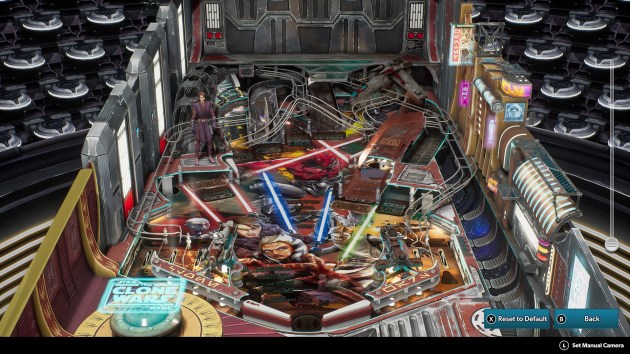

 Cathy: MASTERPIECE (5 out of 5)
 The Champion Pub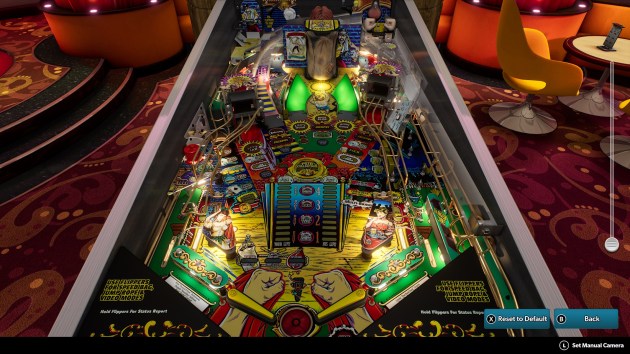

 Cathy:
  Attack From Mars

 Cathy:






 The Pinball Chick
You must be logged in to post a comment.